
Used Injection Molding Machines: Energy Cost per Good Part
Compare used injection molding machines by kWh per accepted part, with clear meter boundaries, a worked example and a practical production-trial checklist.
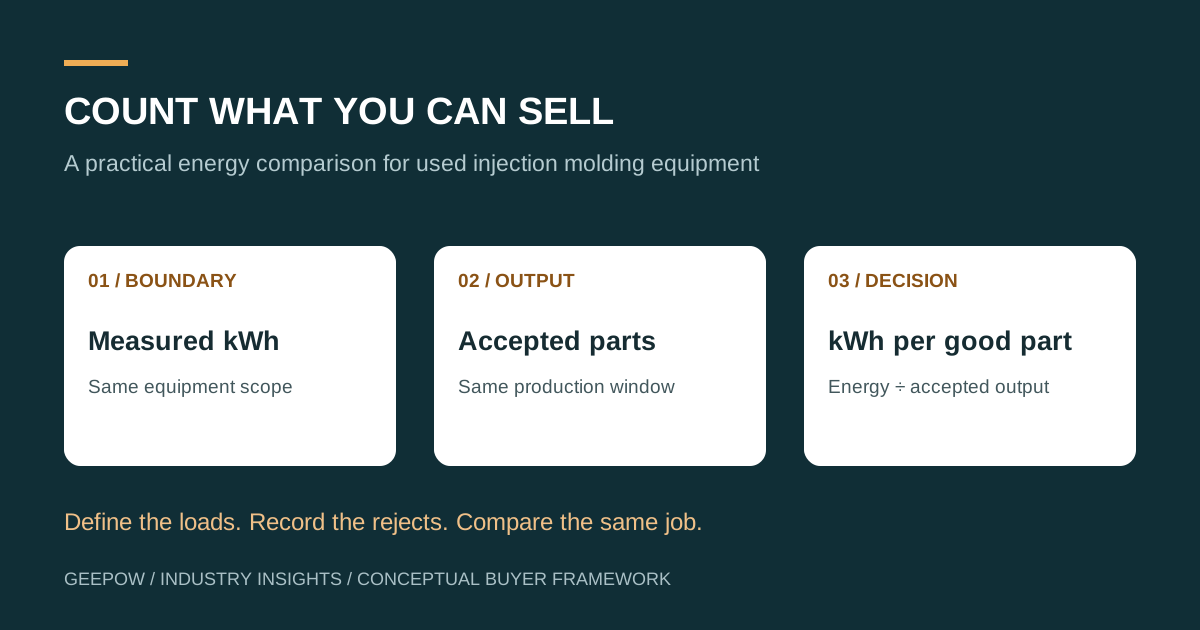
To compare the electricity cost of two used injection molding machines, divide measured energy by accepted output from the same production window. Keep the mold, resin, quality criteria and meter boundary comparable. A lower hourly energy reading can still produce a higher cost per saleable part if output is slower or more parts are rejected.
This matters when adding a second press, replacing an older machine or transferring a mold between factories. The purchase price is visible immediately; the energy cost of delivering the required quantity becomes clear only when the production assumptions are written down. The framework below is a buyer's comparison method, not a claimed test result for any GEEPOW machine.
First distinguish machine efficiency from production economics
EUROMAP 60.1 describes a machine-related efficiency classification under specified conditions. Its scope separates the basic machine from several auxiliary loads, and it limits meaningful comparisons to machines of similar size. An efficiency class is useful context, but it is not a quotation for electricity on your actual part.
EUROMAP 60.2 addresses a specified machine, product and process. It separates consumption into blocks, with some peripheral loads optional, and excludes external fluid supplies from its defined boundary. Consequently, a report referring to this recommendation still needs its included loads explained. A factory-wide cost allocation must be shown separately rather than presented as an unchanged EUROMAP measurement.
Choose one boundary before comparing the numbers
Ask each seller or trial provider to draw a simple boundary around what the meter records. Use the same boundary for both candidates. If one trial includes a dryer and the other does not, request a correction or keep the figures in separate columns.
| Comparison boundary | Record explicitly | Buyer decision |
|---|---|---|
| Press at its measured supply | Meter location; heaters and attached loads included in that reading | Compare the presses only when the included loads match. |
| Defined production cell | Separately metered press, robot, dryer and other agreed equipment | Compare the equipment package needed to produce the part. |
| Allocated factory services | Shared cooling or compressed-air allocation and the assumptions behind it | Use as a separate operating-budget estimate, not a direct press measurement. |
Do not add a peripheral's separate reading if that same load is already inside the press meter's total. Label unavailable shared-service data as unmeasured. A transparent partial comparison is more useful than an apparently complete figure containing hidden estimates.
Calculate kWh per good part, not just kWh per hour
For a defined test window, use kWh per good part = measured kWh ÷ accepted parts. Multiplying that result by a stated electricity price gives the energy-only cost per good part. kW describes power; kWh measures energy over time. A motor nameplate rating should not be entered as if it were a measured hourly bill.
The following numbers are entirely illustrative. They are not machine specifications, supplier quotes or expected savings. Both hypothetical trials use the same agreed cell boundary and quality criteria.
| One-hour trial | Candidate A | Candidate B |
|---|---|---|
| Measured energy | 18 kWh | 22 kWh |
| Total molded parts | 1,000 | 1,200 |
| Accepted parts | 900 | 1,188 |
| Energy per accepted part | 0.0200 kWh | 0.0185 kWh |
| Energy cost at an assumed USD 0.12/kWh | USD 0.00240 | USD 0.00222 |
A has the lower energy reading for the hour, while B has the lower energy cost per accepted part in this example. That does not establish the better purchase: installation, maintenance, financing, tooling fit and production risk still belong in the investment comparison. Demand charges and time-of-use tariffs also require more detail than this simple energy-price calculation.
Request a trial record that another person can audit
EUROMAP 60.2 calls for documented machine and process information and a stable automatic operating condition. The following practical purchasing record builds on that principle; it does not replace the full recommendation or constitute certification.
- Identify the equipment. Link the offer reference, serial number, controller and installed injection unit to the trial record. Do not combine photos or results from different machines.
- Freeze the comparison inputs. Record mold identity, active cavities, resin grade, material preparation, part specification and the agreed quality checks.
- Define the time window. Preserve starting and ending meter readings, timestamps, operating settings and an explanation of interruptions. Have qualified personnel arrange the metering.
- Count acceptable output. Keep total, accepted, rejected and pending-inspection quantities separate. If quality approval is incomplete, report the energy calculation as provisional.
- Record startup separately. Retain warm-up, changeover and scrap information for a shift-level budget rather than silently blending it into a stable-run comparison.
- Investigate differences. Repeat an agreed comparable window when a result changes materially. Record what changed before calculating an average.
A useful machine running video can help link the operating conditions to the offered press. It should accompany the meter and quality records, not substitute for them.
Use three outcomes in the purchase decision
- Comparable: matching boundary, documented conditions and accepted output. Use the result in an operating-cost scenario.
- Conditionally useful: measured data exists, but a mold, resin or auxiliary difference remains. Identify the additional trial needed before ranking candidates.
- Insufficient: only a brochure percentage, motor rating or unlabeled screen photo is available. Keep energy savings out of the purchase justification until measured evidence is supplied.
Questions buyers often ask
Does a servo drive guarantee a lower production bill?
No guaranteed result follows from the drive label alone. Use it to understand the configuration, then compare the actual application with an agreed measurement boundary and accepted output.
Can I compare different part weights using kWh per kilogram?
That metric can add context, but different products and processes make interpretation harder. Keep part quality, throughput and the basis of the weight measurement visible; do not substitute a cross-product ratio for a same-job purchasing trial.
What should I send when requesting a used-machine shortlist?
Provide the part drawing, material, mold dimensions, target accepted output, available utilities and any existing trial records. Browse GEEPOW's machinery listings, then send your project requirements with the measurement boundary you want quoted. Current availability, condition and application performance must be confirmed for the individual machine.