Used Injection Molding Machines: A Practical MES Handover Guide
Check controller options, EUROMAP 77 data, software transfer and live acceptance before connecting a used injection molding machine to your factory MES.
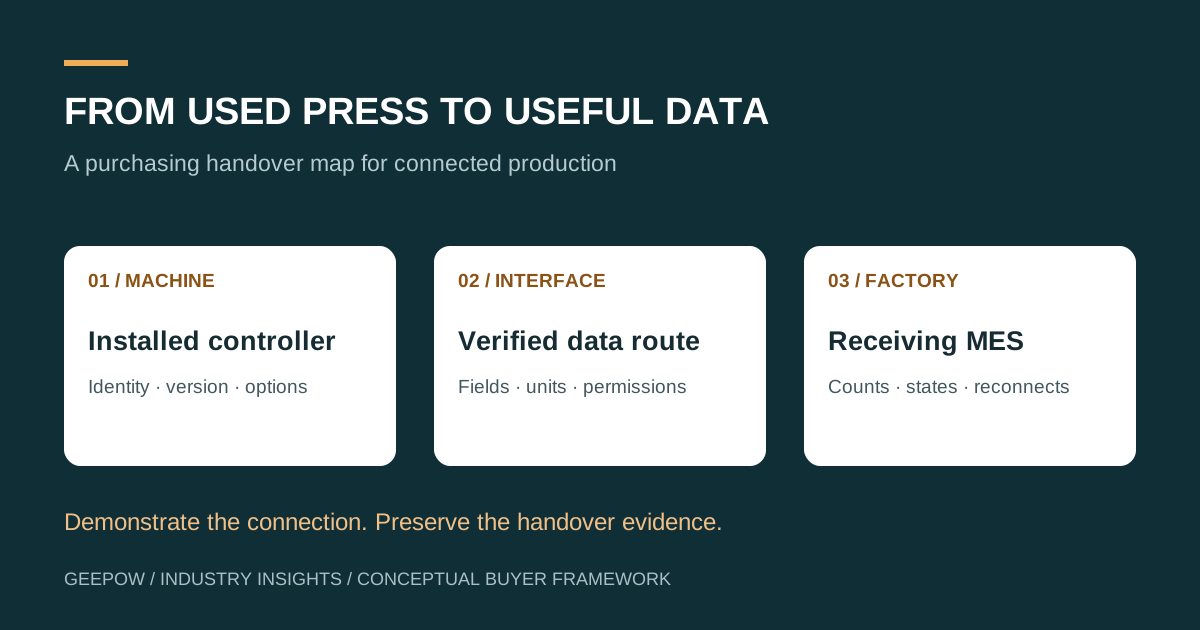
A used injection molding machine is ready for your MES only when the installed controller, enabled interface, permitted software use and required data have been verified together. An Ethernet socket or a screenshot saying “OPC UA” is an initial clue. Purchase acceptance should depend on the receiving system correctly interpreting data from the exact machine being sold.
This guide is for a factory adding used equipment to an existing production-monitoring system. Its practical question is how to avoid buying a mechanically suitable press and later discovering that the data connection needs unbudgeted software, integration work or a controller upgrade. It does not promise that any model or listing includes a particular interface.
Separate MES data from robot control
EUROMAP 77 describes data exchange between injection molding machines and manufacturing execution systems. Its purpose includes collecting machine information for production-related management. A reference to the standard is useful, but the installed implementation and the MES client's requirements still need to match.
Robot communication is a different scope. For example, EUROMAP 79 covers machine-to-robot data exchange, and its official documentation keeps safety signals outside that OPC UA interface. A successful MES connection therefore does not establish robot compatibility or validate the safety of the production cell.
Start with the business question, then request the data
Write down what the receiving factory needs to know on day one. “Connect everything” is difficult to price or accept. A short list of decisions produces a clearer integration request: which job is running, how many cycles occurred, which periods need explanation and which quality records must follow the order.
| Factory question | Data to agree | Acceptance check |
|---|---|---|
| Which machine and job produced this batch? | Stable machine identity and an agreed job-assignment method | The MES record maps to the nameplate and the intended order. |
| How much was produced? | Counter meaning, active cavities and treatment of rejects | A witnessed sample reconciles cycles, molded parts and accepted quantity. |
| Why did production stop? | Available states or alarms and the operator's reason-entry process | A planned pause appears correctly rather than becoming unexplained missing data. |
| Can quality records follow a batch? | Available variables, units, sampling and retention responsibility | A sample export remains traceable after it leaves the machine. |
These are buyer-defined requirements, not a statement that every controller supplies every field. A manual job assignment or operator-entered rejection reason may be adequate for the initial project, provided that limitation is visible and accepted.
Build a handover pack before the machine leaves
Ask for the controller manufacturer, model, software version, installed option pages, relevant manuals and any documented retrofit history. Match each record to the machine serial number. A replacement controller can change the practical integration question even when the press retains its original badge.
Manufacturer offerings illustrate why the option details matter. FANUC describes its EUROMAP77 connection through an OPC UA-supported ROBOSHOT-LINKi2 option. That is evidence of a specific manufacturer route, not evidence that an arbitrary used ROBOSHOT—or a used machine from another brand—already includes that option.
- Hardware and interface: identify the installed controller and the documented communication route. Obtain the applicable interface manual rather than relying on connector photographs.
- Software and ownership: ask the relevant supplier which licenses, support rights, installation media and activation steps can transfer to the receiving owner.
- Configuration: arrange an authorized backup and record who can restore it. Remove reliance on a former owner's inaccessible computer or undocumented settings.
- Data scope: obtain a sample showing the actual available fields, units, counter behavior and timestamps. Confirm the receiving MES can interpret them.
- Responsibilities: name the person or supplier responsible for machine-side setup, MES mapping, factory network configuration and final acceptance.
Use the used-machine inspection checklist alongside this handover pack. Communication evidence is one part of purchase diligence; it cannot establish mechanical condition or production suitability.
Agree a small, witnessed acceptance trial
Make the first trial a read-only monitoring exercise on a network approved by the receiving factory. If the project later needs recipe downloads or other write operations, define their permissions, limits and validation as a separate scope. Do not make production control changes merely to demonstrate connectivity.
- Prove identity. Show which physical machine corresponds to the connection and the MES asset record.
- Prove meaning. Observe a known sequence of cycles, record active cavities and reconcile the MES counters. A cycle counter is not automatically a good-parts counter.
- Prove state handling. Include an agreed normal pause or job transition and document what the MES displays. Use only operating actions approved for the trial.
- Prove continuity. Have the authorized integration team perform a planned data-connection interruption and reconnection. Check for missing, duplicated or stale records.
- Prove handover. Save the sample data, versions, agreed mapping and outstanding items with the machine's purchase record. Repeat the agreed checks after relocation.
Choose the trial duration and tolerances with the MES supplier before testing. A successful momentary connection is a weaker acceptance result than a short, auditable production sequence with known counts and a documented reconnect.
Price the complete connection, not only the socket
Ask the quotation to separate controller options, interface hardware, licenses, engineering, travel, training and ongoing support. Record exclusions beside the price. If a gateway is proposed for an older controller, request a field-by-field demonstration of what it exposes; do not assume it recreates every function of a native interface.
A practical decision is to proceed when the required day-one data is demonstrated and the handover responsibilities are clear; proceed conditionally when remaining work has an agreed owner, scope and acceptance test; or defer the connected-production commitment when the controller route or transferable software remains unverified.
Questions buyers often ask
Does EUROMAP 77 mean plug-and-play with any MES?
The specification provides a common interface context. The purchase still needs evidence for the installed version, available data, enabled options and receiving software. Test the intended pairing.
Can an older press still be useful without a native MES interface?
It may still suit the molding job. Treat monitoring as a separately scoped project, compare the available data with your minimum requirements and obtain a supported integration proposal before budgeting connected operation.
What should I include in a sourcing inquiry?
Send the intended product and mold information, controller preferences, existing MES name and version, required data list and planned factory location. Review GEEPOW's machinery listings and submit those requirements so controller and handover questions can be attached to the individual offer. Confirm machine availability, configuration and any integration scope separately.