Used Injection Molding Machine Shot Size: Match Resin, Part and Screw
Compare a used press’s injection-unit data with the full molded shot, resin and cycle. Use this checklist to avoid relying on a maximum polystyrene rating alone.
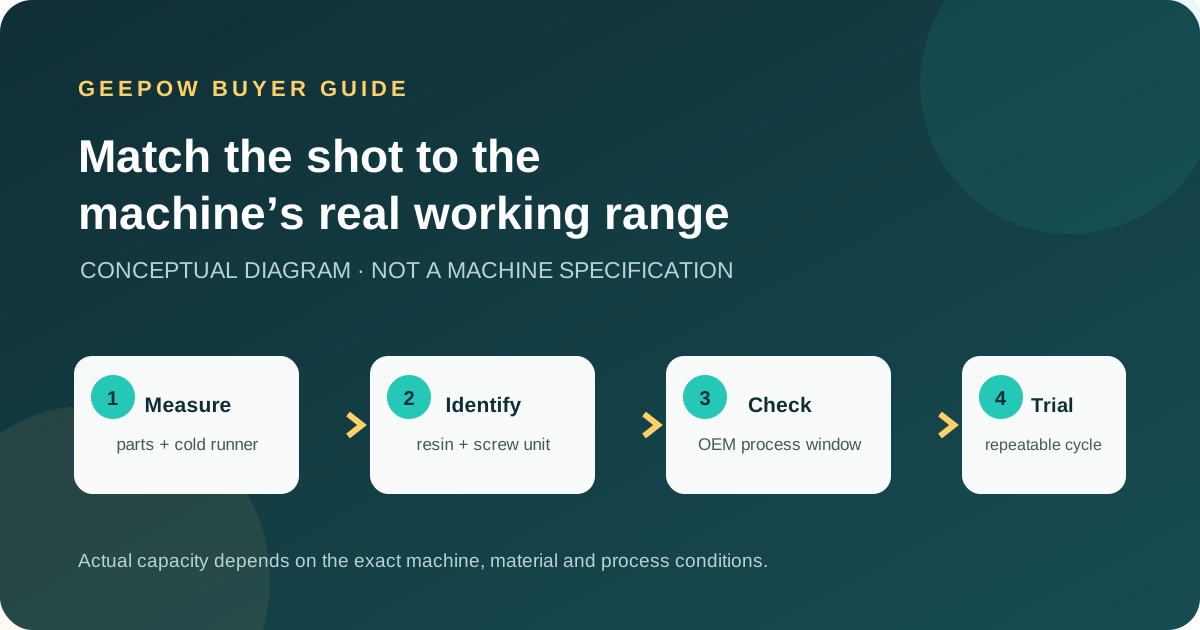
Short answer: compare the complete shot that the tool actually injects with the exact used machine’s injection-unit data for the resin you plan to run. A maximum shot-weight figure stated for polystyrene is not automatically a usable shot size for another polymer, and a press can still be a poor match if its metering, injection pressure, flow or cycle time is unsuitable.
Before shortlisting a press, weigh a representative full shot, identify the screw and barrel configuration, then ask for the original manufacturer’s data and a documented trial. Treat brochure limits as screening information; confirm the actual machine by model, year, serial number, installed options and process conditions.
Start with the shot the machine must deliver
For a cold-runner tool, include all cavities, sprue and runner in the shot mass. With a hot-runner tool, record the actual cycle and distinguish the melt injected into the cavities from material held in the hot runner. Do not add an arbitrary cushion percentage to a mass calculation: cushion is a process setting to verify during a trial, not extra molded-part weight.
Build a one-page requirement sheet before comparing machines:
- Resin grade and supplier data sheet, including any filler, color concentrate or regrind proportion.
- Number of cavities, net part mass and cold-runner/sprue mass, measured from the intended tool where possible.
- Target cycle and cooling time, especially for thin-wall or high-cavitation work.
- Required melt temperature, injection pressure, injection rate and screw recovery time from the validated process or mold trial.
- Installed screw diameter, screw geometry, injection unit identification and the machine’s actual material-specific data.
Use the right capacity figure, not just the largest number
Manufacturer tables may list calculated stroke volume, maximum shot weight for a reference material, injection pressure, injection flow and plasticising throughput. Those values describe different limits. A reference-material shot weight is not a universal mass limit: density, melt behavior and the manufacturer’s calculation method matter.
ARBURG’s 2022 plasticising guidance uses a 20–80% dosage-volume range as its design basis and separately discusses melting capacity, pressure and plasticising flow. The same guide explains that a larger screw diameter can reduce maximum achievable injection pressure, and that screw recovery must deliver the required shot within the available cooling time. Use that as a useful screening framework, not as a universal rule for every brand or machine.
| Check | What to compare | Why it matters |
|---|---|---|
| Dosage volume | Full shot volume against the exact unit’s usable stroke and OEM guidance | Too little or too much of the screw stroke can make stable processing difficult |
| Resin-specific shot data | Material named in the machine table against the resin actually planned | Reference PS values cannot be treated as the same mass for every resin |
| Injection pressure and flow | Required process values against the installed screw/unit configuration | Shot volume alone cannot establish that a thin-wall or fast-fill process is achievable |
| Plasticising capacity | Required shot weight and target cycle against recovery time and throughput | A machine may meter too slowly to meet the intended cycle |
| Condition and repeatability | Cycle logs and repeated shots, plus screw, barrel and non-return-valve evidence | Wear or a leaking check ring can undermine shot consistency even when the nominal unit looks suitable |
A model-specific example—and its limit
ARBURG’s published ALLROUNDER 375 V technical data illustrates why the resin column matters. For one listed 25 mm screw configuration in the 2.3 oz injection unit, the table gives theoretical maximum shot weights of 1.6 oz PS, 1.5 oz PC and 1.4 oz POM. These are the manufacturer’s published values for that specific machine family and configuration; they do not establish the capacity of another press or a guaranteed production shot.
For a used machine, request the original data sheet or manual that matches its nameplate and installed unit. Ask the seller to identify any later screw, barrel, nozzle or control changes. If documentation and nameplate do not agree, pause the comparison until the configuration is confirmed.
What to ask for before paying for a trial
- Photographs of the machine nameplate and injection-unit identification plate.
- The original OEM specification sheet showing screw diameter, stroke volume, material-specific shot data, pressure, flow and plasticising rate.
- A weighed shot or process record for a comparable resin and part mass, with material, screw position, cushion, cycle and reject rate stated.
- A witnessed trial using your resin and tool, if practical. Record repeated cycles rather than relying on a single good shot.
- Inspection evidence for the screw, barrel and non-return valve, especially if the press previously ran abrasive or corrosive materials.
Do not infer current stock, machine condition or achievable part quality from a generic model page. The result depends on the exact configuration, resin, tool, process window and measured condition. This checklist is a screening aid, not a substitute for an OEM application review or a production trial.
Frequently asked questions
Can I compare machines using the PS shot-weight rating?
Use it only as a named reference point. Check the manufacturer’s data for your resin and exact injection unit, then confirm the shot in a trial.
Is a larger injection unit always safer?
No. A larger unit may have different pressure, flow, metering and thermal-residence behavior. Verify the process variables together instead of buying the largest nominal shot capacity.
What if the seller cannot identify the installed screw?
Ask for clear identification and configuration evidence before treating the machine’s capacity as confirmed. If the screw or barrel was changed, the original machine brochure may no longer describe the installed unit.
Discuss a machine against your actual shot
Send the resin grade, full shot mass, cycle target and machine nameplate details when you request a machine-specific review. You can also browse standard injection molding machines and compare this guide with our glass-filled resin screw and barrel checklist.