
Used Injection Moulding Machine Cooling Water Requirements: What to Verify Before Buying
Check a used injection moulding machine’s water connections, supporting cooling equipment and factory supply with a practical buyer evidence sheet.
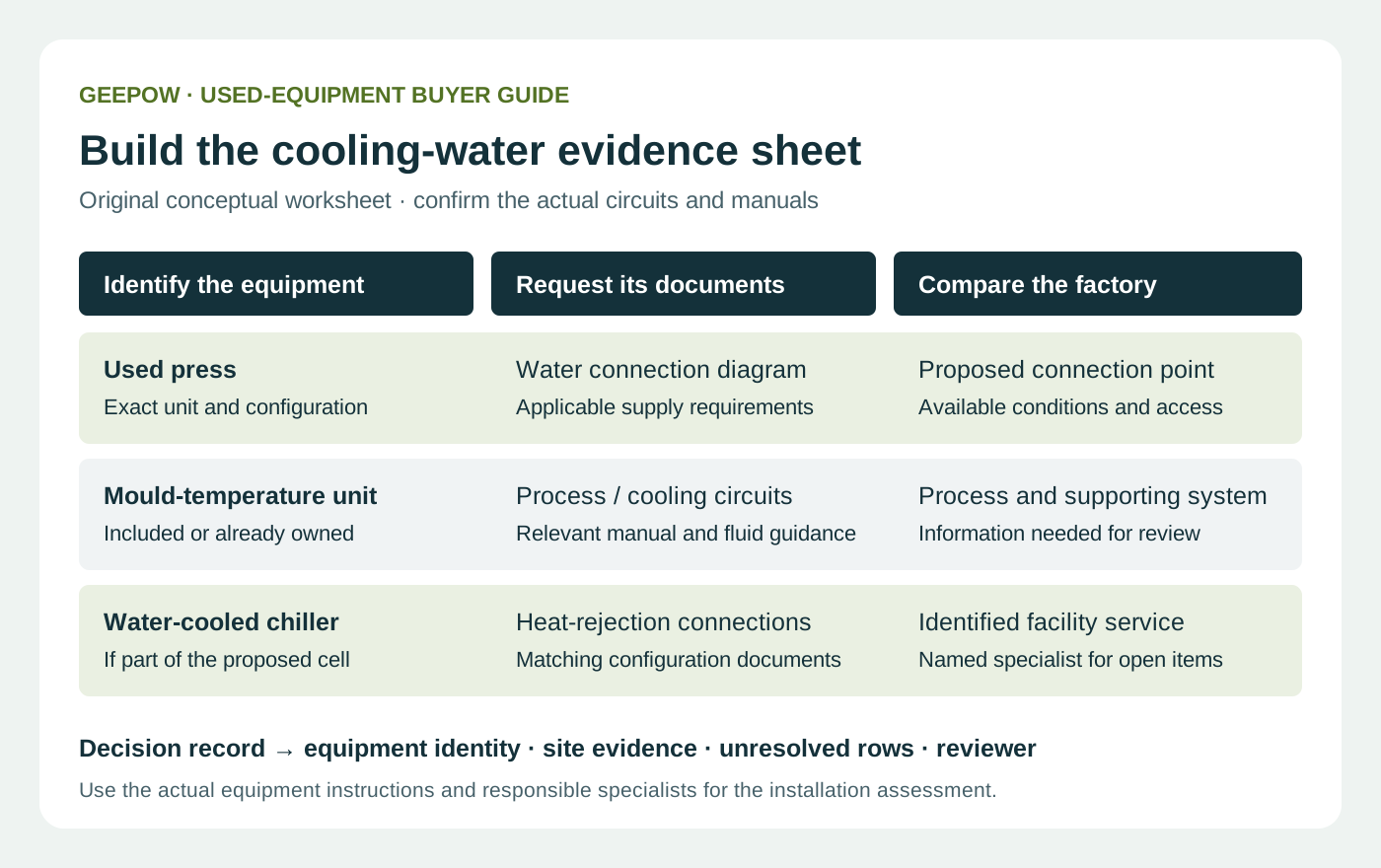
Before buying a used injection moulding machine, compare the offered equipment’s documented water requirements with the supply available at its intended factory connection. Identify each circuit, the applicable operating limits and the evidence available under the proposed production conditions. Include the press, mould-temperature equipment and any water-cooled chiller in the review when they form part of the proposed installation.
Illustration note: the original diagram above organises the purchasing information to collect. Each connection and operating limit must come from the documentation for the actual equipment and its site review.
A chiller model and a pipe size leave important questions open
A buyer may already own cooling equipment and hope to reuse it with a second-hand press. Start with an equipment list showing the exact offered press, the mould, the temperature-control units and the installed cooling arrangement. Mark which items belong to the seller’s offer and which will stay at your factory. A photograph of a nearby unit cannot establish what the quotation includes.
Keep cooling capacity, water delivery and the required temperature conditions as separate questions. A capacity figure alone leaves the proposed connections, available flow, supply and return conditions, fluid requirements and operating scope unresolved. Ask the responsible equipment and site specialists to compare those requirements for the intended installation.
Build a circuit-by-circuit evidence sheet
Use the following worksheet before accepting a statement that the machine can connect to the existing water system. The entries are purchasing questions. The matching equipment documents define which circuits exist and what information applies.
| Item to identify | Seller or manufacturer evidence | Destination factory evidence |
|---|---|---|
| Press water connections | Unit identification, connection diagram and applicable supply requirements | Proposed connection location and measured or documented available conditions |
| Mould-temperature equipment | Exact unit, process circuit and cooling-water connection information | Required mould process and supporting equipment already installed |
| Water-cooled chiller, if included | Configuration and documented heat-rejection connections | Identified facility service for the chiller’s requirements |
| Water and wetted materials | Applicable fluid-quality and treatment instructions | Water information and review by the responsible specialist |
| Hoses, fittings and routing | Required connection details and documented ratings | Proposed route, access and components selected for the actual installation |
Keep the equipment circuits distinct in the enquiry
The HB-Therm manual reviewed here lists main/return, cooling-water and separate system-water connections for specified temperature-control units. It also addresses water quality and treatment. This manufacturer example explains why a purchasing sheet should identify the connection’s function and the applicable manual, rather than grouping every fitting under a single “water inlet” description.
Frigel’s Microgel RSD page describes a temperature-control arrangement incorporating a water-cooled chiller and process pumps. This is another reason to list the complete proposed equipment. An added cooling unit can bring its own facility requirements. Neither manufacturer source establishes that its equipment is fitted to a particular used Haitian, Yizumi or Chen Hsong machine being offered.
Compare two proposed offers by their missing evidence
Consider an illustrative purchasing comparison. Offer A supplies a press photograph and names the buyer’s existing chiller as the cooling solution. Offer B identifies the actual press, provides the matching connection information and records the site data still needed. Offer B supports a more focused compatibility review, although both offers still require a machine-specific assessment.
Send the same circuit worksheet to each supplier and ask who resolves every open row. If the required information is unavailable, record the item as unresolved and decide whether a document review or an agreed inspection can close it before purchase. Keep responsibility for facility modifications explicit in the written scope.
Make the trial conditions traceable
Agree which equipment, mould and material will be used for the demonstration. Record the cooling arrangement and the relevant conditions that the responsible team is able to observe. Keep those records associated with the identified press and supporting units, alongside the sample and acceptance records.
If the seller demonstrates the press with a different cooling arrangement, describe that difference in the handover record. A successful demonstration answers questions about the arrangement actually tested. The destination installation needs its own compatibility review when its supply or supporting equipment differs. The used-machine acceptance-test guide helps organise the agreed evidence.
When the shortlist needs more work
- The offered equipment cannot be tied to a connection diagram or matching manual.
- A chiller capacity figure is the only evidence offered for the complete water arrangement.
- Included auxiliaries or destination-side responsibilities remain unclear.
- Water-quality information and applicable equipment requirements have not been compared.
- The trial uses a different supporting system and the difference is absent from the record.
Connection work and pressurised or hot-water systems require the responsible qualified personnel and the applicable equipment instructions. Have them determine the relevant flow, temperature, pressure, fluid treatment and component ratings for the actual installation.
Questions buyers ask
Can I choose the cooling system from the press’s clamp size?
Use the identified machine and process requirements. Clamp size alone leaves the mould, supporting equipment, site supply and intended operating conditions unspecified.
Does the same connector size establish compatibility?
A matching connector answers only one part of the review. Confirm its circuit function and compare the documented operating requirements and proposed connection arrangement.
Include the factory water information in your enquiry
Use the GEEPOW auxiliary equipment guide to identify the units in the proposed scope. Share the shortlisted press, mould, cooling-equipment details and destination with GEEPOW, together with the site information you have. Ask for missing water-system evidence to be identified before the equipment comparison is finalised.