Used Injection Moulding Machines: Check Material History Before a Resin Change
Plan a material-changeover evidence review before buying a used injection moulding machine. Includes a YIZUMI UN200 SKIII photo and a practical history checklist.
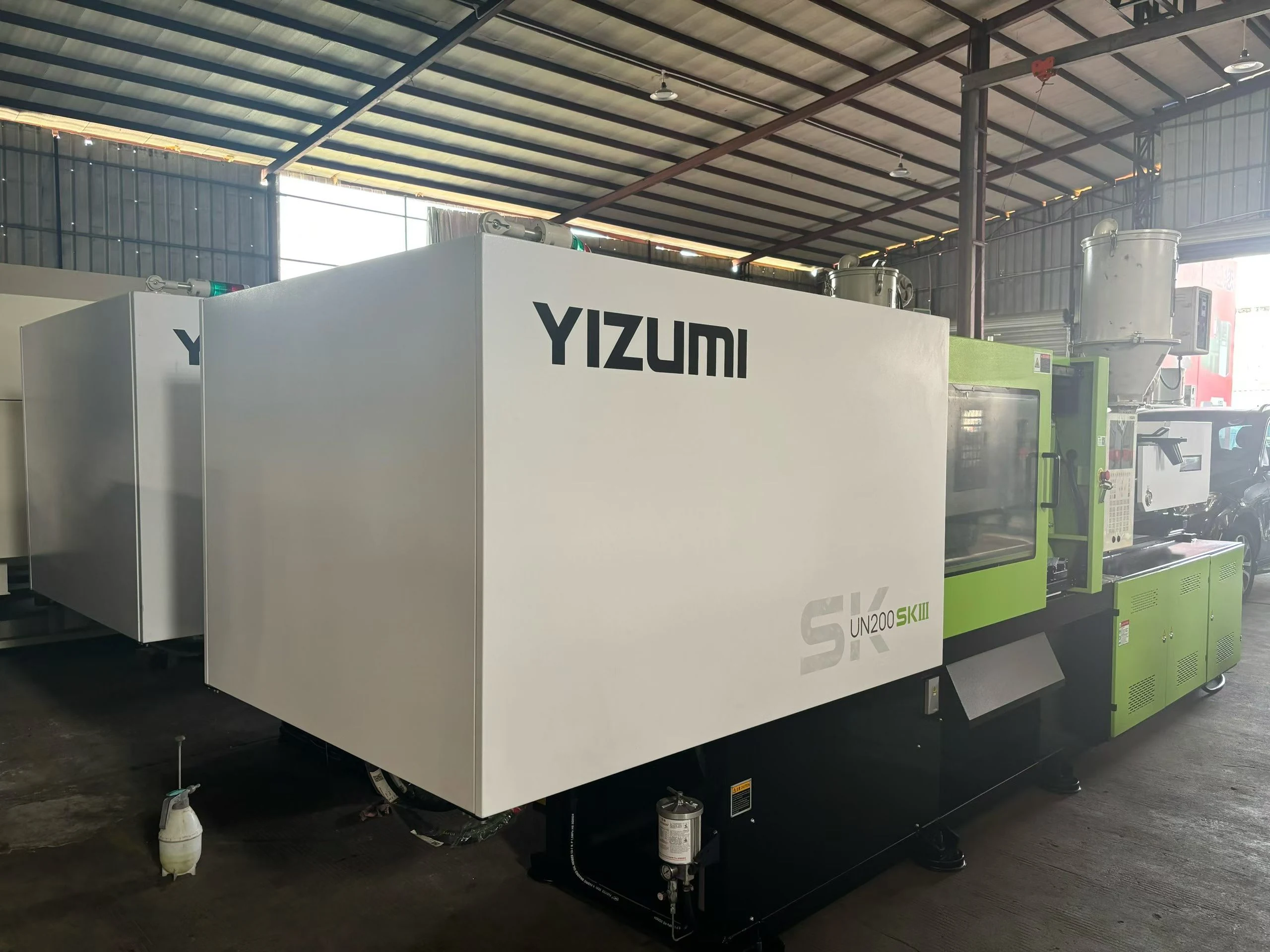
Before moving a used injection moulding machine onto a different resin, ask what it processed previously and agree how the changeover will be evaluated. A clean-looking cabinet, a general-purpose series name or a few acceptable samples does not document the material path. The buying decision should connect material history, installed components and a trial relevant to the intended part.
Photo note: the supplied photograph shows YIZUMI branding and a UN200 SKIII marking. The hopper and exterior are visible, but the photograph does not establish previous resins, internal cleanliness, installed screw specification or current machine condition.
The question is history, not just the next resin name
A buyer planning a light-coloured or visually sensitive part may need different evidence from a buyer continuing the seller’s existing material. Start by identifying the intended resin grade, colour, part requirements and any customer restrictions. Then ask the seller which previous materials and colourants are documented for the actual unit.
If the seller does not know, record the history as unknown. An unknown history is not proof of contamination, but it changes what needs to be investigated and what can be concluded from a short demonstration. Do not rewrite “not available” as “cleaned and approved” in a purchase comparison.
Separate a series description from the installed material path
YIZUMI’s SKIII manufacturer page describes the series and its injection-unit design. It is useful context for identifying questions, but it is not the build record of the photographed machine. Ask for the exact machine identification and documentation of the installed screw, barrel, nozzle and relevant auxiliaries, including known replacements.
For the supporting equipment, the auxiliary equipment checklist helps organise drying, handling and temperature-control questions. The presence of a hopper in a photograph does not identify the performance or condition of the wider material-handling arrangement.
A material-history evidence sheet
| Question | Useful evidence | If the answer is missing |
|---|---|---|
| What resins and colourants were used? | Production or maintenance records linked to the unit | Record unknown history and define further review |
| Which material-contact components are installed? | Component identification and replacement records | Ask for identification before making compatibility claims |
| What cleaning or purging was performed? | Product, procedure reference, date and scope | Do not treat an exterior clean as internal evidence |
| Were auxiliaries and the mould included? | A clearly stated material-path boundary | Separate machine, feed system and tooling questions |
| How was the new material assessed? | Identified resin, samples, observations and agreed acceptance checks | Limit conclusions to what was actually demonstrated |
Why a generic purging instruction is not a purchase specification
Asaclean publishes grade-specific instructions for different products, processes and applications. The relevant lesson for a buyer is to identify the exact product and applicable instructions. This article does not recommend a purge grade, operating temperature, screw speed or cleaning procedure for the photographed machine.
Have the responsible processing team select a method using the machine documentation, material supplier information and the cleaning-product instructions. Ask who performs the work and how its scope is recorded. A supplier’s general product guidance does not establish that a particular used machine has already undergone that process.
Agree what the material trial will actually prove
Define the intended grade and colour, the mould, the sample identification and the acceptance checks relevant to the part. For a visually sensitive job, agree how samples will be examined and recorded. If dimensional or other product properties matter, include the appropriate project-specific checks rather than assuming appearance settles the decision.
Keep samples associated with the identified machine and run. Record substitutions, interruptions and unresolved issues. If the seller demonstrates a different resin, that may answer selected operating questions, but it is not evidence of a successful changeover to your material.
A short trial also cannot establish that there will be no future contamination or rejects. The practical objective is a traceable buying decision with stated limits. Use the used-machine acceptance guide to organise the record without imposing universal pass criteria.
When to pause the shortlist
- The proposed material or part requirement is still undefined.
- The seller substitutes a series brochure for identification of the installed material-contact components.
- A claim of cleaning has no stated scope, or different parties assume the others cleaned the auxiliaries and mould.
- The demonstration uses a different resin but is presented as proof of your production requirement.
- The required records or sample checks cannot be supplied before commitment.
Questions buyers ask
Does a general-purpose SKIII label prove that my resin will work?
No. Review the actual configuration, material information and intended process. The series description is context, not machine-specific approval.
Should a machine with unknown material history always be rejected?
There is no universal answer. Decide what further evidence your application requires and whether it can be obtained within the proposed inspection and trial scope.
Bring the material question into the enquiry
Share your resin, colour, part requirements and destination with GEEPOW. Ask for a material-history review to be included in the used-equipment sourcing discussion, with missing records and proposed checks clearly identified.