Choosing a Used Injection Moulding Solution Provider: What the Quote Must Include
Compare used injection moulding solution quotes by equipment scope, interface ownership and written exclusions, using a Haitian MA 2500 III photo as a reference.
A useful injection moulding solution quote connects the machine to the part, mould, auxiliaries and agreed handover responsibilities. Before comparing totals, ask each provider to identify what is supplied, what is only being recommended, who verifies each interface and which tasks remain with your factory. A machine-only offer can be appropriate when those boundaries are explicit.
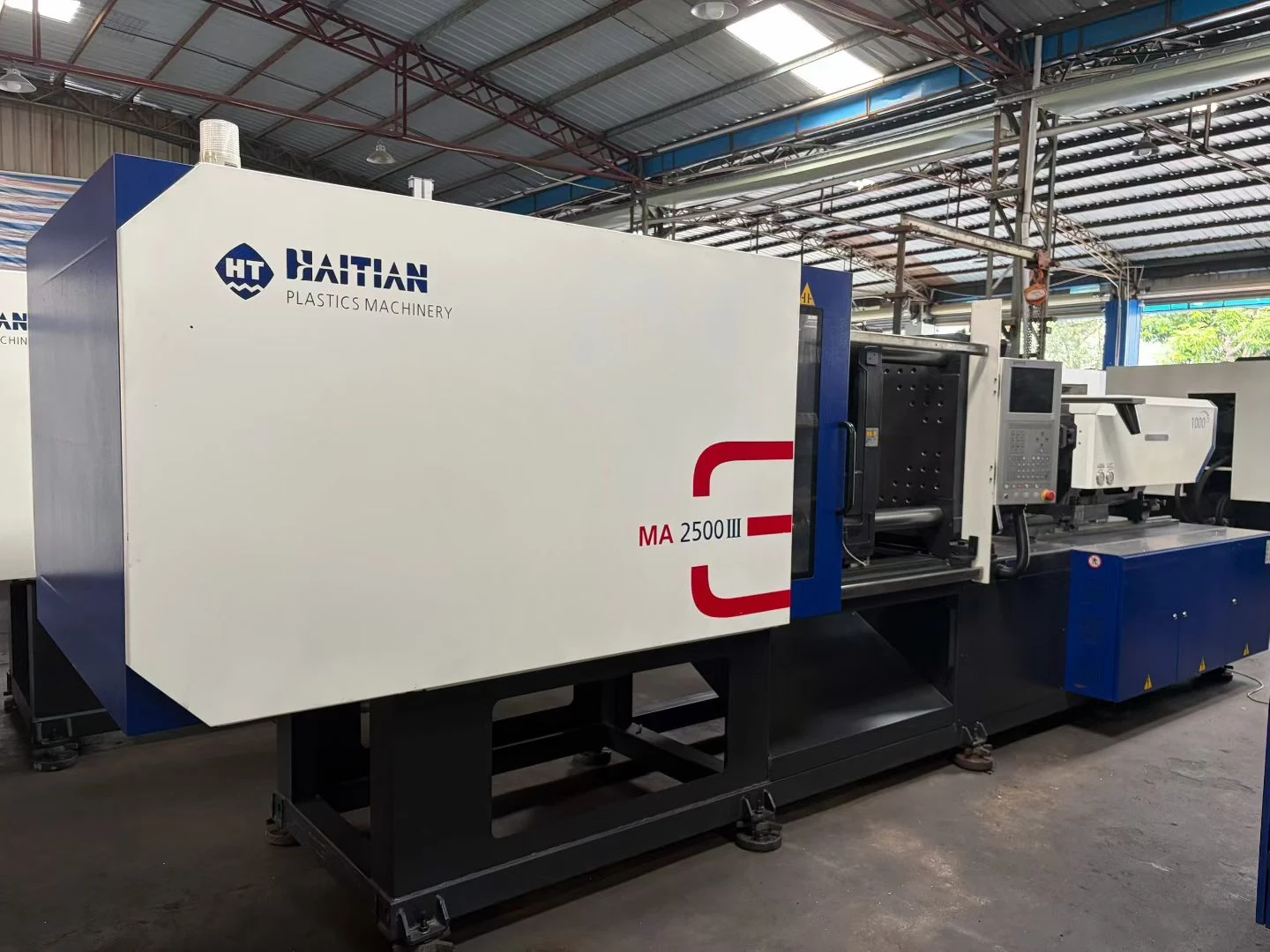
Photo note: the user-supplied image shows Haitian branding, an MA 2500 III marking and a view of the clamping area. It does not establish the unit’s serial number, current availability, age, condition or suitability for a particular mould.
Start with an output brief, then identify the equipment
Write a short brief describing the component, resin grade, mould identification, intended production pattern and destination. Add drawings, sample requirements and the factory utilities you actually know. Mark missing information as a question. A complete engineering specification is not necessary to begin, but unknowns should remain visible when an offer is compared.
For example, a buyer may own the mould and a chiller but need a used press and a take-out arrangement. Another buyer may require assistance identifying all three. Those enquiries can produce different legitimate scopes even when the press model is the same. A useful proposal explains the difference instead of hiding it behind the word “complete”.
Use a scope matrix to compare the proposals
The following is an editorial comparison tool, not a statement about the photographed unit or a standard package offered by GEEPOW. Ask the parties to complete it for their actual proposal.
| Scope item | Evidence to attach | Responsibility to name |
|---|---|---|
| Used press | Exact model, serial plate, configuration and condition record | Who identifies and inspects the offered machine? |
| Mould fit | Tool drawing and documented mounting, opening and ejection review | Who supplies the drawing and signs off the fit review? |
| Material and temperature equipment | Required duty, included units, connections and utilities | Who confirms the existing equipment can be reused? |
| Automation | Robot, gripper, controls, guarding and interface scope | Who integrates and assesses the assembled cell? |
| Trial and handover | Agreed conditions, records and document list | Who witnesses, records and resolves open items? |
| Export and site work | Packing, loading, transport and destination tasks | Which party handles each stage and its exclusions? |
Why the interface rows matter
ENGEL’s automation overview lists robots, conveyors, grippers, peripherals and guarding as separate elements of a production cell. That supports checking the interfaces separately; it does not mean those elements are included in a used-machine offer, or that a GEEPOW proposal includes the manufacturer’s services.
Ask a provider to distinguish an item being physically included from an item being technically checked. A dryer appearing in a photograph is not an agreed dryer specification. A visible controller is not evidence that the required options, documentation or third-party connections will transfer with the machine.
Read model information with its generation attached
The Haitian photograph is marked MA 2500 III. Haitian’s current Mars page reviewed for this guide presents the MA5 generation. Its current-generation figures and features should not be copied into an MA III quotation. Obtain the offered unit’s documentation and list any uncertainty in the scope matrix.
This distinction also applies when comparing a model reference with a machine-specific offer. A family brochure helps frame questions; serial-specific records and inspection define what is actually being proposed. Start with the existing used injection moulding machine references, then tie every shortlisted option to its own evidence.
Resolve exclusions before negotiating a final total
- Request separate identification of equipment, optional items and work performed by other parties.
- Identify any assumptions about your mould, existing utilities or auxiliaries.
- Record unresolved fit, interface or documentation questions and who will answer them.
- Ask what happens if the agreed review finds a mismatch, without assuming a warranty or refund term exists.
- Confirm that drawings, inspection records and the final offer use consistent machine identification.
Use the acceptance-test planning guide for the trial row. The commercial scope matrix addresses who supplies and verifies the system; it does not replace that machine-specific acceptance record.
Questions buyers ask
Does “solution provider” mean installation and commissioning are included?
Only the written proposal can establish this. Ask which tasks, location, personnel, documentation and responsibilities are included, and which require a separate agreement.
Can I reuse my existing auxiliaries?
Possibly, but identify their configuration and required duty first. Record who will review compatibility and what evidence is needed before treating reuse as confirmed.
Prepare a proposal that can be compared
Send GEEPOW your part, resin, mould information, destination and a list of equipment you already have. Request a scope discussion so the next enquiry can distinguish the used press, supporting equipment and the responsibilities that still need confirmation.