Direct Recycling vs Regranulate: What Used-Press Buyers Should Check
Separate direct flake processing from recycled-pellet molding. Check feedstock, installed hardware and trial evidence before choosing a used injection molding press.
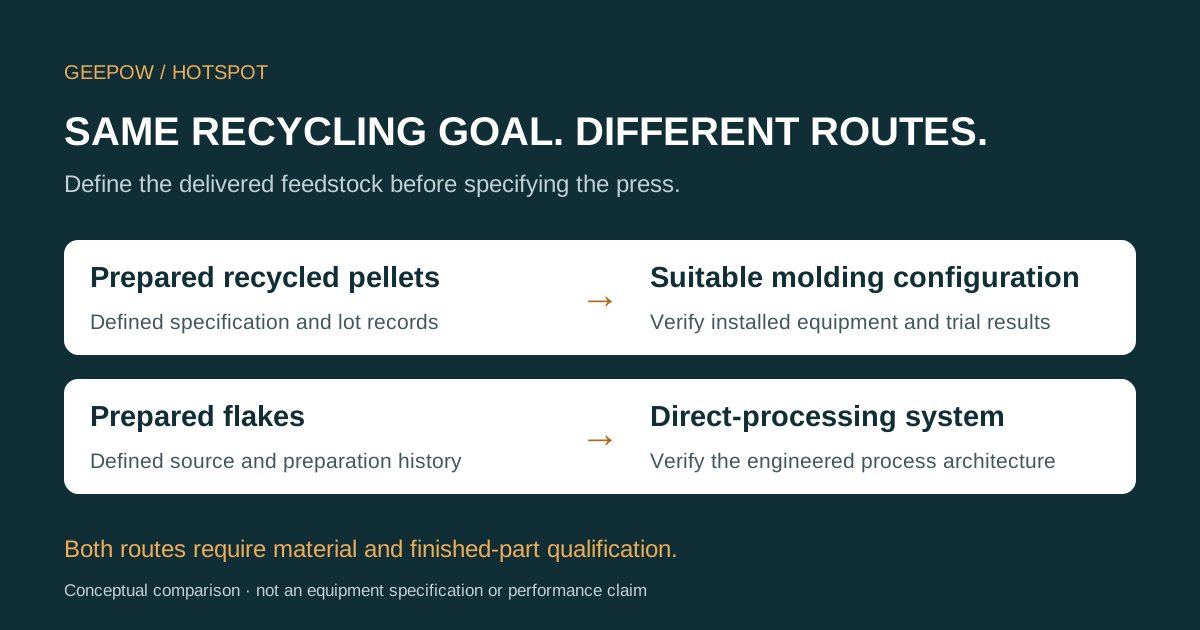
Direct processing of plastic flakes and molding recycled pellets are different equipment-selection questions. Before buying a used injection molding machine, define the feedstock you will receive, the preparation already completed and the functions still required inside the production cell. The phrase “suitable for recycled plastic” leaves too much unresolved to support a purchase decision.
Recycling remains part of the industry's current exhibition agenda: the Fakuma 2026 programme includes recycling and compounding/materials among its innovation award categories. The useful response for a used-equipment buyer is to investigate the process route behind the claim, then ask whether the offered machine actually contains the necessary hardware and controls.
Direct recycling is an established development, not a universal retrofit
In a 23 June 2021 technical announcement, ENGEL described a two-stage route that separates plasticising from injection, processes flakes without an intermediate pelletising step and permits integration of melt filtration and degassing. The date matters: this is a documented technology example, not a newly announced 2026 launch.
The purchasing implication is narrower than “any injection machine can process waste directly.” A conventional used press cannot be assumed to reproduce that route merely because its clamp force or shot capacity looks adequate. Request a configuration-specific assessment from the relevant technology provider before treating direct processing as an available capability.
Define the material before discussing the machine
For this buying comparison, regranulate means recycled material supplied as pellets after a reprocessing route. Flakes or regrind describe a physical feed form; they do not, by themselves, establish cleanliness, consistency or processing suitability. Ask the supplier to describe the actual material rather than relying on a loose trade name.
ARBURG distinguishes post-consumer recyclate from post-industrial recyclate by its source. That origin label is useful, but it does not replace the specification of the delivered lot. Keep origin, feed form and preparation history as separate fields in the request for quotation.
| Proposed feedstock | Question before selecting a press | Evidence to request |
|---|---|---|
| Prepared recycled pellets | What grade and lot variation is the application expected to handle? | Supplier specification, lot records, preparation instructions and representative samples. |
| Controlled in-house regrind | What enters this stream, and how is it segregated? | A documented material stream, blend definition and handling procedure. |
| Prepared flakes for direct processing | Which preparation and melt-treatment functions remain necessary? | A complete process layout and confirmation of the proposed direct-processing configuration. |
| Mixed or poorly documented waste | Can the intended material and product requirements be established? | Material characterisation before a meaningful machine-performance commitment. |
This table is a sourcing framework. It does not prescribe universal drying temperatures, blend percentages or acceptable contamination limits; those depend on the material, process and finished-part requirements.
Check installed capabilities, not only the model name
ARBURG's published recyclate package combines hardware and software, including a modified cylinder module, a wear-resistant screw and controller assistance. It provides another concrete example of why a recycled-material application can depend on configuration. It does not establish that any used machine carrying that brand has the package installed or that a particular upgrade is available.
For the actual used press, request the screw and barrel identification, relevant installed options, maintenance or replacement records and the controller version. Where special feeding, filtration or degassing is proposed, ask who specifies it, who supports it and what evidence will demonstrate that the combined system works for your material.
- Separate standard equipment from additions. List what is already on the offered machine and what is only proposed.
- Record the material envelope. Agree which grades, lots or defined blends the supplier will assess.
- Check the whole process. Include material preparation and handling alongside the press in the quotation scope.
- Define support ownership. Identify who handles a material-related problem and who handles an equipment fault.
Design a trial around the risk you need to resolve
A visually acceptable sample is a useful start, but a sourcing decision needs an agreed link between the material, the process settings and the acceptance criteria. The following is a proposed buyer workflow, not a manufacturer-certified test protocol.
- Identify the trial material. Preserve the supplier, lot identity and agreed preparation or blend record. Do not substitute an easier feedstock without documenting the change.
- Identify the configuration. Record the machine serial number, injection unit, installed options and participating peripherals.
- Define accepted parts. Agree appearance, dimensions and any application-specific performance checks before the trial.
- Document production behaviour. Retain settings, output counts, rejects, interruptions and observations relevant to the original concern.
- Test the proposed range. Where lot variation is part of the business plan, agree representative additional lots and acceptance criteria with the material and process specialists.
- Resolve the exclusions. Record which claims remain untested and what additional work is required before purchase acceptance.
Use our running-video checklist to connect recorded behaviour with the offered equipment. The trial record should remain useful after the sales demonstration has ended.
Compare process routes with a complete cost boundary
Removing a process step is an interesting engineering opportunity, but it is not automatically a lower-cost result for every factory. Compare feedstock preparation, equipment additions, maintenance, accepted output, scrap handling and support as explicit line items. Do not copy a manufacturer's savings claim into the economics of an untested used press.
Where electricity is material to the decision, use a consistent boundary and accepted output, as explained in our energy cost per good part guide. Keep assumptions visible so that a cheaper feedstock price cannot hide additional preparation or qualification work.
Questions buyers often ask
Can a conventional used press run recycled pellets?
That requires an application-specific assessment. The pellet specification, installed injection unit, machine condition and part requirements must be considered together; a generic yes or no is not enough for procurement.
Is direct flake processing simply a hopper change?
Do not budget it on that assumption. The documented two-stage example involves a different process architecture. Obtain a supported equipment scope for your material and intended product.
What is the most useful starting point for a quotation?
Send the material specification and representative sample details, feed form, target part, mold information and required accepted output. Browse GEEPOW's machinery listings, then submit your material and production requirements. Confirm the exact machine's condition, configuration, availability and trial scope before committing to a recycled-material application.