Used Haitian for Headlamp Lenses: Compare the Coated Samples
Compare moulded and coated samples when buying a used Haitian for clear PC headlamp covers. Check trial scope and the installed injection configuration.
When buying a used Haitian to mould clear polycarbonate headlamp covers, agree how samples from the offered machine will be checked before and after the intended coating process. An uncoated sample can support the moulding review. If the purchase depends on coated appearance or performance, put the coating step, its inspection method and its acceptance criteria in the purchase plan.
The 500–3,300 metric-tonne range is a sourcing range. Record the offered press’s nameplate force and original unit, its installed injection unit and the tool drawing. Clamp force alone cannot tell you whether the mould fits, the injection package suits the shot or the samples will meet the coating requirements.
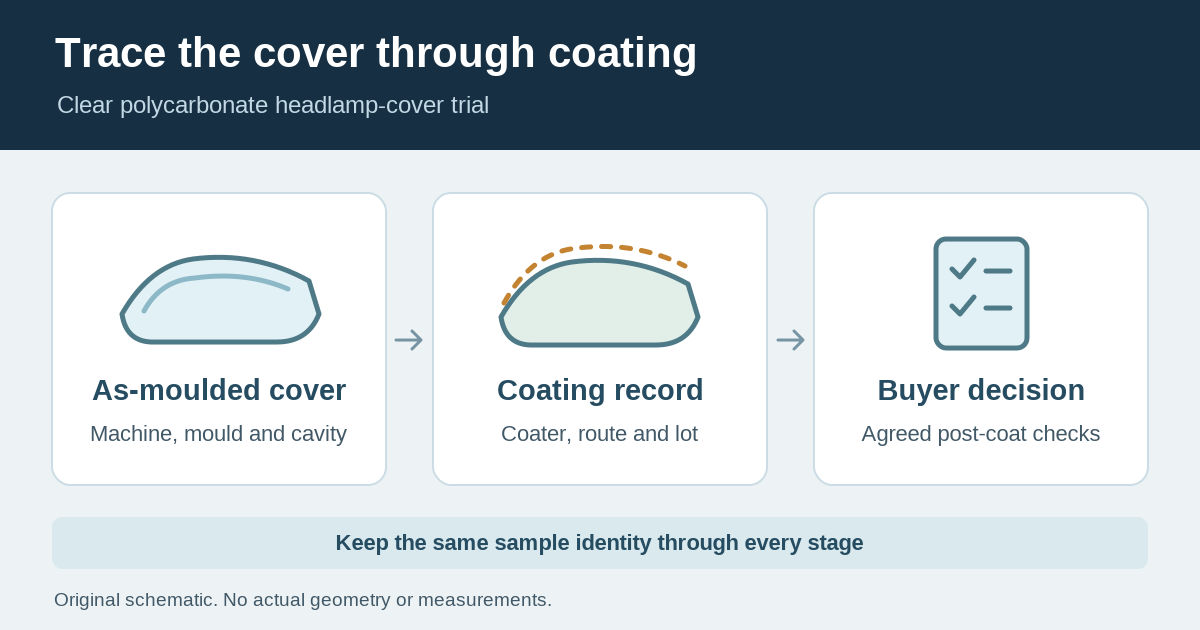
Illustration: an original sample-traceability worksheet. The diagram shows no actual lens geometry, machine or test result.
What Haitian’s headlamp experience can establish
In a 2022 case profile, Haitian International describes Hardcoat Technologies moulding polycarbonate automotive lighting lenses and applying a thermal hardcoat. The profile lists a mixed fleet with Mars and Jupiter machines and reports that the customer specified smaller injection drives on some larger machines for its tools and material residence time.
The profile establishes an application example. It does not assign every reported machine to the same lens or specify the injection unit for your project. Ask for the complete configuration of the individual press and the earlier material history. A press may suit the mould’s dimensions while its injection unit still needs a separate check against the proposed shot, material grade and run conditions. Use the mould-fit dimensions guide to check the loading path, tie-bar spacing, tooling and take-out envelope.
Define the coating route before comparing offers
This guide concerns the clear outer cover, not an internal light guide, collimator or a decorative mask. Specify the lens drawing revision, approved resin grade and the intended coating route. Momentive’s SiLFORT UVHC3000K data sheet gives one example of a UV-curable coating intended for vehicle headlamps. It asks users to determine a workable window for the article and installation. That is a separate reference from the thermal hardcoat in Haitian’s case. Use the coating selected for your part and the requirements agreed with the coating specialist.
Ask both suppliers to carry the same sample identifiers across their work. Keep a confirmed cavity and cycle or sample reference with the uncoated inspection, then connect it to the coating lot and the subsequent observations. Follow the agreed method for retained reference pieces and separate specimens if a test is destructive. Plan an inspection for cracking, crazing or other relevant defects using the product requirements. A post-coat defect alone does not identify the press, mould, handling or coating step as its cause.
Record three decisions separately
Use this purchasing worksheet to prevent a coated-lens requirement from disappearing into a general machine demonstration. Set the methods and limits with the responsible suppliers and the buyer’s quality team.
| Decision | Evidence to carry forward | When to leave it open |
|---|---|---|
| Machine and tool can run the trial | Press serial number, installed injection package, mould revision, resin grade and the site’s agreed operating scope. | The actual configuration differs from the offer or the intended tool and resin cannot be run. |
| As-moulded covers meet the trial scope | Sample and cavity references, recorded process and material preparation, agreed dimensions and optical or visual observations. | The evidence is a video or an unlabelled showpiece. A stress screen, if specified, needs an agreed method and interpretation. |
| Coated samples meet the agreed checks | Linked sample identities, actual coating route and lot, inspection timing and the buyer’s agreed post-coat results. | The coater used a different route, the samples cannot be traced to the trial or the agreed tests are incomplete. |
Compare the work included in each quote
In an example comparison, one offer includes moulding and the inspection of raw covers. Another also arranges delivery to the intended coater and return of a traceable sample report. Compare which work is included, who pays for an additional trial and what happens if a check is deferred. A buyer may accept a machine-only test at the seller’s shop while leaving coating validation open. Tie the two decisions to written responsibilities and dates.
Set the machine demonstration scope using the used machine acceptance-test guide. Leave handling, coating and testing to qualified personnel and document the scope each provider can perform. Product-specific validation of the completed lamp assembly remains a separate review.
Buyer questions
Will a clear as-moulded sample prove the coating will meet the drawing?
No. Check coated samples against the agreed requirements, using a documented route and sample identifiers that link the result to the intended trial.
Can I choose the injection unit from the machine family and clamp tonnage?
No. Confirm the installed injection unit and its options, then assess them for the actual tool, shot and resin grade. The case profile is a reason to ask for the specification, not a sizing table.
What if the seller has no coating equipment?
Identify who will carry out that part of the trial and how the samples will be tracked. Write down what can be accepted at the seller’s shop and which findings are due from the coater before purchase acceptance.
Request a headlamp-cover trial proposal
Start with the 500–3,300 tonne used injection moulding machine sourcing page, then send the tool, resin and coating requirements. Include the part and mould drawings, installed injection configuration if known, split of trial work and required sample reports. Ask for a written offer tied to the individual machine.