
Used Haitian Jupiter III: Inspect Locking Before Buying
Review a used Haitian Jupiter III’s locking hardware, recorded sequence and unresolved findings. Define inspection, repair and retest scope before buying.
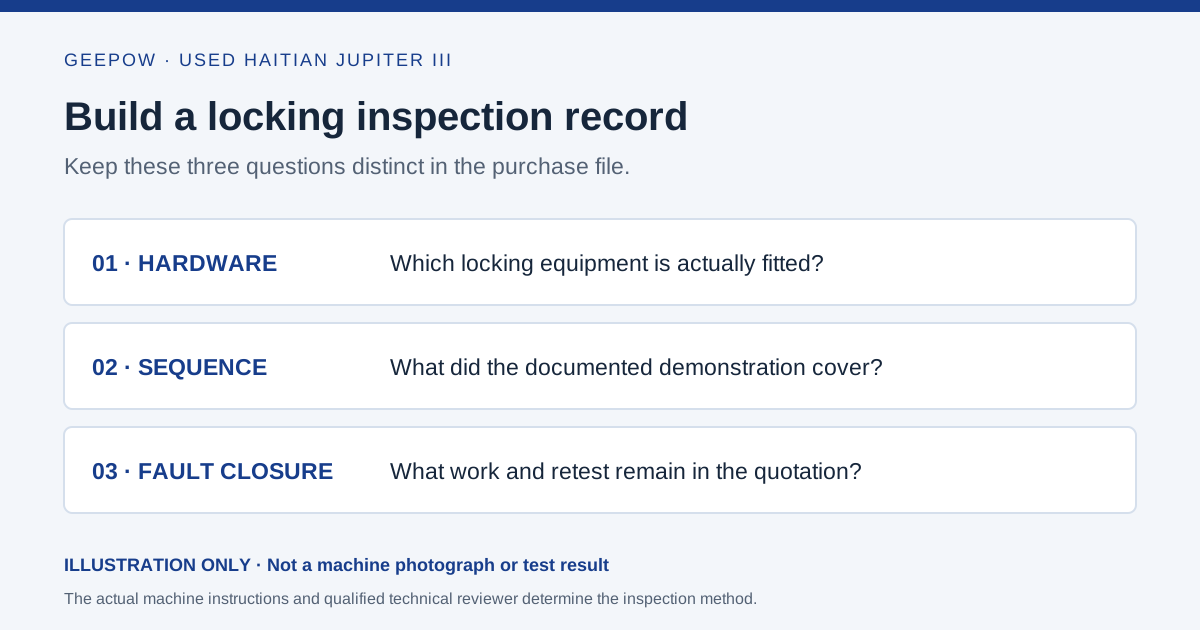
Before accepting a used Haitian Jupiter III, ask for a locking inspection tied to the offered serial number: identify the installed locking equipment, retain a documented demonstration and require any findings to be closed through agreed work and retesting. A controller indication or a short video provides only the evidence actually recorded. Have a qualified technician define what further checks the particular machine needs.
For a project in the 500–3,300 metric-tonne used-machine procurement range, confirm the individual nameplate clamping force and original unit first. Then examine the locking arrangement as its own condition question. The buying range is not a specification or an availability claim for any Jupiter III.
The illustration is an original purchasing worksheet. It is not a photograph of locking hardware, a maintenance instruction or a measured result.
Identify the Jupiter III equipment being offered
Haitian’s Jupiter III introduction describes four independent short-stroke locking cylinders and a parallel locking system. These are descriptions of the named series. They do not establish the present condition, installed replacements or demonstrated operation of a used unit.
Request the applicable machine documentation, a clamping-unit identification record and available service history. Ask the technician to reconcile the fitted locking components, relevant sensors and controller identification with those records. Use the manufacturer’s component names and locations so the inspection report and parts quotation refer to the same equipment.
Separate three types of evidence
A hardware inspection, an observed sequence and an assessment of clamping performance answer different questions. The purchase file should make their coverage clear. A displayed locking status records a control state; it does not, by itself, report the condition of every mechanical contact or confirm a measured force distribution.
Likewise, a photograph of clean components cannot establish what happened during the recorded sequence. Ask the reviewer to explain which conclusions come from physical inspection, which come from the controller record and which require additional measurement under the applicable procedure.
Use a locking evidence and repair table
This original checklist gives the buyer a structure for the inspection request. It does not prescribe adjustment values, allowable wear or a universal acceptance threshold.
| Buying question | Evidence to retain | What remains open without it? |
|---|---|---|
| Which locking arrangement is fitted? | Serial number, applicable document edition, identified locking and clamping components, relevant sensors and known modifications. | Whether the report and proposed spare parts apply to this machine. |
| What physical condition was examined? | The technician’s component-specific inspection scope, findings, access limitations and any relevant service or replacement records. | Which areas were actually assessed and which need further inspection. |
| What sequence was demonstrated? | The identified setup, controller statuses available to the inspector, time-linked observations, alarms and any interventions. | Whether the evidence shows the agreed locking and release functions under the stated conditions. |
| What does the monitoring establish? | The identity and documented role of the available monitoring, together with the reviewer’s interpretation of the retained indications or records. | Whether a displayed value is being presented beyond its actual measurement coverage. |
| What closes each finding? | Diagnosis, itemised corrective work, responsible party and relevant retest evidence attached to the offer. | Who must complete the work and what result will satisfy the purchase condition. |
Record the mould-height setup used in the demonstration
The Haitian Jupiter III technical datasheet lists minimum and maximum mould height, opening stroke and maximum daylight separately. Those are different specifications. Have the responsible reviewer confirm the permitted setup for the actual machine and the tool or test arrangement before interpreting a locking demonstration.
Record the demonstrated mould-height setup and the other conditions required by the agreed method. If a substitute tool was used, describe it and state the limits of the conclusion. A successful observation at one setup should not be written up as acceptance of every mould height or of your intended production tool.
This does not require the buyer to invent a test across the entire published range. Ask the machine specialist to define a suitable plan, including which functions, conditions and instruments are relevant. Retain unexplained alarms, unsuccessful attempts and corrective interventions in the record.
Price the unresolved work before comparing offers
Consider an illustrative purchasing comparison, with no real stock or prices implied. One offer includes a clip showing the press closing. A second includes an identified locking inspection, a list of findings and a written scope for resolving them. The second record may make the outstanding work easier to assess, but neither description alone proves that its machine is in better condition.
Ask both sellers to answer the same questions. For every open finding, identify who supplies the diagnosis, which work is included, whether parts are identified and how the result will be checked. Compare the complete documented offers after those responsibilities are clear. Keep the inspection and retest requirements in the machine acceptance agreement.
Buyer questions
Does a complete dry cycle prove that the locking mechanism is healthy?
It demonstrates the recorded sequence under that setup. Mechanical condition, monitoring coverage and any required performance measurements need their own documented assessment.
Does an absence of alarms close the inspection?
Ask what the installed monitoring checks and what the technician examined separately. Retain any inaccessible areas or deferred checks rather than treating an unrecorded condition as satisfactory.
Should I accept a promise to adjust the mechanism after delivery?
Have the responsible specialist define the work, acceptance evidence, location and commercial responsibility before agreeing. Qualified personnel must follow the machine instructions and site procedures. Do not override guards, force a locking movement or improvise an adjustment to obtain a demonstration.
Discuss a Jupiter III inspection with GEEPOW
Review the used two-platen machine procurement page, then send the Jupiter III identification and locking inspection questions. Include the available documents, known findings, intended mould and destination so the quotation can identify the evidence and work still required.