Used two-platen injection moulding machines
Shortlist a used Haitian, YIZUMI or Chen Hsong press around your mould and production requirements. For procurement briefs targeting 500–3,300 metric tonnes of clamp force, confirm the exact machine's rating and original units from its nameplate and applicable technical sheet. Model numbers alone do not establish clamp force. A two-platen layout deserves consideration when opening space, a large tool or factory layout drives the decision; the individual press still needs to pass the fit, condition and trial checks below. Availability, configuration and quotation require confirmation for each offered unit.
Two-platen or toggle: which solves your mould problem?
A two-platen layout can shorten the machine by removing the rear toggle arrangement. Chen Hsong describes this benefit for its Supermaster TP, but compare the actual dimensions of your candidates. Check mould thickness, opening stroke and maximum daylight together, then allow for part removal, cores, ejectors and the robot path. A toggle press remains a candidate when its documented limits meet the same brief. Choose against the complete tool and cell layout rather than a mechanism label.
Does the heavy tool fit the actual clamp?
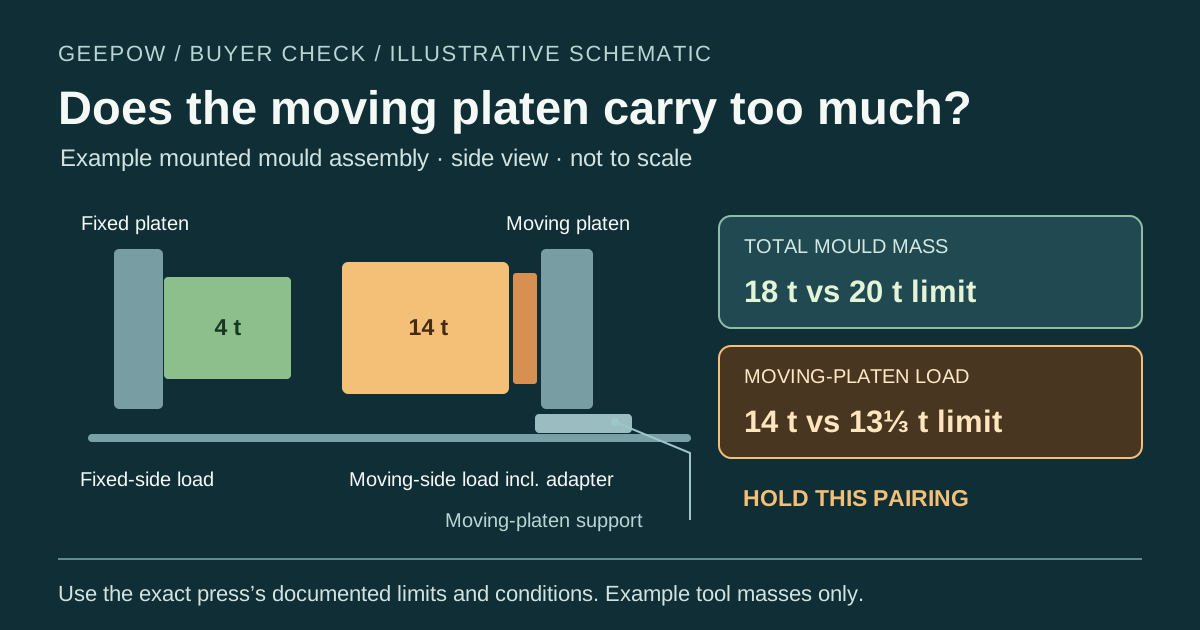
Tie-bar spacing is only the first check. Match the platen mounting pattern, mould thickness range, nozzle interface and ejector arrangement to the tool drawing. Obtain both total mould and moving-side load allowances, including adapters, and identify the moving assembly's centre of gravity. YIZUMI documents extended moving-platen supports on its DP series; inspect the supports fitted to the used unit. A family brochure cannot establish their condition or approve your particular load.
Can the mould enter and the finished part leave?
Ask for a dimensioned loading route from the receiving aisle to the platens, plus the production opening needed for ejection and take-out. Side entry requires the appropriate installed access arrangement; YIZUMI lists automatic tie-bar retraction as an option on DP. Confirm the option record, usable side and complete change procedure on the offered press. Include guards, lifting equipment, headroom and adjacent machinery in the drawing. A wide opening in a photograph does not establish clearance at your plant.
What makes the lower quotation better value?
Compare quotations at the same agreed handover condition. Record identified repairs, installed injection unit and screw, required core pulls and interfaces, controller backups, spares, removal, packing, freight and commissioning. Confirm utilities and installation work at destination. An inexpensive press with unresolved clamp wear, missing options or an unverified injection unit leaves essential costs open. Separate included work, exclusions and unpriced items; request itemised amounts before comparing the total cost to reach the agreed production condition.
Who proves the machine is ready after installation?
Before purchase, name the seller's trial technician, the buyer's acceptance representative and the party responsible for installation and commissioning. Agree the mould, resin, auxiliaries, test duration, consecutive sample count and measurable acceptance limits. Record part dimensions and weight, rejects, cycle time and machine alarms against those conditions. Have a qualified technician document clamp locking, mould protection, interlocks and loaded operation under the applicable machine instructions. Separate the pre-shipment trial from destination reassembly, alignment and repeat acceptance; assign unresolved work, cost and sign-off in writing.
Compare the purchase evidence
| Before shortlisting | Before purchase acceptance |
|---|---|
| Nameplate, serial number and applicable technical sheet | Recorded clamp-force units, injection-unit identity and installed options |
| Mould drawing, half masses and mounting details | Documented load limits, opening clearance and approved loading route |
| Condition report and repair proposal | Completed-work record, remaining defects and agreed remedy |
| Itemised quotation and trial proposal | Witnessed results, shipping scope and named commissioning responsibilities |
Send these six details for a focused enquiry
- Target clamp force with units; preferred brand, year range and any offered machine nameplate.
- Mould dimensions, thickness, fixed/moving masses, mounting drawing and centre of gravity.
- Part drawing, resin grade, cavity count and shot requirement including runner.
- Opening, ejection, core-pull, hot-runner and robot requirements.
- Destination, supply voltage/frequency, cooling provision, access and headroom.
- Budget basis, required timing and proposed trial, removal and commissioning scope.
Technical references
Reviewed 18 November 2026. Manufacturer and material-supplier references explain what to check; they do not certify the condition or configuration of any offered used machine.
- YIZUMI DP Series — clamping unit and optional tie-bar retraction
Manufacturer reference for extended moving-platen supports and optional automatic tie-bar retraction. Verify the actual used machine's generation, options and condition.
- Chen Hsong Supermaster TP — two-platen configuration
Manufacturer reference for the two-platen layout and shorter overall length without a rear toggle arrangement. Actual dimensions and mould limits remain machine-specific.
Share with your buying team
Send this page to a colleague to review the machine requirements.