Used Injection Moulding Machine Nozzle Fit: Check the Sprue Bushing Before Buying
Check the nozzle seat, orifice and reach before moving an existing mould to a used injection moulding machine. Use a two-sided fit sheet and a witnessed trial.
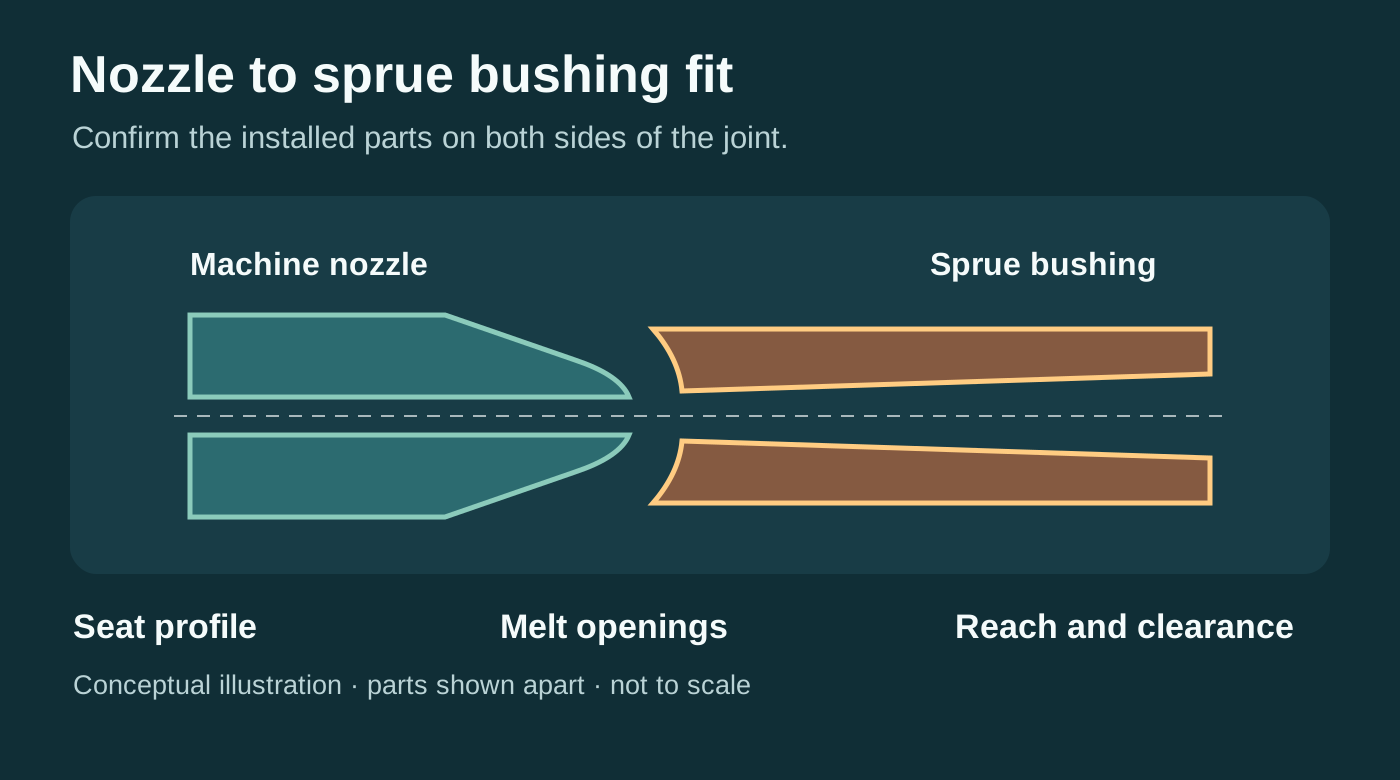
Before buying a used injection moulding machine for an existing mould, compare the installed nozzle and the tool’s sprue bushing as a pair. Ask for the seat profile, the two melt openings and the usable nozzle reach from a shared reference plane. If the seller proposes another tip, identify it by part number and make the completed fit and trial part of the purchase terms.
Conceptual illustration. The diagram identifies the checks to request and provides no dimensions for a particular machine or mould.
Start with the mould that needs to run
Get the current sprue bushing drawing from the toolmaker or the measurements of the installed part. An older drawing may describe a bushing that has since been replaced. On the press side, ask for the offered machine serial number, injection unit identification, and a clear record of the installed tip or extension. Include the drawing revision and units on both sides. If you are moving several tools, start with the deepest recessed seat or any tool with a different seat profile.
Component maker DME identifies seat radius and opening size as separate fit checks for its three-plate extension bushing. MISUMI’s dimensional reference illustrates nozzle curvature, hole diameter and projection from the fixed platen. Use these references to identify what to measure. The machine and tool drawings determine the actual dimensions and acceptance tolerances.
Use one fit sheet for the machine and tool
| Check | Ask the seller for | Ask the toolmaker for | What closes the item |
|---|---|---|---|
| Seating profile | Installed tip profile and radius where applicable, with a photo of the contact surface | Seat profile and radius or approved mating tip drawing | Toolmaker confirms the intended contact geometry. Any damaged or worn surface is assessed separately. |
| Melt path | Diameter at the nozzle exit and tip type | Diameter at the bushing inlet and any specified offset or fit requirement | Both openings align as intended. Confirm the transition and expected sprue release with the toolmaker. |
| Reach and clearance | Usable projection from the fixed platen with the proposed tip fitted, plus its outer envelope | Seat depth from the mould mounting face and dimensions of the locating-ring opening | The technician checks the two datums against the assembled machine, including clearance through the ring. |
| Trial | Guarded observation and an agreed run using the fitted tip | Expected sprue release and a sample acceptance criterion | Record the tested configuration and results, including any visible leakage or sprue sticking. |
Agree who owns a mismatch before the machine ships
When the toolmaker specifies another tip, ask the machine supplier to confirm its compatibility with the installed nozzle body and any heater or sensor arrangement. If the seller proposes an extension, have the parties check its reach and outside clearance with the actual tool. Write the part number, installer, inspection evidence and retest responsibility into the offer. Leave any unproven fit item open if the tool cannot be tested until arrival.
Use the full mould fit checklist for tie-bar, platen and opening dimensions. This nozzle check also belongs in the inspection scope when comparing equipment from the used machine sourcing catalogue.
Questions to settle before purchase
Does the locating ring prove the nozzle will reach the seat?
The ring helps locate the mould. Confirm the nozzle projection, seat depth and clearance separately against the assembled tool and press.
Can I specify one seat radius and orifice difference for every mould?
Use the drawings or approved component data for each pair. Special nozzles and extensions can have different requirements. For a hot-runner tool, obtain the hot-runner supplier’s machine-side inlet drawing.
Ask GEEPOW about a used machine for your existing mould. Include the installed bushing drawing, seat depth and resin, plus the candidate machine model or serial number if you have it.