
Mould Clamp Checks Before Buying a Large Used Injection Moulding Machine
Check platen fixing points, mould clamping edges and the complete mounting hardware before buying a large used injection moulding machine.
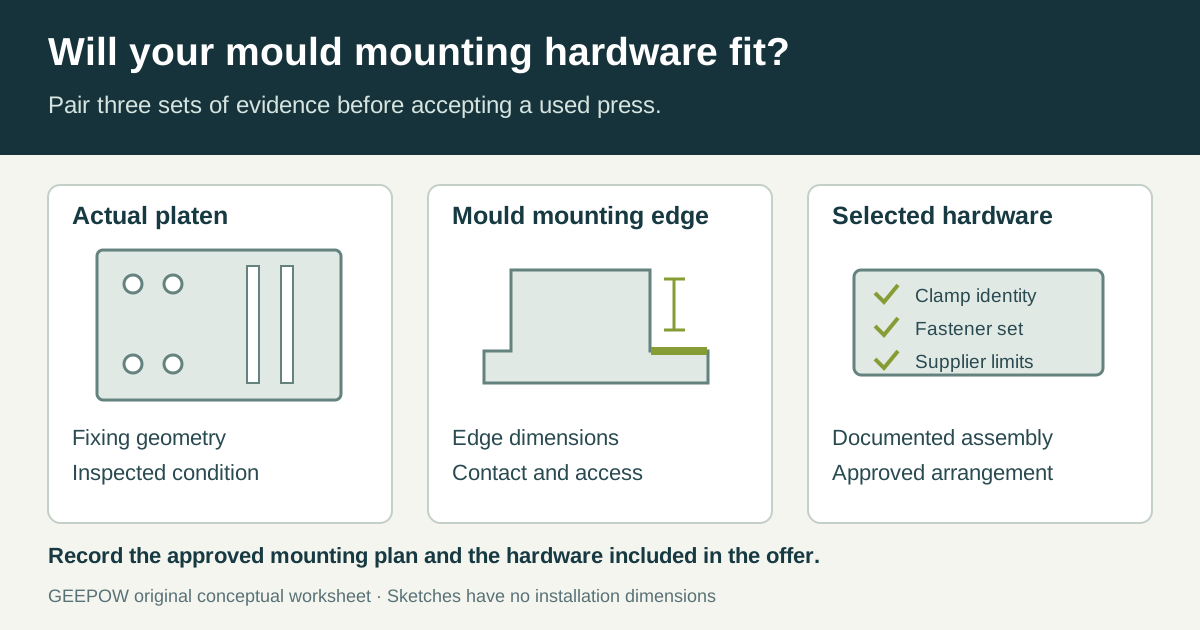
Before buying a large used injection moulding machine, ask for a mounting plan that pairs each mould half with the actual platen and the proposed clamps, studs, nuts and washers. Get the fixing geometry, hardware identification and condition findings together. This lets your tooling engineer decide whether the offered machine can accept your existing mould with the supplied mounting equipment.
For buyers sourcing a used Haitian, YIZUMI or Chen Hsong press in the 500–3,300 metric-tonne clamp-force range, this review belongs in the quotation stage. Record clamp force from the machine identification and manufacturer documents. Then assess the mould mounting arrangement for that individual press. Keep the broader entry-space, daylight and interface review alongside it in the mould-fit dimensions guide.
Original conceptual worksheet. Dimensions, hardware ratings and installation instructions must come from the documents for the actual machine, mould and clamps.
Identify what the platen can accept
Start with separate marked drawings or measured reports for the stationary and moving platens. Ask the seller to identify which attachment points are usable for your mould. A photograph of a bare platen helps locate a question, while measurements and condition findings let the reviewer resolve it.
- For tapped holes, record their locations, thread designation and pitch, usable depth and any documented inserts or repairs.
- For T-slots, record the slot profile, usable entry and travel, and the matching T-nut or T-bolt drawing.
- For the mould, provide the mounting plate outline, fixing holes where used, clamping-edge dimensions and the space occupied by connectors.
- For both mould halves, mark the proposed clamp positions and the areas where the clamp and fasteners need access.
Have the machine and tooling specialists decide whether worn, damaged or altered attachment points remain acceptable. Include their findings in the offer. A proposal to drill, rethread or repair a platen needs an agreed engineering scope and acceptance method before it becomes part of the purchase.
Check the complete hardware combination
Mouldpro’s S-clamp documentation describes use with T-slots and threaded platens and adjustment to the mould clamping height. It also specifies a DIN 6340 washer and states that its published clamp forces use a DIN 787 forged threaded stud. That example shows why an offer should identify the accessories used to establish a clamp rating. A replacement washer or unmarked stud requires its own review.
T-nut construction also matters. TE-CO describes incomplete-thread nuts that stop a stud from passing through the bottom, and its FAQ distinguishes tapped-through versions. Ask the hardware supplier to identify the version being supplied and check the selected stud length and available clearance against the actual assembly.
Use this mounting review table before accepting the offer
| Decision | Evidence to collect | Issue to close in writing |
|---|---|---|
| Can the proposed fixings reach usable platen features? | Overlay the mould mounting outline and selected clamp positions on each platen drawing. Mark the inspected holes or slots. | The plan relies on an unmeasured slot, an undocumented repair or an attachment point outside the inspected area. |
| Does each clamp suit the mould edge? | Compare the selected clamp’s drawing and adjustment range with the mould-edge geometry and the intended contact location. | The offer describes a generic clamp kit while its actual size and arrangement remain undecided. |
| Is the fastener assembly defined? | List the stud or bolt, nut, washer and T-nut where applicable, with part identity, length and the supplier’s mounting requirements. | The quotation names the clamp but leaves its fasteners or their selection responsibility open. |
| Can it be installed and accessed in the intended setup? | Review clamp and fastener access with mould connectors, guards and adjacent equipment shown in position. | A clamp occupies the planned water-line route or cannot be reached with the specified installation tools. |
| Will the delivered kit match the reviewed plan? | Attach the approved arrangement, itemised hardware list and final photographs to the delivery checklist. | Loose, substituted or missing hardware cannot be reconciled to the accepted documents. |
Ask how the mounting force was established
Carr Lane’s standard strap-clamp guide explains the relationship among stud loading, lever geometry and force at the clamp. Its published torque table assumes a clean, dry stud, a stated stud strength and a particular lever ratio. Its calculator also takes friction and geometry as inputs. Apply the instructions and assessment for the chosen mounting system. The reviewer should establish the clamp arrangement, required capacity and tightening requirements for the actual mould and platen.
Record these requirements in the purchase documents together with the person responsible for approving them. If the seller includes used clamps, have their identity and condition reviewed. If new hardware will be bought at the destination, specify who selects it and who confirms its compatibility before the trial.
Keep mounting approval connected to the machine trial
Agree the mounting review and the used-machine acceptance trial together. Record which mould and mounting kit were used in the demonstration. If the seller’s demonstration tool uses different fixing points, document which questions about your production mould still need to be closed.
This guide supports procurement of mechanical mould mounting hardware. Magnetic systems, hydraulic quick clamps and custom bolster plates need the documentation and review for their own designs. Final installation and operation require qualified personnel following the applicable machine, mould and hardware instructions.
Buyer questions
Can the same clamp kit move with the mould?
Have it reviewed against the receiving press. The platen attachment geometry, mould-edge arrangement and hardware condition are inputs to that decision. Keep a machine-specific approved list with the tool.
What should a seller provide if the platen drawing is missing?
Ask for a measured report tied to the machine’s identity, clear photographs and a statement of the condition of the proposed fixing points. Let your reviewer identify any remaining information needed before accepting the mounting arrangement.
Should mounting hardware be included in the quotation?
State exactly what is included, what will be sourced separately and who approves it. That makes the trial and delivery check meaningful even when the buyer supplies some components.
Discuss your mould mounting requirements
Review GEEPOW’s 500–3,300 tonne used injection moulding machine sourcing page, then send the press identity, mould mounting drawing and available clamp details. Tell us which mounting questions need to be addressed in the individual machine offer and inspection scope.