
Can a Used Two-Platen Press Carry Your Heavy Mould?
Compare total tool mass, moving-half load and centre of gravity before buying a large used Haitian or YIZUMI press. See which evidence to request.
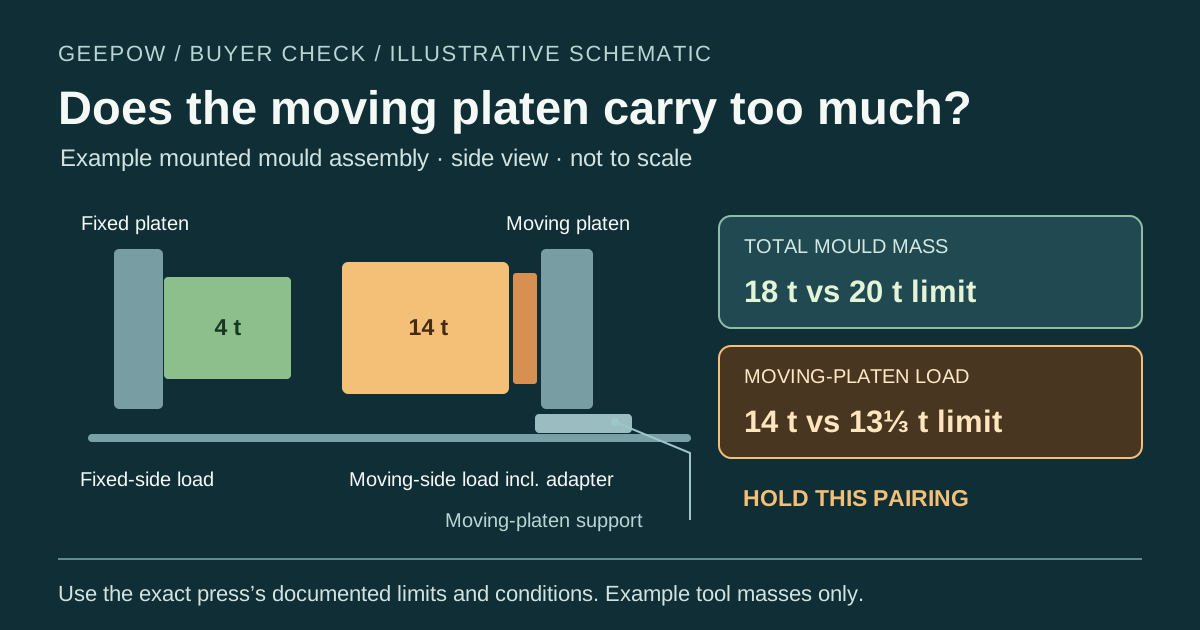
When you shortlist a used two-platen injection moulding machine, check the assembled tool mass against the total mould allowance and check the mass carried by the moving platen against its own allowance. Include any adapter or hardware that moves with the tool. An assembly can be within the total allowance while carrying too much mass on the moving side. Confirm both limits on the exact press before agreeing to a loaded trial.
For buyers sourcing a Haitian Jupiter or YIZUMI DP in the 500–3,300 metric-tonne clamp-force range, keep the clamp rating in its original unit from the nameplate or manufacturer record. The press’s clamp force and the mould mass in tonnes answer different questions. Start with the plate-load question even if the tool already clears the tie bars and fits the platen.
Read the moving-platen note
Haitian’s European JU/SE technical sheet lists the JU12000/SE at 12,000 kN clamping force and 20 t maximum mould weight. The accompanying note assigns a moving-platen allowance of two thirds of that maximum, which is 13⅓ t for this published configuration. Use the sheet as an example of how to read the limits. Confirm the applicable document and conditions for the press you are offered.
Compare both limits. Suppose your installed assembly weighs 18 t, with 4 t on the fixed side and 14 t on the moving side including its adapter. The total is below 20 t, but 14 t is above 13⅓ t. Hold this pairing and ask for a compliant alternative before arranging a loaded trial. Two thirds is the value in this Haitian example. Get the applicable allowance in writing for a different model, generation or option.
Check the support arrangement on the used press
Ask the toolmaker to provide the moving assembly’s centre of gravity relative to the platen mounting face. Where the mass sits matters because a heavy half that projects farther from the platen can create a greater tilting moment. Include a side view of the tool and the planned adapter thickness, and request the manufacturer’s review if the arrangement is unusual or the available documents do not describe it.
YIZUMI’s DP series illustrates why the installed hardware is part of the check. Its product documentation describes extended sliding shoes that support and guide the moving platen, with an adjustment for tilt. For a specific used DP, request dated photos of the actual guides and supports, plus service or replacement records where available. Have a qualified inspector assess visible damage, wear or modifications against the applicable service information. A series diagram or an unloaded cycling video leaves the condition of the support system under the proposed tool load unverified.
Build a short evidence pack for the purchase decision
| Check | What to put on file | When to hold the purchase decision |
|---|---|---|
| Actual press limits | Nameplate photo, full model and serial number, applicable technical sheet and written total and moving-side allowances. | The seller supplies only a clamp rating, a family brochure or an unexplained maximum mould weight. |
| Installed tool load | Fixed and moving masses from the toolmaker or recorded weighing, with a list of adapters and other hardware carried by each side. | Only the closed tool mass is known, or the proposed assembly exceeds a documented limit. |
| Centre of gravity and condition | Tool side view with its centre of gravity identified, planned mounting arrangement, photos and inspection findings for the used support system. | The centre of gravity or an altered support arrangement remains unresolved, or a qualified reviewer flags wear or damage. |
| Loaded verification | After confirming the documented limits, agree with the inspector which approved tool or representative load will be used, what will be observed and how results will be accepted. | The seller offers only an empty cycle or a trial with a lighter tool and treats it as evidence for your heavy tool. |
Once these records support the pairing, use the mould dimensions checklist for the other fit constraints, and agree the scope of the witnessed acceptance trial before payment.
Common questions about moving-platen loads
Can I use a moving-platen allowance from another machine in the same series?
Ask for the total and moving-side allowances that apply to the specific model, generation and fitted options you are buying. A brochure for another configuration can help you find the right fields, but leave the pairing on hold if the seller cannot establish the limits for the actual press.
Send the mould-half masses with your enquiry
Start from the used injection moulding machine sourcing page or send GEEPOW your tool and press details. Include the target clamp-force range and units, the fixed and moving mould-half masses, the mounting sketch, the intended part and resin, and the destination. If you already have a press in mind, include its nameplate and the technical sheet you received.