
Used YIZUMI D1: Check Barrel Heating Zones Before the Trial
Inspect a used YIZUMI D1’s heating zones, sensor identities and warm-up response before the mould trial. Agree how faults, repairs and retests will be recorded.
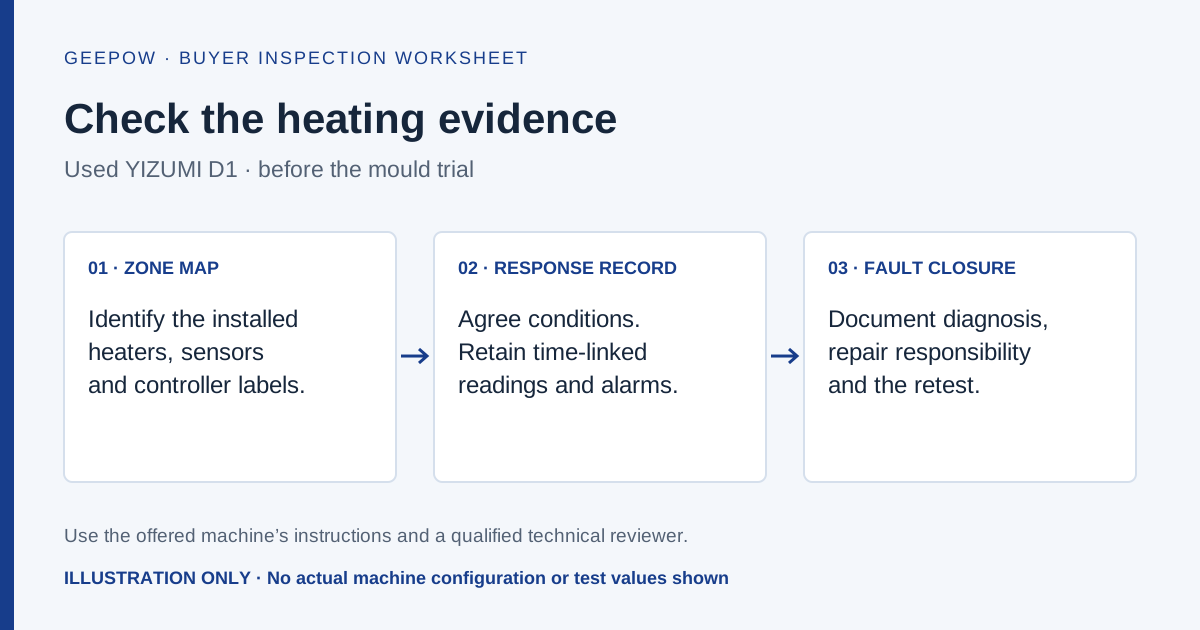
Before a mould trial, request a heating record for the exact used YIZUMI D1: the installed heater and sensor identities, the agreed warm-up conditions, the response of each documented zone, and the diagnosis and retest of unresolved faults. A photograph of a temperature screen is useful context, but it is not a complete heating inspection.
For buyers sourcing within a 500–3,300 metric-tonne clamping-force range, this is a separate decision from choosing the machine size. Confirm the individual nameplate rating and original unit, then examine the installed injection configuration. The D1 designation alone does not identify replaced heaters, sensors or control components.
The illustration is an original inspection worksheet, not a machine photograph, wiring diagram or measured test result. It does not show a particular number of heating zones.
Identify the heating arrangement you are buying
YIZUMI’s D1 product description discusses ceramic heater bands and adaptive PID temperature control. That is a published design reference for the named series, not proof of the equipment or performance of a used press. Ask for the applicable machine documents, controller identification and a record of any heating-system changes. Keep D1, D1-N and D1S literature separate.
Before agreeing a demonstration, ask the responsible technician to map the controller’s zone names to the physical locations and fitted components. Include the nozzle zone where applicable. Retain the mapping with the offered serial number and inspection date so a later replacement or repair can be traced to the same location.
Use a zone-by-zone evidence sheet
This original purchasing table defines the information to request. The machine instructions and responsible technical reviewer must determine the actual procedure and acceptance criteria; the table supplies no generic test temperature or time limit.
| Record item | What the buyer should receive | Question it resolves |
|---|---|---|
| Machine and zone map | Serial number, injection configuration, relevant document edition and a cross-reference between controller labels and physical zones. | Does the evidence cover the equipment being offered? |
| Heaters and replacements | Readable component identification and documented ratings, together with available replacement and repair records. | Are the fitted parts identified and technically appropriate for this installation? |
| Sensor and input identity | The documented sensor type and corresponding control input, with a qualified technician’s findings on discrepancies. | Can the displayed value be interpreted against an identified measurement channel? |
| Agreed warm-up conditions | The permitted starting condition, relevant machine setup, target profile and observation period defined for this machine. | Can the recorded response be assessed against a repeatable plan? |
| Observed response | Time-linked setpoints and indicated values for each zone, available control-output information, alarms and observer notes. | Which zones were demonstrated, and what remains unexplained? |
| Fault closure | A diagnosis, itemised corrective work and a retest under the agreed conditions, attached to the quotation. | Who will resolve an issue, and what evidence will close it? |
Separate a heater problem from a measurement problem
Tempco’s temperature-controller manual lists sensor faults, heater-circuit faults, power-supply faults and switching-component faults as distinct troubleshooting possibilities. Its installation guidance also requires the sensor and extension wiring to match the instrument’s specified type. This is general component guidance, not a D1 wiring manual or evidence that Tempco equipment is fitted.
For a buying decision, an unexplained temperature indication should prompt a documented diagnosis rather than an assumption that a new heater band will solve it. Ask a qualified specialist to use the actual machine and component instructions. Electrical inspection, access and any measurements must be handled by authorised personnel under the applicable isolation and safety procedures. The buyer’s role is to agree the evidence and repair scope, not to improvise a live electrical test.
Make the demonstration interpretable
Request a record that follows the same identified machine and zone map from the agreed starting condition through the observation period. Where a video is used, ask the inspector to identify what it covers and any gaps. Keep controller records or exported trends where available, together with the setup and observations. A smooth video edit or a single final screen leaves the earlier response undocumented.
If one zone was not demonstrated, have that recorded as an open item. After corrective work, repeat the relevant checks under the agreed conditions and retain both the original finding and the retest. Put these requirements into the machine-specific acceptance agreement.
Keep heating evidence separate from production capability
A barrel-zone indication is not a direct record of the condition of all the material in the injection unit. If the process requires an independent melt-temperature assessment, have the process specialist specify a suitable method. Successful warm-up also does not establish recovery rate, part quality or repeatable production with your mould and resin.
Those questions belong in a relevant production trial. Use the D1 injection-unit comparison guide to frame the separate application and trial questions. Keep the heating record as supporting evidence for the configuration and conditions used.
Buyer questions
Is a photograph showing every zone at its setpoint enough?
It records one displayed condition. Ask for the zone identity, starting conditions, response history and explanation of any alarms or interventions before accepting the heating inspection.
Is there one acceptable warm-up time for every used D1?
No universal limit is proposed here. Agree the relevant profile, setup and criteria with the responsible reviewer using the actual machine documents and intended application.
How should an unresolved heating fault affect the offer?
Require a diagnosis and a written repair and retest scope before treating it as resolved. A lower machine price cannot be compared fairly while essential work and responsibility remain undefined.
Plan a used YIZUMI D1 inspection with GEEPOW
Explore the 500–3,300 tonne used injection moulding machine sourcing page, then send the D1 identification, heating-zone records and outstanding questions. Add your mould, resin, receiving-factory supply and destination so the inspection and quotation can address the intended job.