Used YIZUMI D1: What to Ask About a Repaired Platen
Buying a used YIZUMI D1 with a platen repair? Request material identity, engineering disposition and inspection coverage before accepting the proposed mould duty.
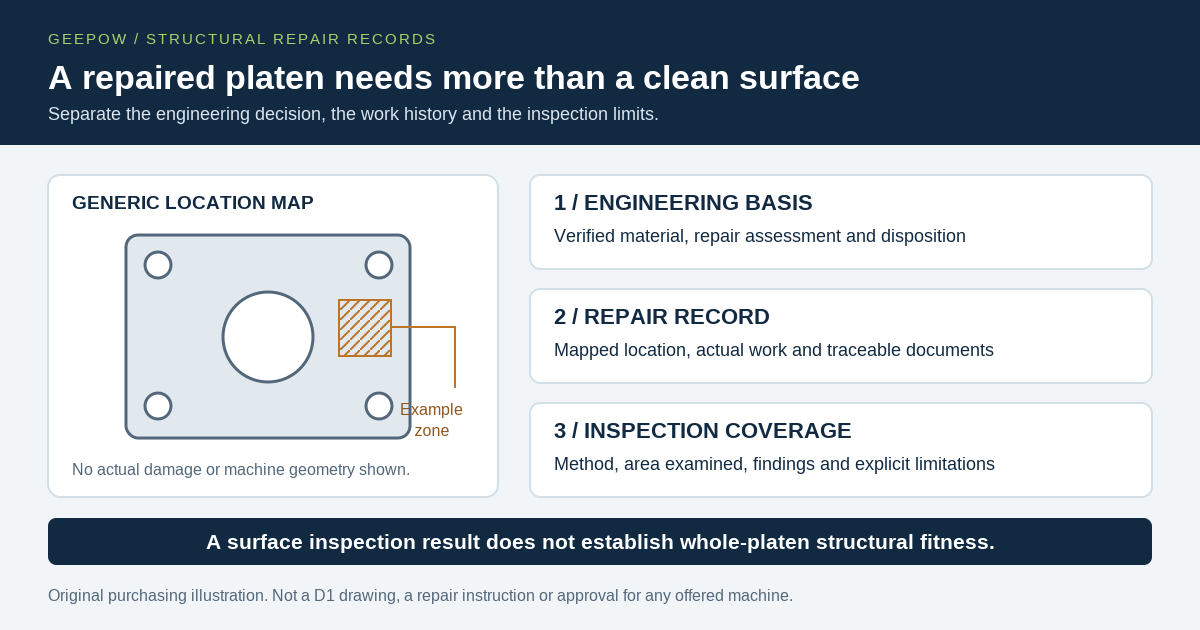
Before buying a used YIZUMI D1 with a disclosed platen repair, request a repair history tied to the machine serial number, a marked repair location, the engineering basis for the work and inspection reports showing their actual coverage. A repainted face, a smooth closing movement or a note saying “NDT passed” leaves different questions unanswered. Decide what the records establish before accepting the repaired component for your proposed mould.
For buyers sourcing within a 500–3,300 metric-tonne clamping-force range, confirm the individual press’s rating and original unit separately. This is a purchasing guide for a reported structural repair, not an assertion that a particular YIZUMI has been repaired or is available.
The original illustration is a generic purchasing worksheet. Its platen outline and location map are conceptual, not a D1 engineering drawing, repair photograph or inspection result.
First establish what “platen repair” means
Ask whether the seller means an attachment-point repair, surface machining, replacement of a complete component or work on a structural crack or damaged section. Request separate descriptions for separate jobs. A repaired threaded hole and a welded structural section should not share one unexplained line in the quotation.
Mark the work on views of the fixed or moving platen, showing which component was affected and where. Include photographs before work, during the repair where retained, and after finishing. Fresh paint or a visible line is a reason to ask for identification; appearance alone cannot establish whether a structural repair occurred.
YIZUMI’s D1 product page describes long moving-platen supports and L-shaped frame guides. That series description helps identify the assembly being discussed. It does not specify the material grade, repair allowance or current structural condition of the offered platen. Match the actual component and machine documents; do not transfer a repair conclusion between D1 generations or other YIZUMI series.
Identify the material before interpreting welding evidence
Request the component identification, applicable drawing or manufacturer specification, and any material evidence used by the repair engineer. Keep unknown material recorded as unverified. Do not assign a platen grade from its colour, the machine badge or a general brochure.
TWI’s cast-iron welding guidance illustrates why this matters if cast iron is established for the component: cast-iron categories have different weldability, and welding can introduce hard, brittle regions and cracking. TWI points to the original specification and, where needed, chemical or metallographic analysis for identification. This does not establish that a D1 platen is cast iron or that welding is an acceptable repair for it.
Ask the responsible engineer to state the diagnosis, repair objective and technical basis, including the intended service and any limitations. A consumable invoice or a welder’s certificate can support parts of the work record; neither supplies that component-specific disposition.
Use a five-part repair evidence worksheet
The following is an original procurement checklist, not a repair procedure or acceptance standard. Have YIZUMI or the responsible structural specialist determine which records and assessments are appropriate for the actual component.
| Buying question | Record to request | Issue to resolve |
|---|---|---|
| What was repaired? | Machine serial number, fixed/moving component identity, dated location map, original defect description and repair timeline. | A report or photograph cannot be tied to the offered platen. |
| Why was that repair selected? | Material identification, diagnosis and written engineering disposition identifying the proposed service and relevant limitations. | The offer names a repair method without explaining its suitability for this component. |
| What work was actually completed? | Applicable repair drawing or procedure revision, responsible workshop, execution records and any changes from the approved scope. | A planned repair is presented as completed work, or later changes lack review. |
| What did inspection cover? | Method, procedure, inspected areas, surface condition, access exclusions, personnel identification, findings and acceptance reference. | “NDT passed” omits the examination coverage or the basis for judging indications. |
| Who released it for the proposed duty? | Required dimensional and machine-test records, review of unresolved findings, written disposition and any operating or inspection restrictions. | A component inspection is treated as unrestricted approval of the complete press. |
Read a penetrant report within its limits
ASNT describes liquid penetrant testing as a method for finding discontinuities open to the surface in nonporous materials. It does not detect subsurface defects, and cleaning and examination conditions affect results. Therefore, identify the method behind an “NDT” claim instead of assuming all reports examine the same things.
For a penetrant report, ask which surfaces were accessible, how their condition was addressed and where the findings were recorded. Let the qualified inspection specialist select suitable methods and explain exclusions for the actual material, geometry and repair. A satisfactory surface examination does not, by itself, determine the platen’s load capacity, remaining life or suitability for your mould.
Separate structural disposition from mounting and trial evidence
Parallelism measurements answer a geometry question under recorded conditions. A structural repair needs its own engineering assessment. Likewise, an apparently good moulding sample does not fill a missing repair history. Agree the structural review before using a production demonstration to close the purchase.
Then connect the permitted duty to your mould mass, mounting arrangement and intended process. Use the large-press mould mounting checklist for the attachment interfaces and the machine acceptance guide for the agreed demonstration. Neither replaces the repair disposition.
Consider two hypothetical offers. One says “platen repaired, NDT passed”; another supplies an identified repair file with inspection coverage and documented restrictions. The second is easier to review, but its completeness alone does not establish better condition. Ask the same reviewer to assess both against the same proposed duty and list the unresolved work before comparing complete quotations.
Buyer questions
Does every visible mark mean the platen is structurally damaged?
No. Record its location and request an explanation supported by inspection or service evidence. Do not diagnose a crack, welding or a material grade from a sales photograph.
Can missing historical records be replaced by a new NDT report?
A new report establishes only the examination performed. Ask the responsible engineer what further evidence is needed and whether the proposed use can be assessed. Keep unavailable historical facts visible rather than recreating an assumed repair record.
What should remain in the purchase agreement?
Identify required documents, outstanding assessments, responsibility for any corrective work and the evidence needed before the relevant acceptance milestone. If suitability remains unresolved, keep it as an open purchase condition and have any proposed replacement alternative technically confirmed and separately quoted.
Send the repair file with your enquiry
Start from GEEPOW’s 500–3,300 tonne used-machine sourcing page, then send the D1 identity, repair records and proposed mould details. Include the destination and the questions your inspector still needs answered so the individual offer can define its remaining evidence and work.
Sources
- YIZUMI — D1 Series Two-platen Injection Molding Machine: clamping unit and moving-platen supports (undated product page)
- TWI — Can You Weld Cast Iron? (A Complete Guide): material identification and weldability; conditional reference only
- ASNT — Liquid Penetrant Testing: An Essential Method for NDT: scope, advantages and limitations