
Used YIZUMI D1: Request Screw and Barrel Wear Evidence
Buying a used YIZUMI D1? Request mapped screw and barrel measurements, component-specific wear criteria and a written repair scope before acceptance.
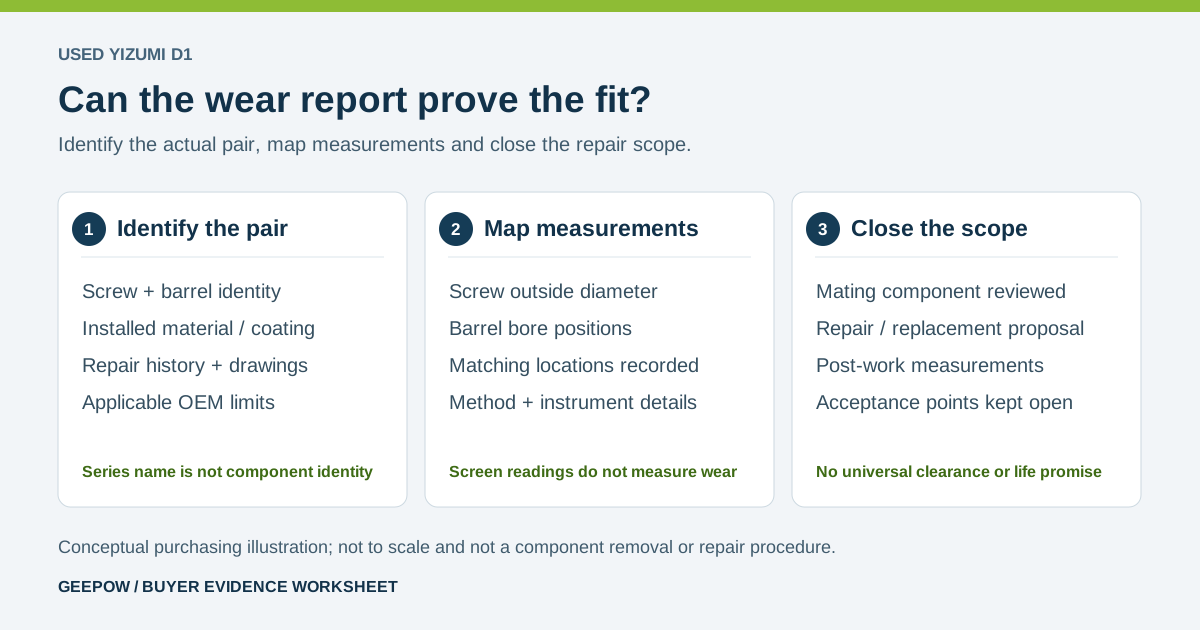
Before buying a used YIZUMI D1, request a dated dimensional inspection of its identified screw and barrel, with location-labelled readings and a written assessment against the applicable component specifications. A clean screw photograph, a replacement invoice or one successful moulding cycle leaves the wear question open. The report should connect the measured parts to the offered machine and explain any repair still required.
This guide concerns current dimensional condition. GEEPOW’s 500–3,300 metric-tonne range describes a sourcing focus; the actual machine’s clamp rating, configuration and availability require individual confirmation.
The illustration is a conceptual inspection worksheet. It contains no actual machine measurements, wear limits or condition findings.
Identify the D1 screw and barrel before requesting measurements
YIZUMI’s February 2023 D1 brochure lists a nitrided alloy-steel screw and barrel as standard, with a mixing screw, bi-metallic screw barrel and special screw components among the options. That edition identifies possible configurations; it does not establish what remains fitted to a second-hand press.
Record the machine serial number, injection-unit identity and separate screw and barrel identifiers. Request replacement and repair records, including the component drawings or specifications that the inspector will use. Reconcile any changed assembly with the offered machine. The D1 injection-unit comparison guide covers the wider configuration decision.
Ask for a measurement map you can review
Reiloy’s preventive-maintenance booklet describes separate barrel-bore and screw-flight diameter measurements, identification records and inspection reports. Its guidance uses suitable measuring instruments and records conditions after cleaning and cooling. This is component-maker guidance, not a YIZUMI D1 service procedure.
Ask a qualified inspector to agree the machine-specific inspection plan. The following original buyer worksheet defines deliverables to request, without prescribing dismantling, measurement spacing or acceptance values.
| Evidence item | Required record | Buyer’s review question |
|---|---|---|
| Part identity | Screw and barrel identifiers, machine serial, date and inspector. | Do both reports belong to this offer? |
| Measurement basis | Reference ends, units, instrument identification and inspection conditions. | Can another reviewer interpret the readings? |
| Barrel bore | Actual bore readings at labelled axial stations, with orientations identified. | Where was the bore assessed? |
| Screw flights | Actual outside-diameter readings at labelled flights and measurement directions. | Which flight locations were checked? |
| Location relationship | A drawing mapping the relevant screw positions to barrel stations. | Which readings can be assessed together? |
| Assessment and work | Applicable specification, findings, unresolved areas and proposed corrective scope. | What remains before acceptance? |
Interpret the pair with the correct reference
A screw moves axially during operation. Ask the specialist to explain how the selected screw-flight locations relate to barrel stations over the positions being assessed. Identical distance labels measured from different component ends do not establish that relationship. A global average or a single unexplained clearance number leaves the local measurement basis unclear.
Request the original dimensional specification and the applicable wear or repair criteria from YIZUMI or the responsible component supplier. Keep nominal size, measured condition and acceptance criteria in separate fields. If the applicable reference is unavailable, leave acceptance unresolved until the responsible reviewer supplies it. This article sets no universal allowable clearance or wear percentage.
Make repair scope cover the mating assembly
For an offer described as having a “new screw”, request its installation record and the findings for the retained barrel. For a repaired barrel, ask which areas were addressed and which remain unchanged. Have the specialist assess the complete proposed assembly before treating either description as a closed condition item.
The quotation should identify the agreed work, responsible party, inspection deliverables and any necessary retest. Preserve the original findings alongside the completion record. Agree what happens if inspection reveals additional work before committing to a final repair price.
Keep dimensional evidence within its limits
A dimensional report addresses the inspected parts and locations. It does not establish remaining service life, approval for a different resin, check-ring sealing or production output. Record inaccessible areas and missing history. Material suitability and application performance require their own review; use an agreed machine acceptance trial for the intended mould and resin.
Access, isolation, cleaning and component removal belong to authorised specialists following the actual machine instructions. A buyer’s evidence sheet is not permission to improvise those operations.
Buyer questions
Does a good moulding sample prove the screw and barrel are unworn?
No. Retain the trial result for its documented conditions and request dimensional evidence for the wear decision.
Can a new screw close the inspection question?
Only after the responsible specialist has assessed its identity, installation and relationship with the retained barrel. Obtain that assessment in writing.
What if no applicable tolerance document is available?
Keep acceptance open and request the correct component-specific reference. Do not substitute a generic online clearance table.
Prepare a used YIZUMI sourcing enquiry
Review GEEPOW’s used injection moulding machine sourcing page, then send the D1 identification and available inspection records. Include your resin, mould, destination and unresolved repair questions so the requested evidence and quotation scope address the intended purchase.