Used YIZUMI for Pallets: Verify Product Load Evidence
Buying a used YIZUMI for pallets? Separate press acceptance from pallet load qualification. Match reports to the design, material and handling conditions.
When buying a used YIZUMI for plastic pallets, agree two separate acceptance records: one for the offered press running the identified mould and resin, and another for the resulting pallet’s suitability for its intended handling and storage conditions. A complete-looking pallet, an acceptable part weight or a smooth machine cycle does not establish a working-load rating.
For a project sourcing within a 500–3,300 metric-tonne clamping-force range, confirm the individual machine’s nameplate rating and original units. Keep that force rating separate from the load carried by the finished pallet. Neither the brand nor a model number supplies a pallet payload specification.
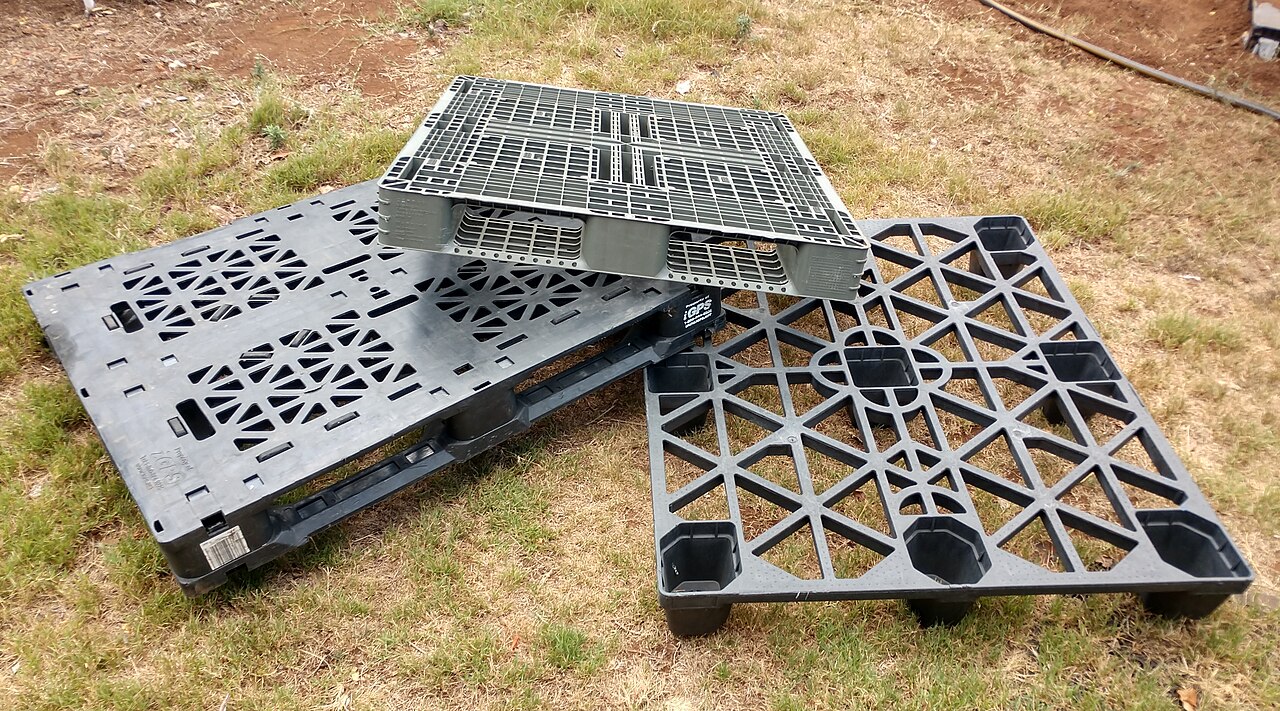
Application reference photograph: three plastic pallet designs, by 293.xx.xxx.xx / Wikimedia Commons, CC BY 4.0. Wikimedia resized preview; no local crop or content edits. The photograph source and licence are linked below. These are third-party examples, not GEEPOW project samples, YIZUMI output or tested load results.
Define the pallet’s job before reviewing a trial sample
YIZUMI’s logistics application page includes plastic pallets. It establishes an application category, not the configuration, condition or suitability of a particular used machine. Begin your enquiry with the pallet drawing and intended use, then compare candidate equipment. The material, mould and actual machine configuration still require their own review.
The maker’s CONNECT 2026 report describes a UN2700D1L pallet demonstration with an identified product, material and mould arrangement. That application evidence belongs to the reported setup; it is not load qualification for another second-hand machine. No demonstration cycle time or payload is transferred to a used-machine offer here.
Ask the receiving operation to describe how the pallet will be loaded, supported, moved and stored. Record the relevant conditions rather than accepting an unexplained number labelled “load capacity”. The following original buyer worksheet helps a product engineer or testing laboratory turn that description into an appropriate qualification plan. It is not a laboratory procedure or a source of allowable loads.
| Use or identity | Information to agree | Evidence to request |
|---|---|---|
| Floor storage and stacking | Payload arrangement, support, stacking arrangement and duration relevant to the intended operation. | A report identifying the arrangement actually assessed and the acceptance criteria used. |
| Fork handling | Intended entry direction, handling equipment and contact arrangement. | Findings tied to the agreed handling configuration, not a report for an unspecified support condition. |
| Rack storage | Rack support layout, pallet orientation, payload and storage conditions. | An assessment covering that arrangement, with any limits or exclusions visible. |
| Conveyor or automated handling | Support and clearance requirements, interfaces and the receiving system’s acceptance points. | A documented compatibility review or relevant field trial; a general strength claim leaves these interfaces open. |
| Environment | Temperature, exposure and service conditions that the responsible reviewer considers relevant. | The report’s conditioning and test environment, together with any untested service conditions. |
| Product and material identity | Drawing revision, mould identity, resin specification and lot, additives and any reinforcement. | Sample identification connecting the tested pallets to the recorded moulding trial and material. |
Select product tests with the responsible specialist
ISO 8611-1:2025 addresses methods for assessing new flat pallets, covering nominal-load, working-load and comparative durability evaluation. Its public scope also recognises the value of field evaluation for a specific design. ISO 8611-2:2025 addresses performance requirements and test selection for different handling environments. These are product-testing references, not used-press acceptance certificates.
Have the pallet designer, customer or competent laboratory identify the applicable requirements and obtain the necessary current documents. The public scope pages do not provide a complete test procedure. Agree the test plan, sampling, reporting and pass criteria before presenting a load claim to your own customer. This guide assigns no universal load, deflection limit, temperature or test duration.
Keep the tested pallet traceable to the machine trial
Record the machine identity and fitted injection unit, mould revision, material identification and relevant process conditions. Identify the retained samples and which ones went to product testing. If a report covers a different pallet design or material, ask the responsible specialist what further evidence is needed before applying it to the proposed product.
For recycled feedstock, define the material specification and traceability needed for the intended job. A successful demonstration using one identified lot does not settle the effect of future input changes. Agree how changes to material, reinforcement, tooling or the production setup will be reviewed, and which changes require further qualification.
Use the machine acceptance guide for the press trial. Attach the product qualification plan as a separate deliverable so neither party mistakes a machine demonstration for approval of the pallet’s intended service.
Include product qualification in the purchasing scope
Compare offers with the same product brief and evidence requirements. Identify who supplies the mould and trial material, who funds product testing, who reviews the report, and how failed samples or design changes affect the scope. Record whether downstream handling trials and any required modifications are included or separately quoted.
This makes a price comparison more useful: a lower press quotation can leave essential application work unresolved. Review the used two-platen machine sourcing checklist alongside the pallet brief, while keeping load qualification with the appropriate product specialist. No particular cycle time, payload, production cost or availability is confirmed here.
Buyer questions
Does the press’s tonnage tell me the pallet’s load capacity?
No. Clamping force describes a machine characteristic. Product load evidence must address the identified pallet and its intended use.
Can I use a load report for a similar-looking pallet?
Ask the responsible reviewer to check the tested design, material, construction and conditions against your specification. Appearance alone does not establish that the report applies.
Must the seller complete every product test before I inspect the press?
The sequence is a commercial and technical agreement. Identify what each stage will establish, which conditions remain open and who must close them before the relevant purchase milestone.
Discuss your pallet project with GEEPOW
Explore the 500–3,300 tonne used injection moulding machine sourcing page, then send your pallet drawing, material brief, handling conditions and destination. Include any existing reports so the machine enquiry can identify the evidence still needed. This is an application guide, not a completed GEEPOW customer case.
Sources
- YIZUMI — Logistics packaging applications, including plastic pallets
- YIZUMI — CONNECT 2026 pallet demonstration with an identified machine and setup
- ISO 8611-1:2025 — Public scope of flat-pallet test methods
- ISO 8611-2:2025 — Public scope of performance requirements and test selection
- Photograph source — Three Plastic Pallets, 293.xx.xxx.xx / Wikimedia Commons
- Photograph licence — Creative Commons Attribution 4.0 International
