
Used Yizumi SKIII Core Pull: Will Your Hydraulic Mould Transfer?
Check hydraulic circuits, end-position feedback and motion sequence before moving a core-pull mould to a used Yizumi SKIII injection moulding machine.
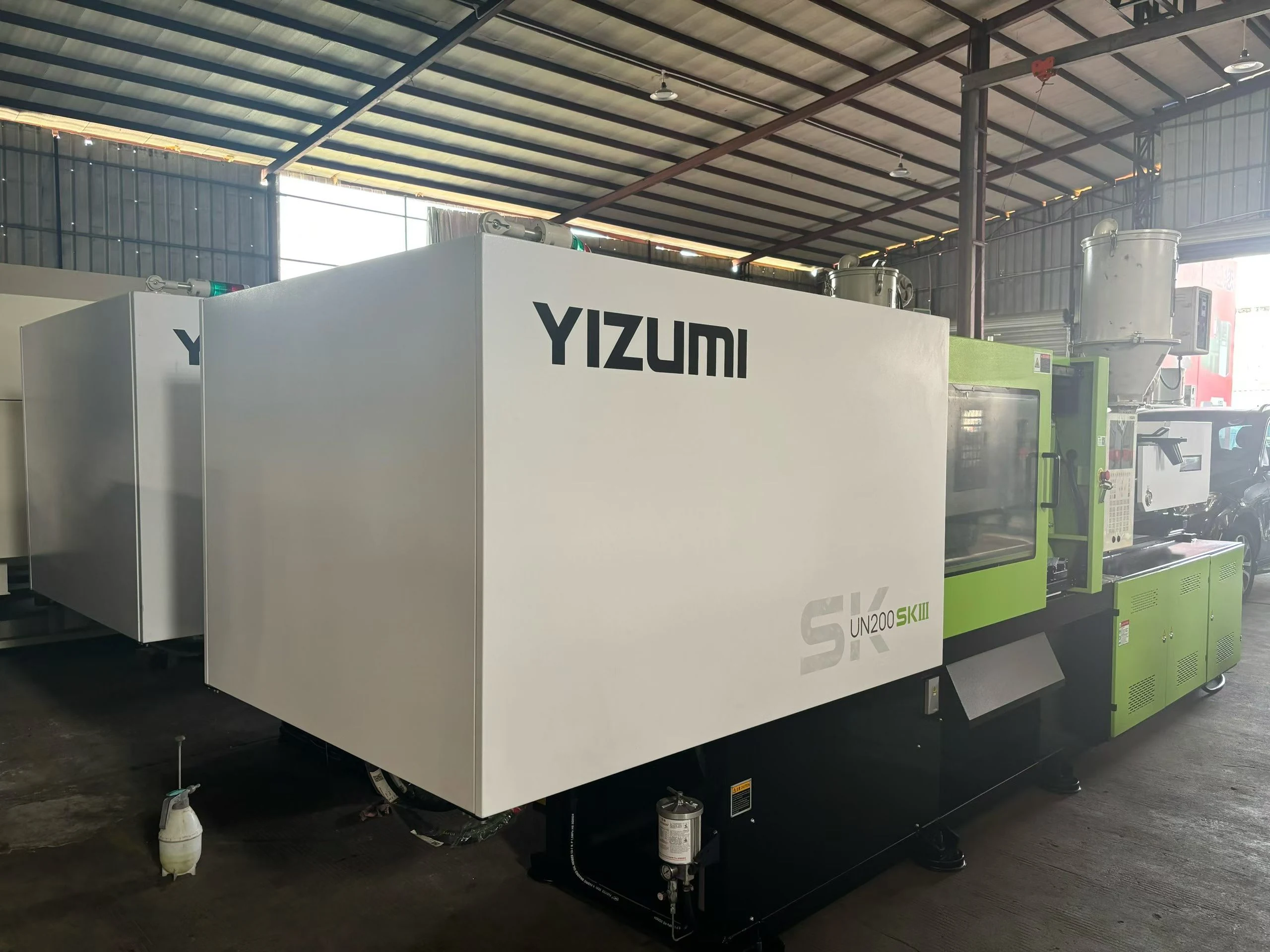
Before buying a used Yizumi SKIII for an existing hydraulic core-pull mould, ask the seller to demonstrate each circuit the tool needs and show how the controller confirms core position before the next movement. Start with the toolmaker's sequence and match it to the offered machine's valve hardware, sensor inputs and controller functions. Treat any step the seller cannot demonstrate as an open acceptance item.
Photo: Yizumi UN200 SKIII, shown as a model reference. Ask for separate photos and documentation of the offered machine's core-pull hardware.
Start with the mould sequence you already use
Write one line for each core: its start position, the movement it must make, the feedback that confirms completion and the action that can follow. Include any dependence on mould opening, ejection or part removal. If a tool has two cores, note whether they move together, in sequence or independently. Two hoses connected to a cylinder may represent one circuit. Count separately controlled functions using the hydraulic drawing.
YIZUMI's SKIII brochure distinguishes standard and optional functions and includes multi-set core pulling and synchronised movements in its feature tables. Ask for the as-built configuration for the serial number. A menu item or the presence of connectors should prompt a check of the installed hardware, wiring and control logic.
Send the seller a four-line interface brief
- Oil supply and return. Provide the toolmaker's pressure, flow and any holding requirements. Ask the seller for the installed circuit diagram, valve and connection details, plus evidence the circuit can supply the mould during the intended sequence.
- Position feedback. List the sensor type, supply, connector pinout and the positions the tool requires the controller to recognise. Ask for the input assignment and a demonstration of the indicated state at each required end position.
- Motion order. Provide the mould and ejector positions that allow each core movement, and the state that must be confirmed before closing, injection, opening or ejection, as applicable. Ask the seller to show how the controller enforces your tool's sequence.
- Stop and restart. Ask the machine and mould technicians to agree how the system will respond to a missing signal or interrupted cycle and how the operator will recover the tool to a known position. Request a witnessed check using an approved procedure.
For one example of why cylinder details matter, DME's instructions for its hydraulic locking core pull cylinders identify requirements for service pressure and for confirming full extension and retraction. Those requirements apply to the specified cylinder. Use the documentation for the cylinder and sensors installed on your own mould.
Turn the brief into purchase acceptance criteria
Have the seller show the machine serial number, installed valves and controller inputs in the same inspection record. Use an approved tool trial to record each movement and the signal that releases the next step. If you use a demonstration fixture, record which circuit and inputs were proven and which mould-specific checks still need the production tool. Keep guards and interlocks in use and have qualified personnel handle connections, fault-response checks and any changes to the control logic.
Put any missing valve, interface module or controller change on the quotation as a named line item, with an installer and retest responsibility. Once you know the interface can be made to work, use the mould fit dimensions guide for mechanical clearances and record the result in the machine acceptance test.
Questions to resolve before shipping
Does a single working core prove my two-core mould will run?
It establishes the demonstrated function. Your mould also needs evidence that the installed circuits and controller can carry out both movements in the required order and recognise their feedback.
Can a timer replace a position signal?
A timer measures elapsed time. Where the tool requires confirmed core position, preserve that requirement and have the machine and mould technicians verify how it is met.
Ask GEEPOW to review a used Yizumi SKIII mould transfer. Include the mould sequence, cylinder and sensor list, and the offered machine's full model and serial number.