Used YIZUMI for TPE Overmoulding: Verify the Bond
Buying a used YIZUMI for TPE overmoulding? Define the material pair, specimen identity and bond-test scope before accepting a two-shot demonstration.
When assessing a used YIZUMI TPE overmoulding machine, agree how the bond between the soft material and rigid substrate will be accepted before the trial. A complete-looking part and a working second injection unit do not establish that your material pair meets its intended use. Tie the purchase decision to identified materials, labelled specimens and a test procedure agreed with your quality team and material supplier.
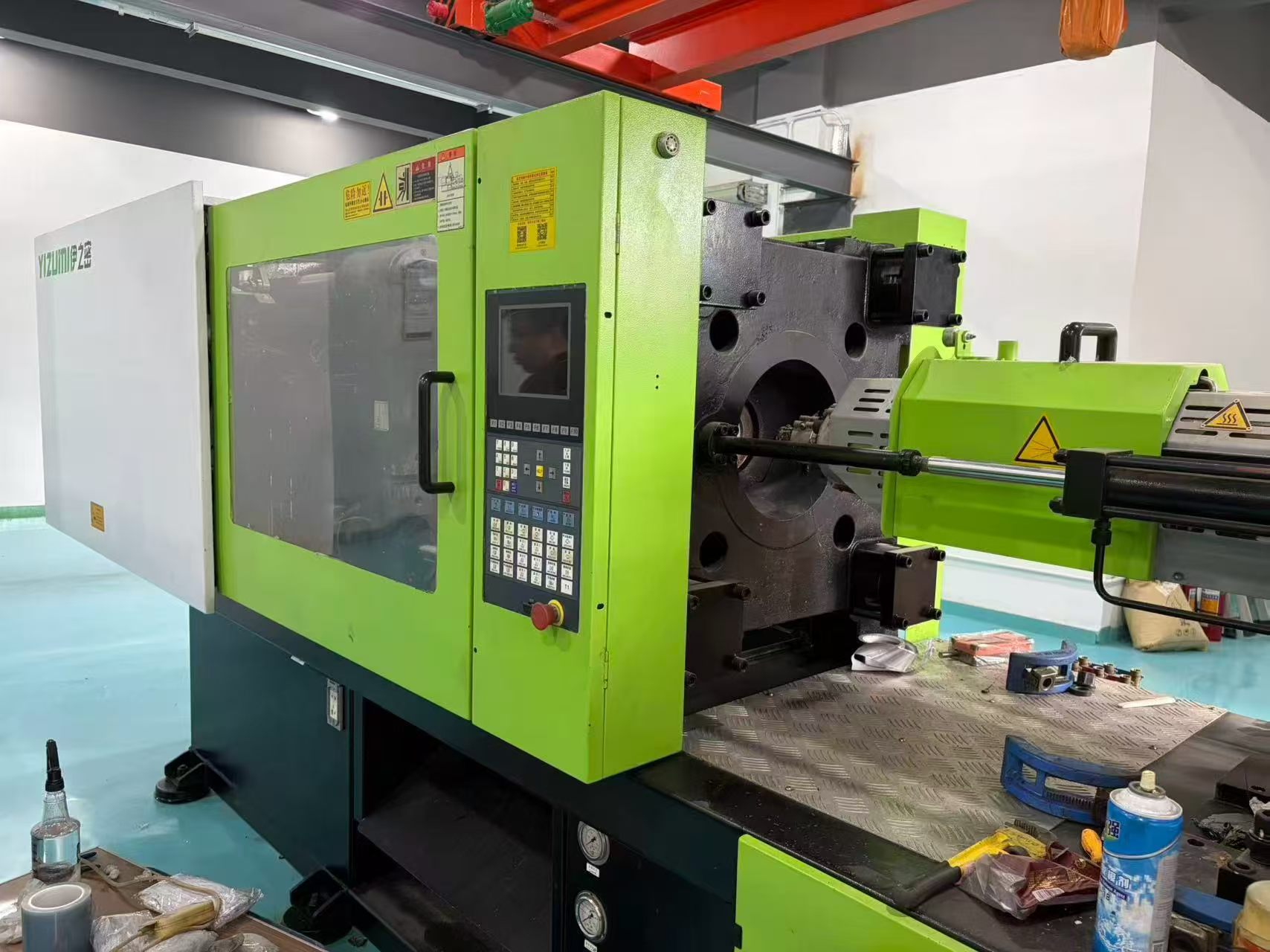
Archive YIZUMI UN200SKII photograph: controller and mould-area reference only. It does not show a TPE bond trial or establish a multi-component configuration, clamping rating or current availability.
Define the interface you are buying a process for
Consider a rigid panel with an overmoulded soft-touch strip. The purchasing question is whether that strip remains attached under the buyer's defined service conditions, not whether a demonstration produces two colours. Mark the interface and critical edges on the drawing, and state the expected loading and environment.
RTP Company's overmoulding guidance says grade selection depends on the substrate, application and environment; grades are not universally interchangeable. A description such as “TPE onto PP” is therefore an incomplete trial brief. Name the exact commercial grades before asking a seller to demonstrate adhesion.
For buyers sourcing within GEEPOW's 500–3,300 metric-tonne range, confirm each candidate's nameplate clamping force and original units separately. That range is a procurement filter, not proof that a particular machine, mould or material pair is suitable. The archive photograph above does not establish membership of that range.
Identify the installed route before comparing the samples
YIZUMI's technical overview treats material pairing, mould movement and individual injection-unit sizing as a combined selection problem. It also calls for checking intended grades after exposures relevant to the product. A current OEM overview describes engineering considerations; it does not certify the options or condition of an offered used machine.
Write down whether the proposal uses a separately moulded insert loaded for overmoulding or an integrated multi-shot sequence. Teknor Apex distinguishes these routes. Record the actual injection-unit identities, transfer arrangement and tool revision; a family name alone is insufficient. This guide assumes the proposed route has been identified. It does not determine whether a conventional press can be converted.
Use one bond-trial record for the quotation and acceptance
The table below is an original procurement worksheet. Agree the contents before making trial parts, then require the specimen labels and report to use the same identifiers.
| Record item | Put in the buyer's brief | Evidence to retain |
|---|---|---|
| Material pair | Exact substrate and TPE grade; permitted substitutions | Material labels, lot references and the supplier's grade-specific guidance |
| Actual formulation | Agreed colour system, additives and regrind condition | Trial formulation record; identify any difference from intended production |
| Substrate history | Insert handling and storage, or the first-to-second-shot sequence | Recorded preparation, conditioning and stage timing for the sampled run |
| Specimen identity | Part revision, cavity and interface location to be assessed | Labelled samples and photographs showing exactly where they were tested |
| Test definition | Agreed specimen geometry, conditioning, procedure and acceptance criteria | Report with method details, units, individual results and any departures |
| Failure observation | How separation, tearing or mixed failure will be recorded | Post-test specimen photographs linked to the measured result |
Avient's GLS guidance identifies moisture, colour-carrier choice, substrate preparation and processing history among the influences on adhesion. It directs users to individual grade data. Use these as questions for the material supplier, not as a universal processing recipe. If the trial substitutes a material, colour system or substrate history, state which part of the purchase decision remains open.
Read the failure mode alongside the result
Teknor Apex explains that adhesion data from different peel methods need comparable test conditions. It distinguishes separation at the interface from failure in which the TPE itself tears before peeling away. Ask for both the measured result and the observed failure mode; a number without its method or specimen identity is difficult to compare.
Do not turn either observation into an automatic pass. A small test plaque, a cut strip and the buyer's curved panel can support different questions. Have the quality team define what the chosen specimen represents. Where the design uses mechanical interlocks, document their role rather than treating visible retention as a measurement of the intended interface bond.
Likewise, an initial bond test does not establish long-term durability or a sealing rating. Record any product-specific ageing or exposure assessment that remains to be completed, together with its owner and decision point. This is a purchase evidence plan, not a material approval or a claim that GEEPOW has completed such testing.
Separate equipment acceptance from product-bond acceptance
- Equipment record: identify the offered machine, installed units, included transfer equipment and demonstrated sequence. Record checks and unresolved items under the used-machine inspection protocol.
- Product-bond record: identify the material pair, tool, specimens, test procedure and results. List any substitute trial materials or missing observations explicitly.
- Commercial decision: agree who supplies the trial materials, tool and testing; which costs are included; and what happens if a repeat trial is required. Put these responsibilities into the written machine acceptance trial.
A lower-priced offer with undefined bond testing is not directly comparable with an offer containing an agreed trial scope. Compare the written inclusions and unresolved work, without assuming that either seller's demonstration guarantees your product.
Buyer questions
Can higher clamping force solve poor TPE adhesion?
A force rating does not demonstrate material compatibility or an acceptable bond. Confirm the machine and mould requirements separately from the grade-pair and specimen assessment.
Is a hand-peel video enough?
It can document an observation. Treat it as final acceptance evidence only if the buyer has agreed that procedure, specimen and criterion for the intended purpose; it cannot substitute for an unperformed specified test.
Does an OEM multi-component brochure confirm the used machine's options?
No. Obtain machine-specific identification, configuration documents and the agreed witnessed checks. Keep OEM family information separate from evidence about the unit being offered.
Explore GEEPOW's 500–3,300 metric-tonne used-machine sourcing range, then describe your panel, material grades and bond-trial requirements to discuss the evidence needed for a specific candidate. State the destination and the scope you need quoted; configuration and availability require confirmation.