
Choosing a car accessories injection machine for large automotive parts
A car accessories injection machine is not just another factory purchase. For sourcing managers and process engineers, it is usually the point where part geometry, mold size, resin behavior, cycle stability, and plant economics all meet. If the machine is undersized, the mold will fight back. If it is oversized in the wrong way, the line may run, but not efficiently. That is why buyers looking at automotive plastic injection machine options should focus less on brochure language and more on whether the machine matches the parts they actually intend to run.
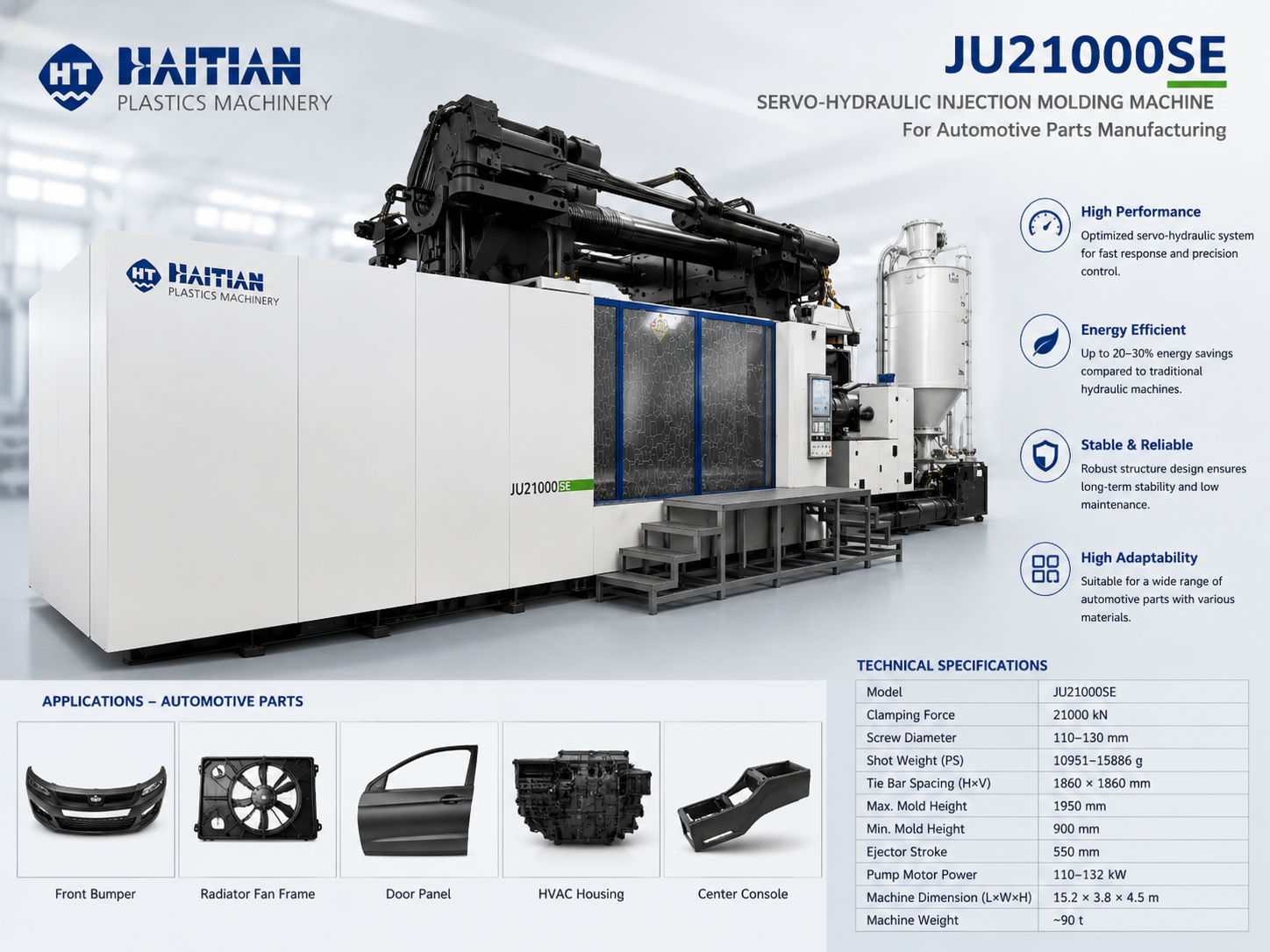
In automotive production, the decision often comes down to one question: can this machine produce medium-to-large plastic parts consistently enough to justify the tooling and downstream assembly? A model like the Haitian Plastics Machinery JU21000SE sits in the heavy-duty category, and its published specifications make it clear why. With 21,000 kN clamping force, a 110–130 mm screw diameter, and a large tie bar spacing of 1860 × 1860 mm, it is aimed at sizable molds and large-shot applications rather than small trim pieces. That matters, because automotive programs rarely fail only on one metric; they fail when the machine, mold, and part family are not aligned.
What this class of machine is built to do
The machine category here is best understood as servo-hydraulic injection molding equipment for large plastic parts. In plain terms, it is the kind of plastic auto parts production machine used when the part is too big, too thick, or too structurally demanding for standard small-tonnage platforms.
Typical applications include:
Front bumper shells and related exterior trims
Radiator fan frames
Door panels and large interior trims
HVAC housings
Center console structures
Other automotive component molding machine applications where repeatability and large mold capacity are more important than compact footprint
That list is not exhaustive, and not every program will use the same resin or mold architecture. Still, the machine’s scale tells a useful story. A shot weight range of 10,951–15,886 g for PS indicates serious melt capacity, which is one reason this type of machine appears in car exterior accessories injection molding and larger interior part production.
Quick reference: the specifications that matter most
When evaluating injection molding for auto accessories, buyers tend to look first at the headline numbers. That is sensible, as long as the numbers are interpreted correctly.
- Clamping force: 21,000 kN
- Screw diameter: 110–130 mm
- Shot weight (PS): 10,951–15,886 g
- Tie bar spacing: 1860 × 1860 mm
- Max. mold height: 1950 mm
- Min. mold height: 900 mm
- Ejector stroke: 550 mm
- Pump motor power: 110–132 kW
- Machine dimensions: 15.2 × 3.8 × 4.5 m
- Machine weight: about 90 t
Those values point to a machine designed for large cavity loading, substantial mold thickness, and physically demanding production. For buyers, the practical takeaway is simple: this is not a general-purpose desktop solution scaled up. It is industrial infrastructure, and the mold portfolio should be reviewed with that in mind.
How to judge whether the machine fits your parts
A common mistake is to begin with tonnage alone. Clamping force matters, but it is only one part of the fit. For a car dashboard parts injection machine or a car door panel injection machine, the mold envelope and shot capacity can become just as important as clamp tonnage.
1. Match clamp size to projected area and mold behavior
Large automotive parts often create wide projected areas and generate significant cavity pressure. The 21,000 kN clamp on the JU21000SE suggests room for demanding molds, but buyers should still confirm whether the part family needs that level of force continuously or only for certain tool designs. A machine with more clamp than required is not automatically wasteful; sometimes it gives a process engineer a calmer window. But oversizing can also mean higher capital cost and more floor impact than necessary.
2. Check mold dimensions, not just part size
The tie bar spacing of 1860 × 1860 mm and max mold height of 1950 mm are critical. Automotive tools can be bulky even before the first shot is made. A machine may technically handle the shot weight and clamp requirement yet still be a poor fit if the mold stack height, platen spacing, or mounting footprint is wrong. Buyers should verify the mold envelope early, especially for programs involving multi-gate tooling or thicker structural components.
3. Confirm shot weight against the real part family
The machine’s large shot range is a strong signal for automotive plastic injection machine users, but the real question is resin density, runner design, and part mass. Published shot weight figures can look generous on paper and still be tight after the tool is finalized. This matters more than people like to admit during launch planning.
Why servo-hydraulic matters in production planning
The product information describes an optimized servo-hydraulic system and claims energy savings of up to 20–30% versus traditional hydraulic machines. That kind of figure is worth reading carefully. It is best treated as a directional benefit rather than a promise for every plant and every molding recipe. Still, the underlying logic is sound: a servo-driven hydraulic platform can reduce wasted power during idle or low-demand phases, and that is relevant on large machines where electricity consumption is not a minor line item.
For production teams, the value is not only in utility savings. Servo-hydraulic platforms are often selected because they can balance force, speed, and robustness on large parts where a purely electric machine may not be the easiest fit. That said, no machine architecture fixes a poor mold design. If venting, cooling, or gating are off, energy efficiency will not rescue the part.
Applications where this type of machine earns its keep
A machine in this class usually makes sense where part size, appearance, and dimensional stability all matter at once. Exterior automotive parts need surface quality and consistent filling. Interior components need repeatability and acceptable cosmetic performance. Structural housings need strength and uniform wall behavior.
That is why buyers often evaluate this category for:
Car interior parts molding machine programs with large trims and housings
Car exterior accessories injection molding where visible surfaces and tool life matter
Injection molding for auto accessories that must be produced at volume with predictable part weight
Composite program families where one platform may run multiple large molds over time
GEEPOW Machinery’s used machine inventory may be relevant here as well, since the company notes it offers used injection molding machines from 90 to 2800 tons and keeps over 300 models in stock. For some plants, especially those adding capacity without starting from zero, that broad range can shorten the search for a fit. Used equipment does require more diligence, of course: buyers should inspect maintenance history, control condition, platen wear, hydraulic performance, and whether the machine has actually been run under production load.
Common buying mistakes with large automotive molding equipment
The most frequent error is assuming that every large automotive part belongs on the same machine platform. It does not. A bumper program and a center console program may both sound “large,” but their process demands can differ sharply.
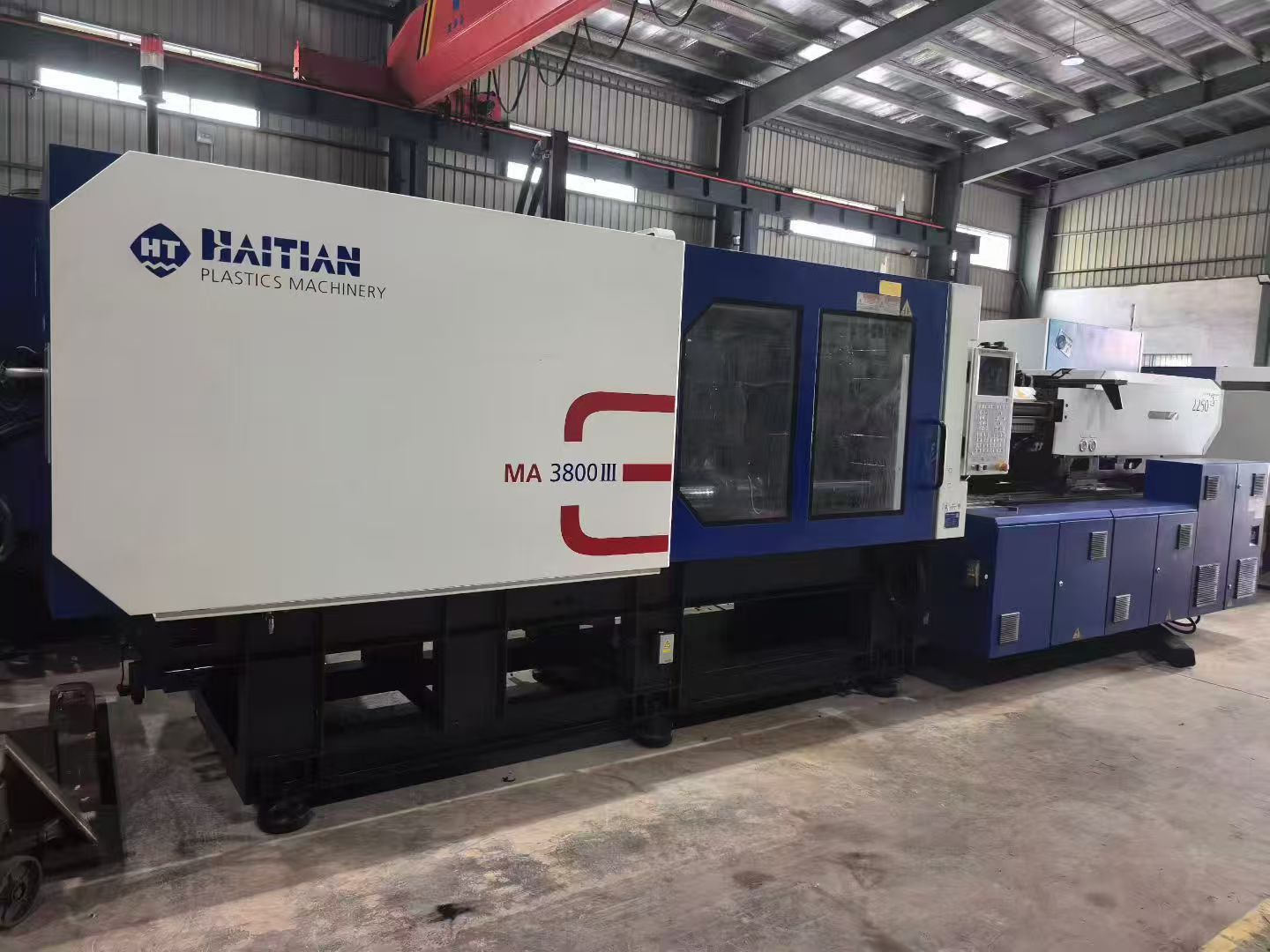
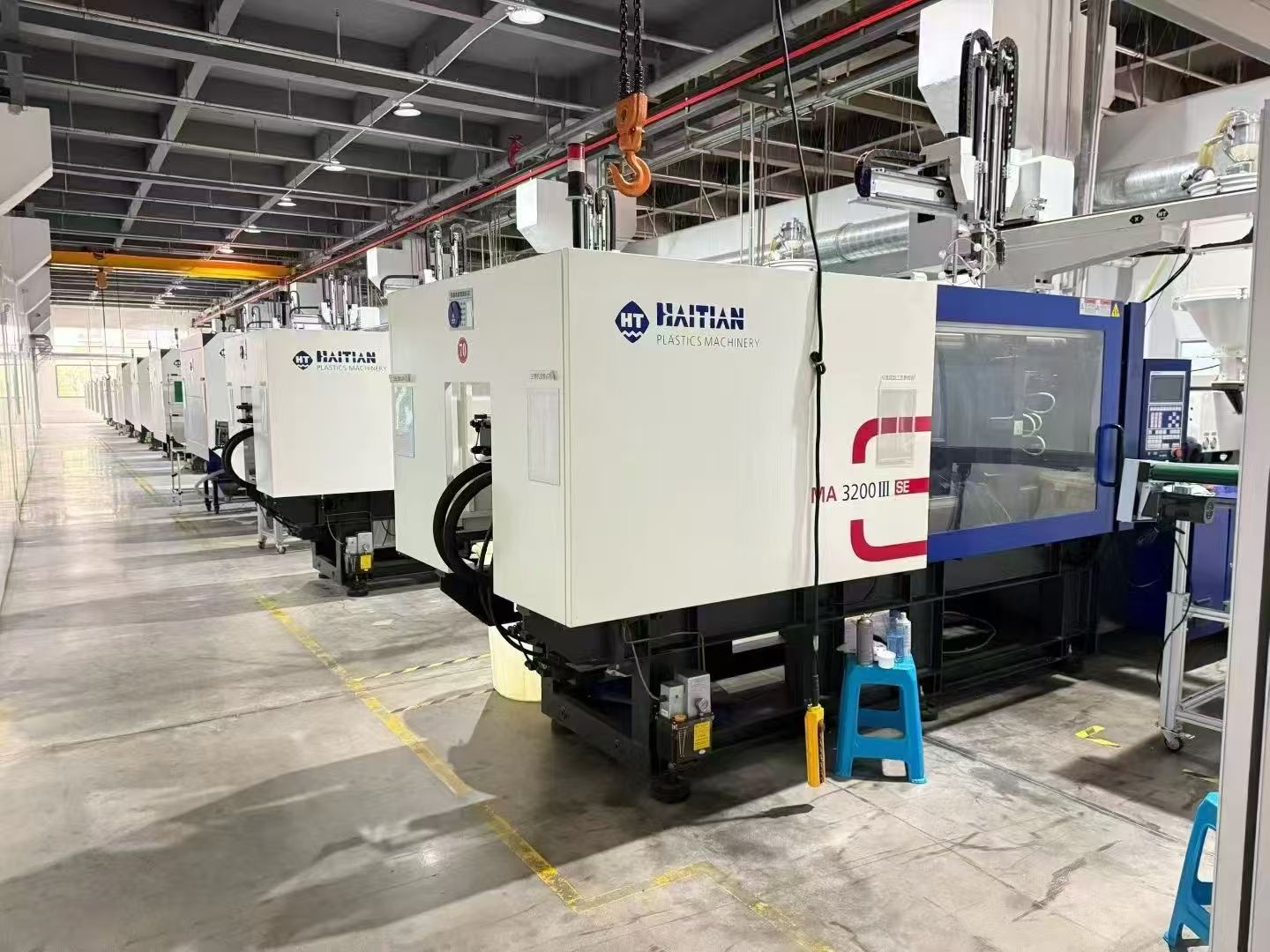
Another mistake is underestimating auxiliary equipment. The machine image shows a vertical auxiliary hopper or material-handling vessel on the right side, which is a reminder that the press is only part of the line. Drying, conveying, cooling, and downstream handling all influence whether the machine can hold a stable cycle.
A third mistake is buying for the part that exists today while ignoring the next platform shift. If a plant expects to move from one car accessories injection machine application to another, the mold envelope and shot range need enough flexibility to absorb that change. Otherwise, the machine becomes specialized faster than planned.
Practical questions to ask before purchase
Before committing to an automotive component molding machine in this class, buyers should ask:
Will the largest planned mold fit within the platen and mold height limits?
Does the part family need the full 21,000 kN clamp or only a portion of it?
Are the shot weight and screw diameter sufficient for the heaviest resin load and runner design?
Is the floor space available for a machine that measures 15.2 × 3.8 × 4.5 m and weighs about 90 t?
Can the plant support the auxiliary systems the line will require, even if those systems are not fully defined yet?
Those are plain questions, but they are the ones that prevent expensive surprises. A buyer can recover from a slow ramp-up. It is harder to recover from a machine that cannot physically accommodate the mold.
What a good next step looks like
If you are comparing a car accessories injection machine for a new automotive program, start with the part drawing, the mold concept, and the planned resin family. Then map those against clamp force, shot capacity, tie bar spacing, and mold height. Only after that should you compare control features, energy claims, or brand familiarity.
For large-format automotive work, that order matters. It keeps the conversation grounded in what the machine must actually do, not what the brochure makes it sound like it might do.
If you are evaluating new or used options, GEEPOW Machinery’s inventory may be worth reviewing alongside your technical checklist, especially if your project needs a large-tonnage platform rather than a standard press. The right machine is usually the one that fits the mold and the production plan without forcing either to compromise too much.