Fakuma 2026: A Buyer Brief for Used Injection Molding Machines
Prepare for Fakuma 2026 with a focused used-machine buying brief: compare demonstrations, verify retrofit options and turn show insights into an evidence-based RFQ.
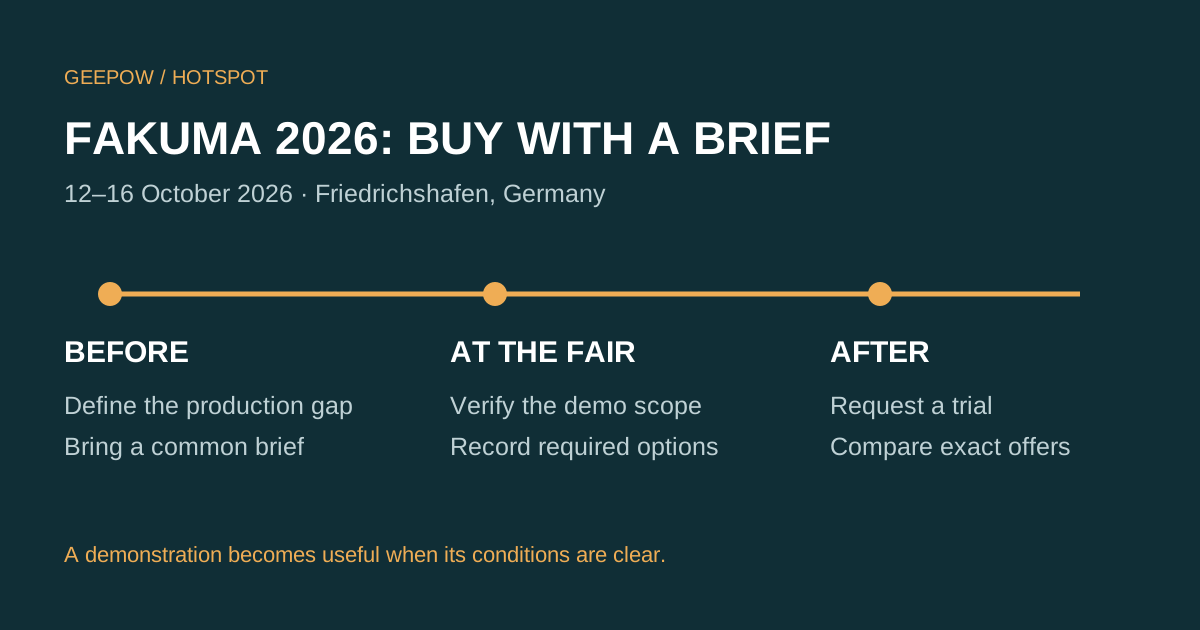
Fakuma 2026 is scheduled for 12–16 October in Friedrichshafen, Germany. For a factory considering a used injection molding machine, the useful outcome is a better purchasing specification: which capabilities are essential, which can be added later and which require a different machine configuration. Treat a trade-show demonstration as a starting point for technical questions, then verify those answers against the individual press offered for sale.
The organiser's visitor information places injection molding alongside tooling, materials, peripherals, automation and recycling. That breadth makes the event relevant even when your next purchase is used equipment rather than the newest machine on display. This planning brief reflects official information checked on 27 September 2026; confirm your intended sessions and exhibitor appointments with the organiser before travelling.
Why the demonstration's status matters in 2026
The organiser's anniversary programme announcement introduces a Fakuma Innovation Award covering six technology categories. It allows entries to be demonstrated as production-ready products, working prototypes or live technology demonstrations. That distinction deserves a line in your meeting notes: an impressive demonstration does not necessarily represent an orderable option or a supported retrofit for an older controller.
The practical opportunity is to discover better questions before committing capital. Ask what configuration makes the result possible and which elements belong to the machine, mold, material, robot or process software. A feature's relevance depends on your production job, not on how many visitors gather around the display.
Take a one-page production brief to each meeting
Start with the bottleneck you need to remove. A factory short of capacity for an established component needs different answers from one qualifying a new material or transferring a difficult mold. Keep the same brief across discussions so that the resulting offers can be compared.
- Part and quality: product drawing, material grade, appearance requirements and the checks that determine whether a part is acceptable.
- Mold and output: dimensions, weight, cavity layout, relevant movements and the accepted output required over the planned operating schedule.
- Factory constraints: utilities, available floor space, handling arrangements and the planned installation location.
- Existing equipment: machine and controller identity, current limitations and any peripherals you intend to retain.
- Purchase priorities: the capabilities you must demonstrate before acceptance and the upgrades that can wait.
Bring a version you are authorised to share. A redacted drawing and a clear performance question can be enough for an initial discussion; detailed tooling information can follow through your normal supplier process.
Convert each show claim into a purchase question
| What attracts attention | What to ask | Evidence needed for a used press |
|---|---|---|
| A faster cycle | Which part, mold, material and auxiliary equipment produced the result? | A trial on the proposed configuration using agreed quality criteria. |
| An automatic setup assistant | Which controller version and enabled options are required? | Exact-machine option records and written support for the intended use. |
| A compact production cell | What is included outside the visible press footprint? | A layout covering peripherals, access and your handling requirements. |
| A retrofit proposal | Is the upgrade supported for this serial number and configuration? | An itemised scope, responsibility split and acceptance test. |
| A recycling application | What feedstock form and preparation steps does the demonstrated route use? | A material-specific process review and a representative trial. |
The table is an original purchasing framework, not an organiser's certification scheme. Record an answer as unconfirmed if it is based only on a brochure or another installation. For measurement detail, use our energy cost per good part guide; for data integration, see the MES handover checklist.
Compare three practical investment routes
Keep and improve the existing press. Consider this route when the bottleneck appears to sit in tooling, material preparation or peripheral handling. Ask the relevant supplier to demonstrate the proposed change before attributing the problem to the machine itself.
Add a used press with verified capabilities. This route deserves review when an identified machine fits the tooling and output requirement, and its installed options can be demonstrated. Price the relocation, utilities, trial and handover alongside the equipment.
Investigate a different process or equipment configuration. A specialised material route or automation requirement may need more than a conventional press with an added accessory. Keep that route in a separate comparison until its complete scope is known.
Do not force these routes into a single headline price comparison. Use a common list of required outcomes, then show the outstanding evidence, responsible supplier and additional work for each route.
Leave with a short action list, not a folder of brochures
- Classify the technology. Record whether you saw an available configuration, a prototype or a concept demonstration.
- Attach it to a production problem. Note the exact requirement it could address in your factory.
- Identify the missing proof. Request a trial, compatibility statement, sample data or itemised upgrade proposal.
- Assign the next step. Give each shortlisted route an owner and a review date agreed by your team.
If you cannot attend, the same brief can structure a remote supplier meeting. Ask for the configuration and test conditions behind a demonstration video, then use those answers to decide whether an exact-machine inspection is worthwhile.
Questions buyers often ask
Should I wait until after Fakuma to buy a used machine?
The exhibition date alone does not determine the right purchase timing. Consider your production deadline, the evidence available for the actual offer and the value of any unresolved technical question. Do not assume an exhibition will change used-equipment prices or availability.
Does a demonstrated feature carry over to an older machine of the same brand?
Only a configuration-specific review can establish that. Obtain the controller, hardware and support requirements rather than relying on a shared brand name.
What should I send GEEPOW after comparing the options?
Review the machinery listings and send your production brief, essential options and the proof you want included in a used-machine offer. Availability, installed configuration, condition and trial arrangements need confirmation for the particular equipment.