
Used Haitian Jupiter III: Check Shipping Units Before Freight
Request packed dimensions, gross weights and shipping-unit records for a used Haitian Jupiter III before comparing freight quotations or transport assumptions.
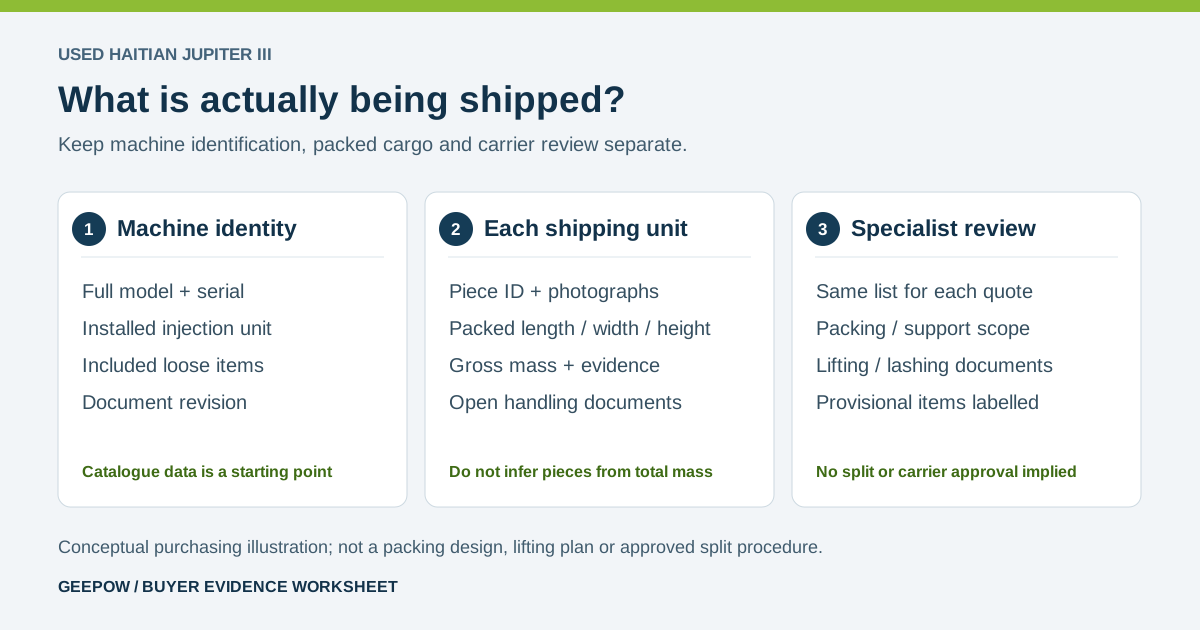
Before requesting freight for a used Haitian Jupiter III, obtain a transport split list tied to the individual machine: identify every proposed shipping unit, its packed dimensions and gross weight, and the handling documents still required. An installed-machine footprint and a catalogue weight do not establish the shipment presented to a carrier. The list should also state whether the machine remains assembled; separation must never be assumed from a two-platen layout.
For projects within the 500–3,300 metric-tonne used-machine sourcing range, record the nameplate clamping force in its original unit separately from cargo mass. That procurement range does not establish a Jupiter model’s rating, availability or shipping arrangement.
Illustration note: the original worksheet shows evidence fields only. It is not an actual transport plan, packing design or approved machine separation procedure.
Start with the offered configuration
Haitian’s Jupiter III technical datasheet lists machine dimensions and machine weight separately and presents multiple clamping-unit and injection-unit combinations. It provides a reference for identifying the equipment. It does not identify the packing, modifications or shipping pieces of a particular used press.
Ask for the serial number, complete model designation, applicable document revision and dated photographs. Reconcile the installed injection unit, external equipment and included loose items against the sale scope. Ask the responsible technical provider to identify any documented separation proposal and the applicable manufacturer’s instructions. A seller’s sketch alone is not evidence that a proposed split is authorised.
Keep three different records
An installation drawing describes the assembled machine arrangement. A shipping-unit list describes the pieces proposed for carriage. A loading or handling plan addresses how those pieces will be supported, secured and moved. Use consistent item numbers between them, while retaining each document’s purpose and approval status.
Hapag-Lloyd’s special-cargo guidance identifies dimensions, total weight, lifting and lashing points, and technical documentation as inputs to its review. Its 2019 special-cargo brochure specifically requests weight including packaging. These are carrier information requirements, not acceptance of any proposed Jupiter shipment.
Use this shipping-unit evidence table
Complete one row set for each proposed piece. The entries below are information requests, not instructions to remove any component.
| Record | What to request | Buyer decision |
|---|---|---|
| Piece identity | Unique item number, description, included parts and matching photographs. | Can the packed item be traced to the agreed sale scope? |
| Transport condition | Assembled or separated status, applicable instruction and named technical reviewer. | Is the proposed arrangement documented or still provisional? |
| Packed envelope | Length, width and height with units, including the proposed case, skid and protrusions. | Does the quote describe the actual shipping envelope? |
| Packed mass | Gross weight, measurement or calculation basis, packing allowance and outstanding verification. | Is a brochure machine weight being mistaken for cargo weight? |
| Handling evidence | Applicable lifting, lashing and support information, with drawings and reviewer details. | Which questions must the handling specialists resolve? |
| Separate packages | Itemised auxiliaries, spares and loose equipment, with their own packing records. | Is anything excluded from the shipment quotation? |
Compare quotations against one revision
Send each freight provider the same dated list, origin, destination and requested shipment window. Ask which entries remain provisional and which transport assumptions appear in the quotation. If a proposed case or separation arrangement changes, issue a revised list rather than comparing a new shipment against an old price.
Hapag-Lloyd’s special-cargo quotation FAQ recommends attaching drawings or photographs of breakbulk pieces showing lifting points, and recording accompanying standard boxes. Whether either category applies must be established for the actual shipment.
Use the quotation scope checklist to name who supplies the packing evidence, arranges technical review and owns unresolved costs. Avoid treating “export included” as a complete description.
Questions buyers ask
Can I calculate shipping-unit weights from total machine weight?
No reliable unit breakdown follows from the total alone. Request documented masses for the actual proposed pieces and packing; retain the basis and any unresolved verification.
Does a two-platen press always ship separated?
This guide establishes no universal split. The individual machine documentation, approved technical proposal and transport review determine the arrangement.
Does a carrier quote confirm the machine’s condition?
No. Keep transport review separate from the Jupiter III locking inspection and agreed acceptance trial. Container choice, lifting equipment, securing design, freight costs and destination readiness require their own evidence.
Discuss a used Haitian Jupiter III sourcing brief with the model records, destination and proposed shipping-unit list. Mark missing packed weights, dimensions and handling documents clearly so the next enquiry addresses the remaining evidence.
Sources
- Haitian — Jupiter III technical specifications: configuration combinations, machine dimensions and weight
- Hapag-Lloyd — Special Cargo: dimensions, total weight and handling documentation review
- Hapag-Lloyd — Special Cargo Quotes: photographs, drawings and accompanying standard boxes
- Hapag-Lloyd — Special Cargo brochure, January 2019: weight including packaging and enquiry fields