
Buying a Haitian Used Injection Machine: What Matters Before You Commit
If you are comparing a haitian used injection machine against other second-hand presses, the real question is not whether the brand is familiar. It is whether the machine still fits the mold, the output target, and the floor space you have left after the next production ramp. Used injection molding equipment can be a smart way to expand capacity, but only if the buyer looks past the paint and focuses on what the machine can still do reliably.
That is especially true in the used market for high-volume molding equipment. A machine may look complete, with an enclosed clamping area, a control console, and a heavy frame ready for transport, but those visible features tell only part of the story. The rest lives inside the hydraulics, the electrical cabinet, the screw and barrel condition, the clamp alignment, and the maintenance history. If those items are unknown, the purchase becomes less a procurement decision and more a gamble.
Why buyers keep looking at used Haitian machines
Used Haitian equipment has a strong reputation in many molding shops because the category usually sits in the practical middle ground: capable of high-volume production, common enough to service, and widely understood by maintenance teams. For buyers searching used haitian machines, the appeal is often straightforward. You want a proven production platform without paying new-machine pricing, and you want something that can be put into service faster than a custom-built option.
That is the upside. The caution is equally simple: not every used machine that carries a familiar name is the right fit for your plant. Machines from the same family may differ by series, clamp size, controller generation, and prior service life. A buyer who assumes all units are interchangeable usually ends up with a machine that can run, but not efficiently, or not with the mold they planned to place on it.
GEEPOW Machinery says it offers used injection molding machines from 90 to 2800 tons and keeps more than 300 models in stock. That kind of range matters because used buyers rarely shop for one exact frame size. More often, they are matching a press to a production gap: a bigger automotive part, a packaging application, or a replacement for an older machine that has become too costly to keep repairing.
What the machine image tells you, and what it does not
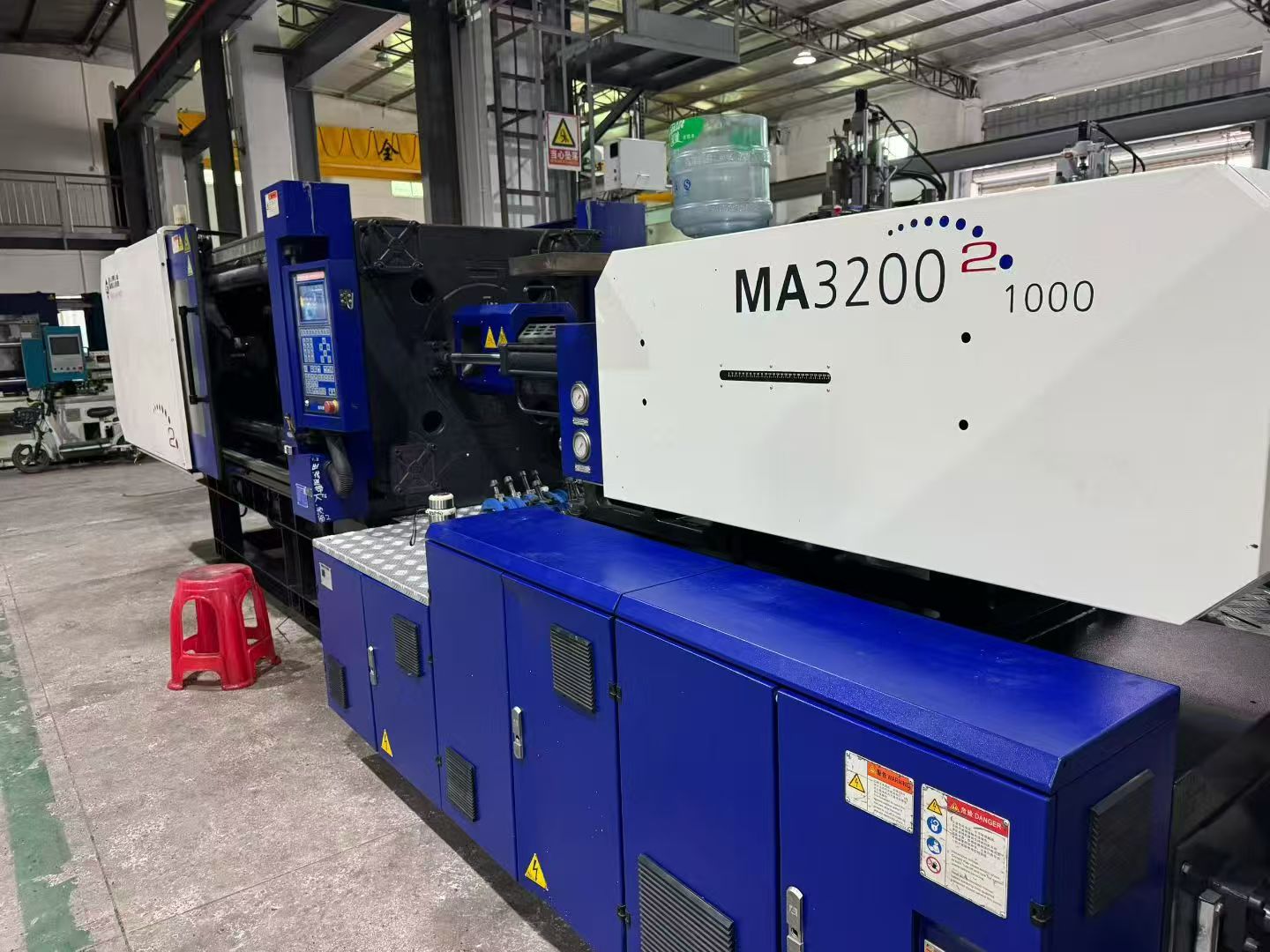
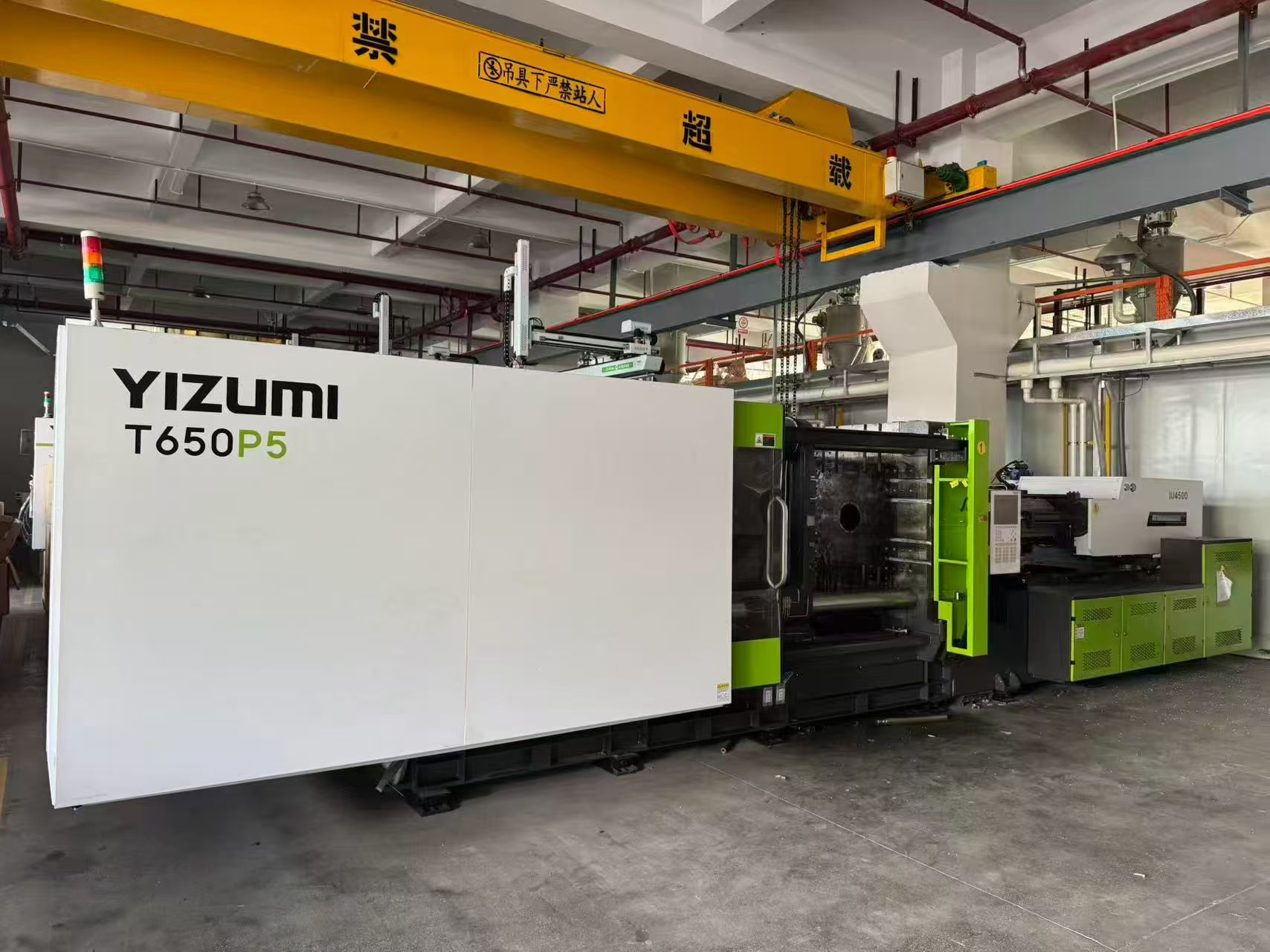
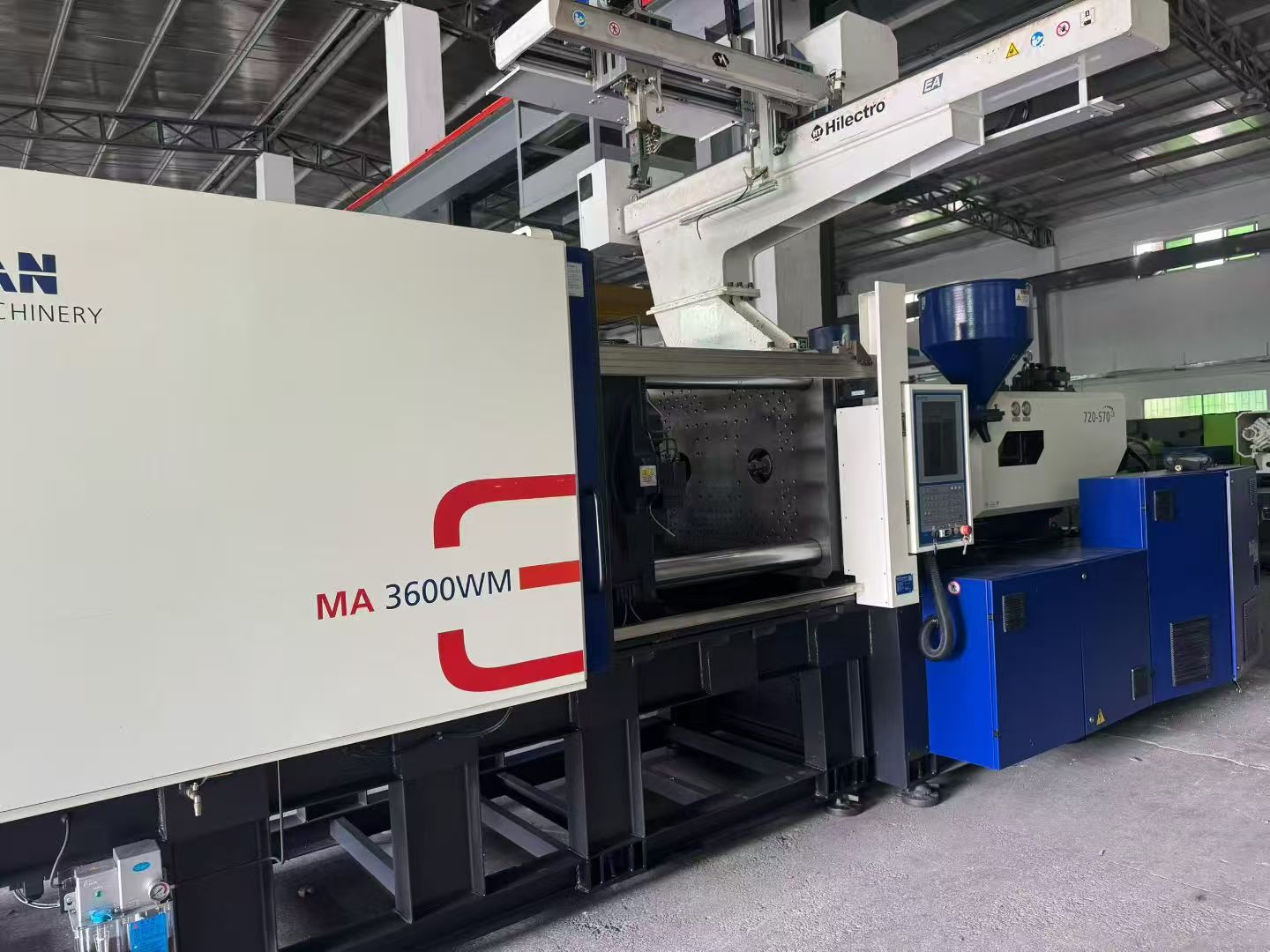
The machine shown is a large horizontal injection molding press with a white and blue main body, a metal structural frame, an enclosed clamp area, and a right-side control panel. The visible structure suggests a machine built for thermoplastic injection molding, which is the standard process for mass-producing plastic parts in automotive, appliance, packaging, electronics, consumer goods, and industrial applications.
One model marking appears to read “MA3800III SE+,” though it is partially obscured by protective wrap. That detail is useful, but it should be handled carefully. The exact brand name is not fully visible, and the machine’s tonnage, shot size, screw diameter, automation level, and configuration are not confirmed from the image alone. In used-equipment buying, it is a mistake to fill in those blanks with wishful thinking.
What you can verify from the image is the presence of a large clamp frame, tie bars or guide structures, an operator console, safety guarding, and transport protection film. Those are clues about machine class and size, not proof of remaining service life. A machine can look clean and still need a full mechanical and electrical inspection before it enters production.
Quick reference: how to judge a used injection press before shortlisting
1. Match the machine to the mold, not the other way around
The first filter is mold fit. Buyers often start with tonnage, but the mold envelope, tie-bar spacing, shot requirement, and part geometry are just as important. A press that seems powerful enough on paper can still be awkward if the mold is large, the platen spacing is tight, or the ejector setup does not suit the tooling.
2. Check the service history, not just the appearance
Clean panels and wrapped shipping film are nice to see, but they are not maintenance records. Ask for what has been replaced, what was tested, and what remains original. If the seller cannot give a coherent service summary, assume the buyer will inherit the uncertainty.
3. Think about maintenance support
Used injection machines are only as useful as the people who can keep them running. If your plant already services a machine family, that lowers risk. If not, make sure your team can source parts, interpret alarms, and handle routine wear items without long delays.
Where a Haitan-style used press can make sense
In practical terms, this type of machine is often considered by OEMs, contract molders, and factories that need repeatable high-volume output without buying every line new. A used machine can be especially attractive when the part is mature, the resin is established, and production margins are tight enough that capital cost matters.
That said, the best use case is not always the largest machine available. A used press should be bought for a specific production job. If the part demand is stable, the mold has already been proven, and the shop has experienced technicians, then a used platform can be a sensible investment. If the part is still under development, or the mold is likely to change, flexibility may matter more than raw size.
Selection criteria that deserve real attention
Clamp condition
The clamping unit does the heavy work, and wear here is expensive. Look for signs of platen damage, tie-bar issues, uneven travel, or inconsistent closing behavior. Small alignment faults can become expensive scrap if they show up as flash, poor parting line control, or mold wear.
Injection unit health
The screw, barrel, and heater zones are the heart of process repeatability. If the machine has been run hard on abrasive or filled materials, wear may be significant even if the exterior looks good. Buyers should ask about resin history and whether the unit can still deliver stable shot control.
Controls and electrical condition
A control panel with a modern screen and keypad is useful only if the system is stable and supportable. Old controllers can still work, but they may complicate training and spare-parts planning. If the plant is not familiar with the interface, the learning curve can be more disruptive than expected.
Floor and utility fit
Do not overlook the basics. The machine’s footprint, electrical demand, cooling needs, and handling requirements have to fit the plant layout. Large presses are unforgiving of poor planning; once they are on the floor, small mistakes become expensive lifting jobs.
Common mistakes buyers make with used Haitian machines
The most common mistake is buying on brand recognition alone. The second is asking for a low price before confirming whether the machine actually suits the mold. A third, and very common one, is ignoring downtime risk because the machine appears complete and “ready to ship.”
There is also a habit of underestimating the hidden cost of recommissioning. Even a solid used press may need cleaning, calibration, new seals, electrical checks, and operator training before it can make acceptable parts. None of that is unusual. It just needs to be budgeted.
Another practical warning: if the seller cannot clearly separate confirmed facts from assumptions, the buyer should slow down. This is especially relevant when a model designation is partially visible, as with the machine image here. A partially readable nameplate is not the same thing as verified specification data.
When to compare against other machine classes
If your production target is modest, a smaller used press may be easier to place, power, and maintain. If your application is growing, a larger frame might seem attractive, but bigger is not automatically better. The right machine is the one that can hold the process window with enough consistency to protect part quality and cycle stability.
For buyers comparing a used Haitian machine to other used equipment, the decision often comes down to three things: how much process risk you can tolerate, how quickly you need output, and how much maintenance support your team can realistically provide. That is a more useful question than whether the press is the latest version.
Practical buyer advice before requesting a quotation
Before you request final pricing, gather the production details first. Have the mold dimensions, required clamping force range, resin type, part weight, and target output ready. If you are replacing an existing press, share the current machine’s pain points as well. That helps the supplier narrow the selection instead of offering a machine that only looks suitable on paper.
With GEEPOW Machinery, the available inventory range suggests they can help buyers compare more than one tonnage class, which is useful when the production need is not perfectly fixed. A good supplier conversation should not stop at model numbers. It should move quickly to fit, condition, and operating intent.
If possible, ask for photos of the platen faces, injection unit, control screen, and machine serial or model markings. If the machine is wrapped for shipping, ask what is being protected and whether the unit was recently tested. That one question often tells you more than a polished sales sheet.
FAQ
Is a used Haitian machine a good option for mass production?
It can be, provided the machine condition is sound and the press matches the mold and output requirement. The real value comes from process fit, not from the brand name alone.
Can I trust the model marking in a photo?
Only as a starting point. If the marking is partially obscured, treat it as a clue and verify the full specification separately.
What should I ask the seller first?
Ask for machine size, confirmed tonnage, service history, controller details, and whether the unit has been tested under power. Also ask what resin types it has previously processed.
Does a wrapped machine mean it is new?
Not necessarily. Protective wrapping often indicates transport or storage preparation, not new condition.
Next step
A used injection machine can save money and shorten the path to production, but only if the buyer treats it like a technical purchase, not a bargain hunt. Start with the mold, verify the machine condition, and confirm the support you will have after installation. If you are comparing options in the used market, ask for a machine that fits the job first and the price second. That usually leads to fewer surprises once the press is on the floor and the first parts are due."}