
Pallets Injection Machine Buying Trends: What Engineers and Sourcing Teams Should Watch
If you are comparing a pallets injection machine for a new line or a capacity upgrade, the real question is no longer simply “can it mold a pallet?” It is whether the equipment can do it at scale, with stable dimensions, reasonable energy use, and enough flexibility to keep up with resin changes and pallet design updates. That is why many buyers now look at the plastic pallet injection molding machine category less as a single-spec purchase and more as a production strategy.
The pallet market has moved in a few noticeable directions. Companies want lighter pallets, longer service life, and better traceability. At the same time, warehouses and export users still expect stiffness, load performance, and repeatable quality. That puts pressure on pallet production equipment to deliver high clamping force, consistent melt delivery, and dependable automation interfaces. In other words, the machine choice is shaping the business model, not just the mold cycle.
Why pallet injection molding is getting more attention
Plastic pallets have become a serious alternative to wood in closed-loop logistics, food-related distribution, and export handling. The appeal is familiar: stable dimensions, moisture resistance, and easier cleaning. But the manufacturing side matters just as much. A pallet molding machine has to handle large molds, high injection volumes, and often demanding demolding requirements. Miss one of those pieces and the line starts to show problems in flash, warpage, or inconsistent pallet weight.
That is one reason buyers are paying closer attention to the injection molding machine for pallets itself rather than treating it as a generic press. A machine built for smaller consumer parts may be perfectly good in many shops, but pallets are a different scale. The mold footprint is larger, the shot size is more demanding, and the clamping system has to stay composed under heavy load. For industrial users, that makes the difference between a workable setup and a line that constantly needs adjustment.
What the current market is rewarding
A clear trend in pallet production equipment is the shift toward larger, more efficient servo-hydraulic systems. Buyers still value hydraulic power for large-tonnage work, but they want a machine that behaves more intelligently in daily production. The interest in energy-saving systems is easy to understand. A manufacturer claim often cited in this space is energy savings up to 20–30% versus traditional hydraulic machines, though that kind of figure should always be checked against your real resin, mold, and cycle conditions. Marketing numbers travel faster than plant realities.
There is also a stronger focus on footprint and factory layout. A plastic pallet manufacturing machine is not a small purchase in physical terms. Large presses occupy floor space, demand safe maintenance access, and often require auxiliary systems for material handling. Buyers planning a pallet line now tend to think about the entire cell: material storage, drying, mold change logistics, part removal, stacking, and downstream inspection. The press is just the center of that system.
Quick reference: what matters most in a pallet machine
For most sourcing teams, the buying decision comes down to a short list of practical checks rather than a long brochure comparison. The machine needs enough clamping force for the mold, enough shot capacity for the part, and enough tie bar spacing and mold height room to fit the tooling. If those basics are off, the rest of the discussion is academic.
In pallet applications, high-tonnage machines are common because the mold itself can be substantial and the part requires broad, even pressure. A pallet injection molding equipment setup also needs an ejector system that can handle a large molded article without fighting the cycle. On top of that, buyers often ask about energy use, operator access, and whether the machine can integrate with the line they already have. That is practical thinking, not overengineering.
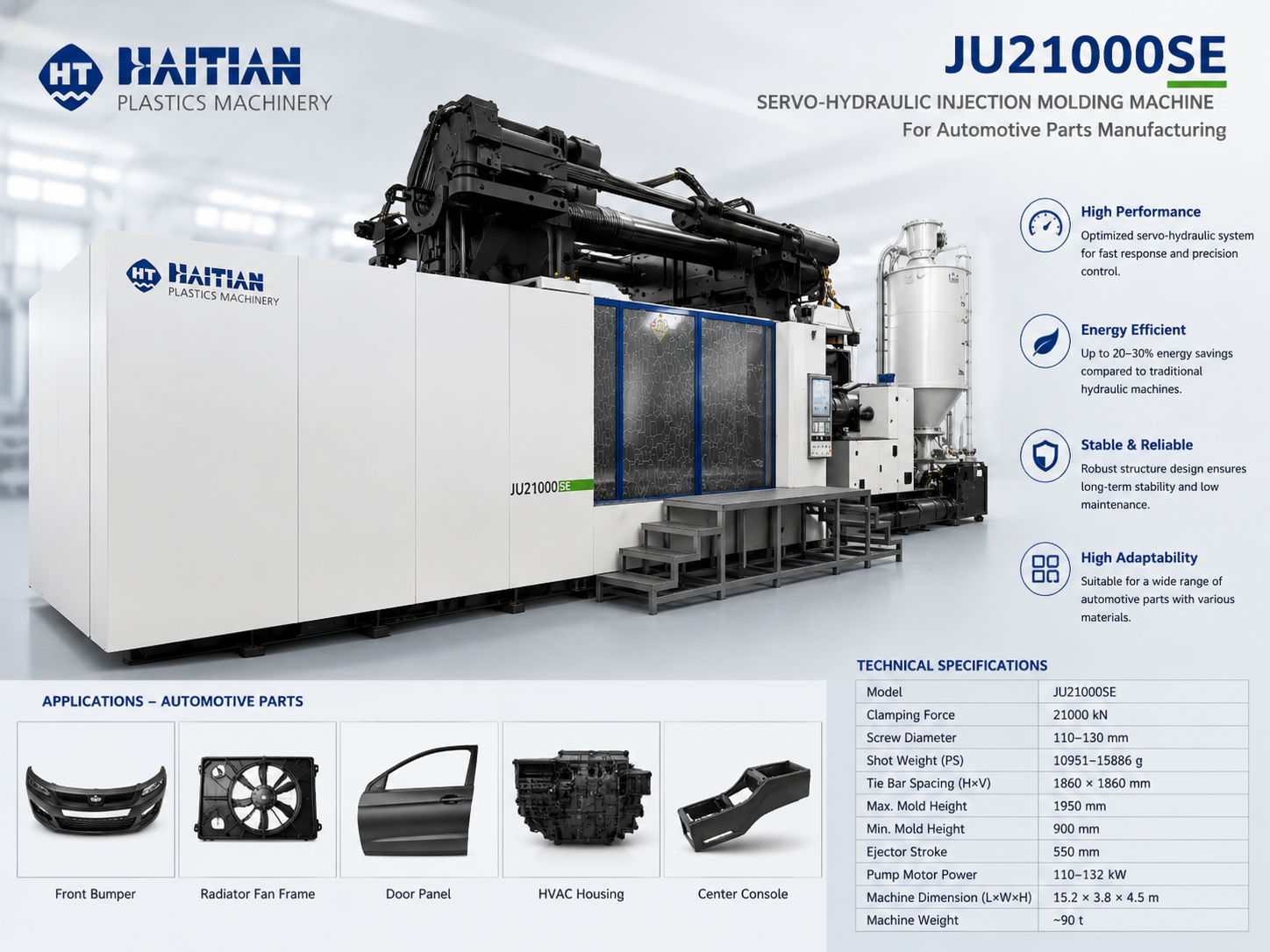
Example of a heavy-duty platform: the JU21000SE
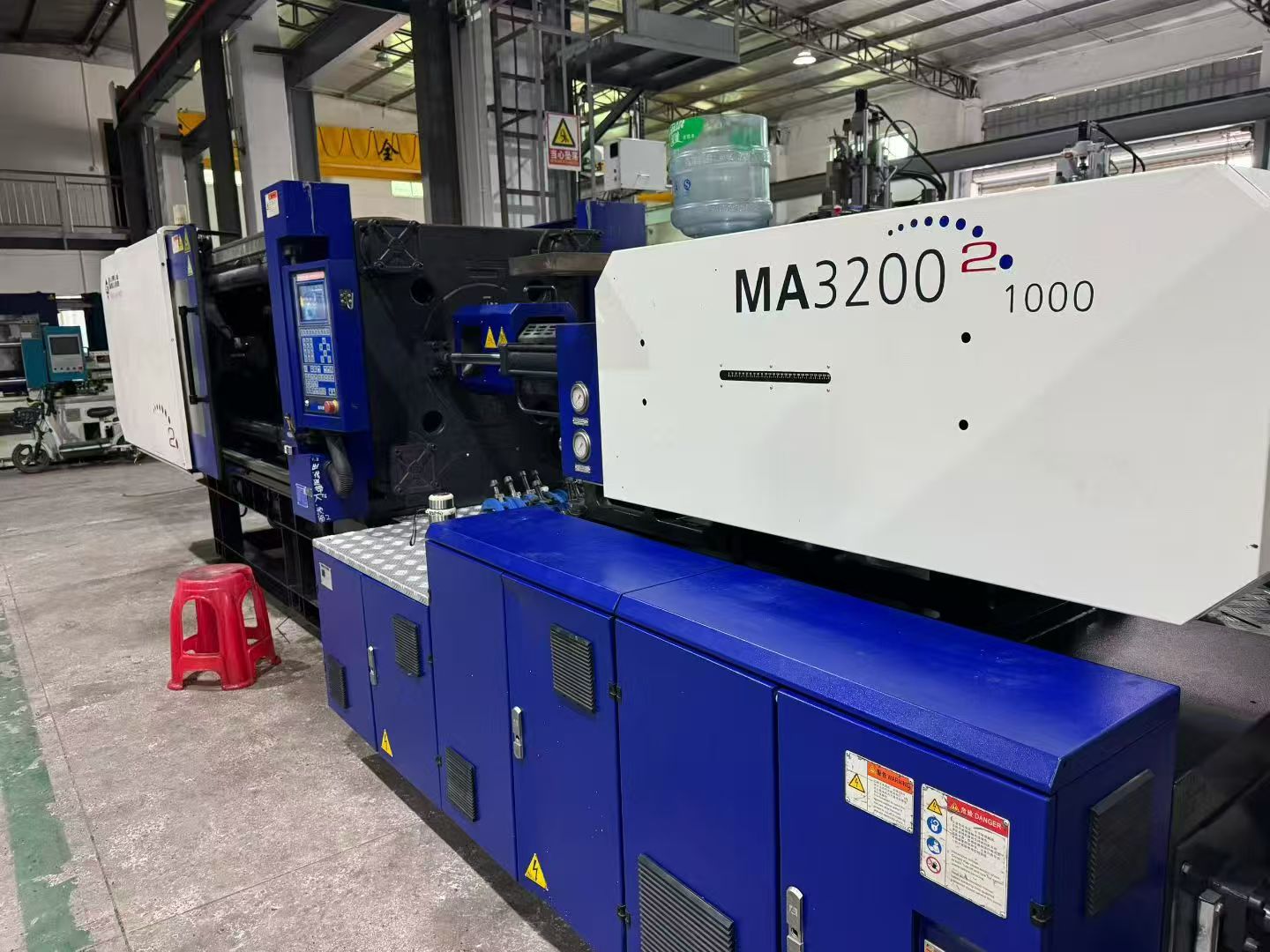
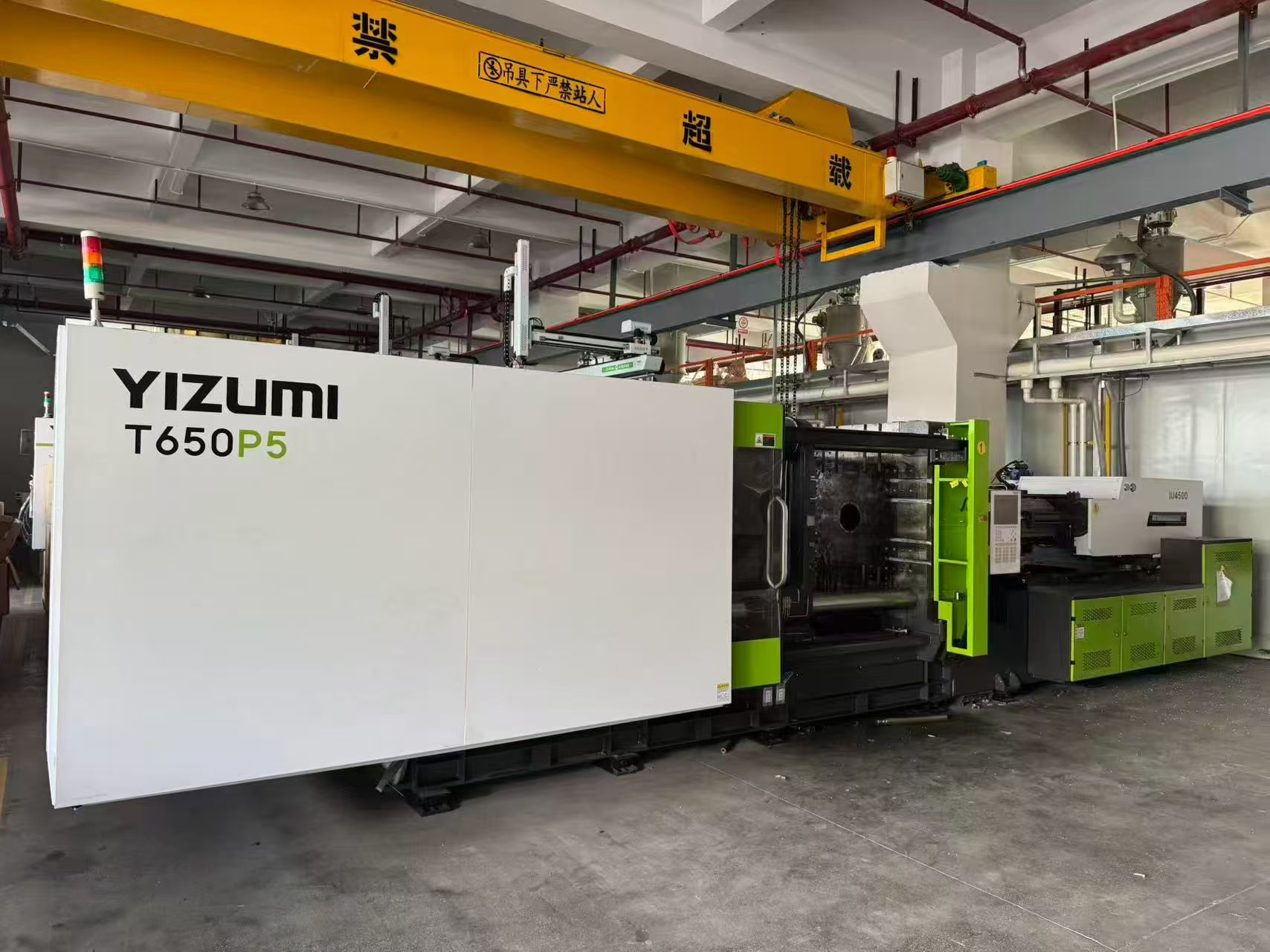
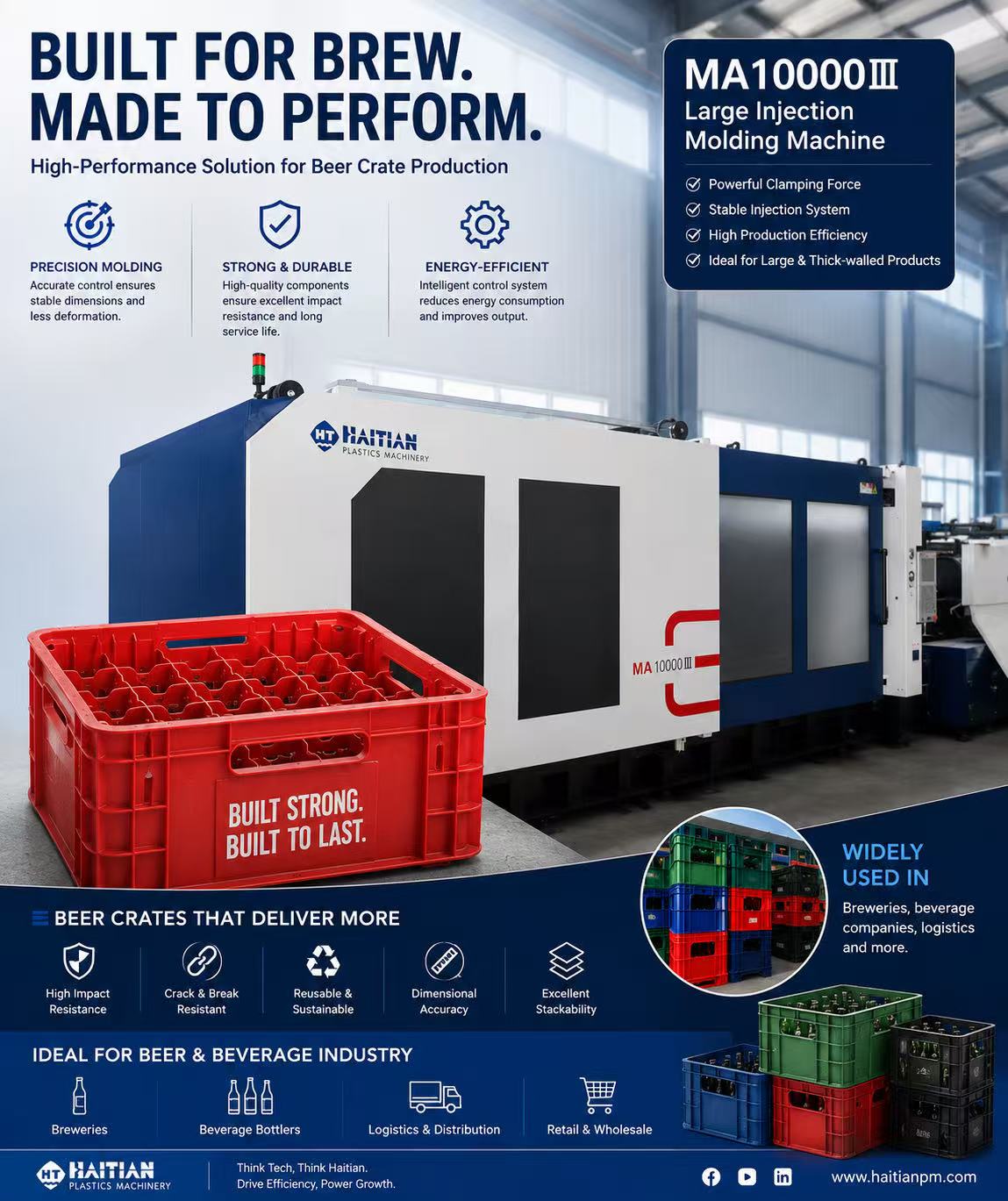
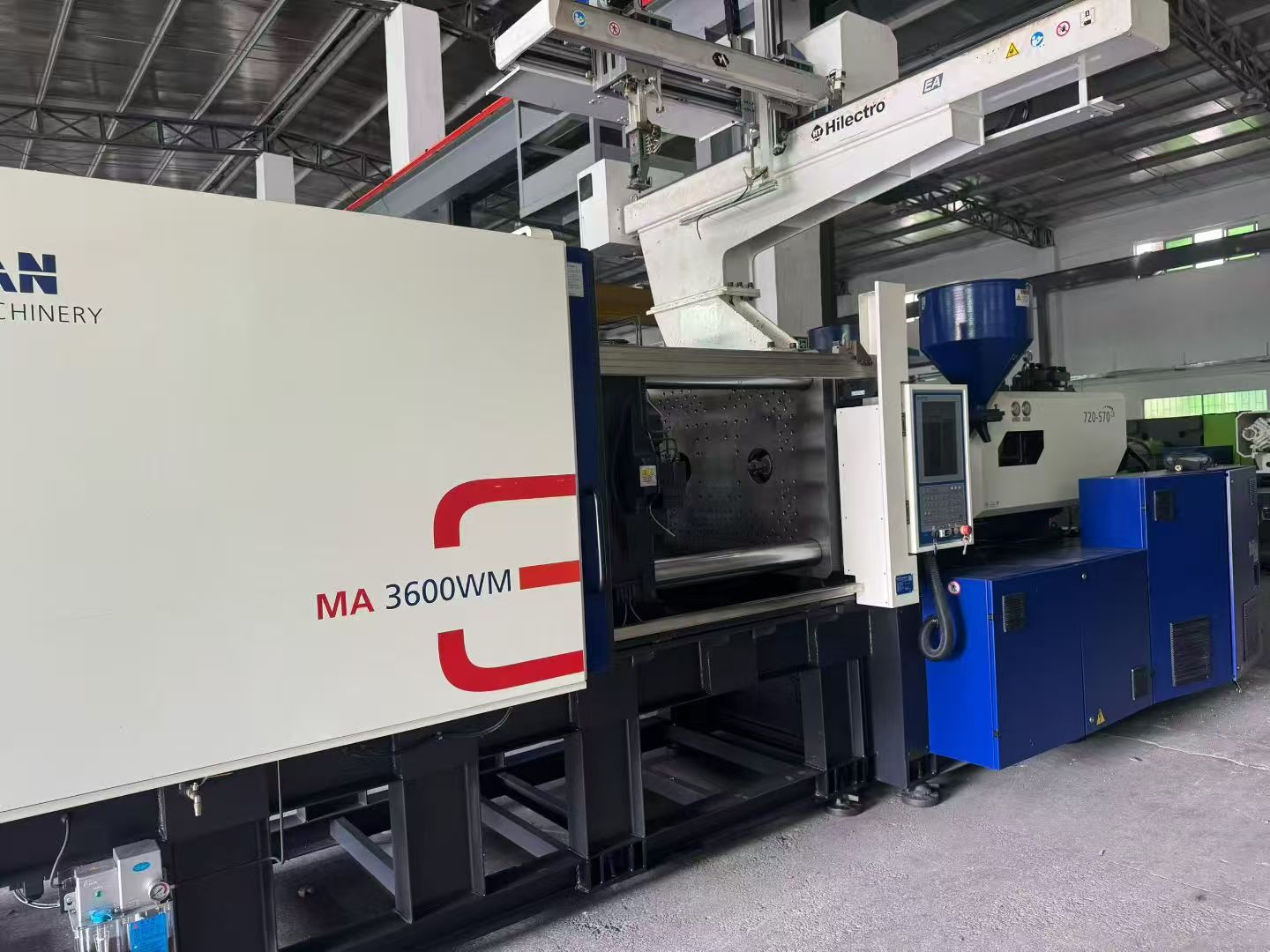
GEEPOW Machinery supplies used injection molding machines from 90 to 2800 tons, with over 300 models in stock, and one example from the heavy-duty side is the JU21000SE servo-hydraulic injection molding machine. While the machine shown is positioned for automotive parts manufacturing, it is useful as a reference point for the size and capability level buyers often consider when they are evaluating large-format pallet work.
According to the provided data, the JU21000SE has 21,000 kN clamping force, screw diameter options from 110 to 130 mm, and shot weight in PS of 10,951 to 15,886 g. The tie bar spacing is 1860 × 1860 mm, with max mold height of 1950 mm and min mold height of 900 mm. Ejector stroke is 550 mm, pump motor power is 110–132 kW, and the machine dimensions are approximately 15.2 × 3.8 × 4.5 m, with machine weight around 90 t.
Those figures do not describe a pallet machine by name, but they do explain the scale of press architecture that large-part buyers are dealing with. For an industrial pallet machine, the main lesson is that the mechanical envelope and shot capacity must be checked early, not after the mold is already ordered.
How to compare machines without getting lost in brochure language
1. Start with the mold, not the press
Too many teams start by asking for tonnage and only later discover the mold will not fit. For pallet projects, that is a common mistake. Mold dimensions, tie bar spacing, mold height range, and ejector requirements should be matched first. The press should be selected around the tooling, not the other way around.
2. Look at shot size with some margin
Large pallet molds can consume significant material. A machine that is technically close to the requirement may still be risky if the shot window is too tight. Buyers usually want some breathing room for resin variation, process tuning, and future mold revisions. That margin is cheap compared with reworking a production line later.
3. Check whether the clamp is truly stable for long cycles
Large pallet runs can expose weak points in platen rigidity, clamp parallelism, and hydraulic consistency. In practice, stability often matters more than headline tonnage. A machine can advertise impressive force and still be annoying to run if it does not hold setup well over time.
4. Evaluate the supporting equipment as part of the machine
Material drying, feeding, mold cooling, part removal, and pallet stacking all influence the line. Even if a supplier focuses on the plastic pallet making machine itself, buyers should treat the purchase as a production cell decision. A strong press on a weak support system is still a weak line.
Common mistakes buyers make in pallet projects
The most common mistake is underestimating how large the mold and finished part can be in real production. The second is assuming a generic injection molding machine for pallets will handle every pallet design equally well. A one-size-fits-all mindset rarely survives contact with actual tooling.
Another frequent issue is overlooking maintenance access. Heavy machines are built to work, but technicians still need to reach the clamp, the control area, and the material system without fighting the layout. That sounds obvious until the first service call. Buyers sometimes also focus so heavily on energy savings that they neglect uptime, which is usually the more expensive variable.
Finally, some teams compare only new machines and ignore the used market. In industrial production, that can be a mistake if the supplier has a credible inspection process and a broad stock base. For many plants, a used industrial pallet machine from a trusted source can shorten lead times and reduce capital pressure, especially when the application is proven and the tooling is already fixed.
Where the trend is heading
The next phase in this segment appears to be smarter large-tonnage machines with better energy management and easier integration into automated lines. Buyers are not only asking for force; they are asking for control, repeatability, and a cleaner operating profile. That is why servo-hydraulic systems remain relevant. They sit in a practical middle ground for large-part molding: robust enough for heavy molds, but more efficient than old-school hydraulic setups in many applications.
There is also growing pressure to make pallet production less labor-heavy. Even when a line is not fully automated, operators expect simpler interfaces and safer access. The more the pallet market expands into regional warehousing, cold chain, and export logistics, the more important that becomes. Machines that are difficult to live with tend to lose favor, regardless of what the brochure said in year one.
Buyer checklist before you request a quote
Ask for the mold envelope, not just the tonnage. Confirm shot weight, screw diameter, and expected resin range. Review clamp structure and tie bar spacing against the largest pallet mold you plan to run. Check the ejector stroke and mold height limits. Ask how the machine is arranged for material handling, because auxiliary systems can affect uptime more than many buyers expect. And if the supplier is offering a used unit, request the machine history and operating condition details rather than relying on the model plate alone.
For companies comparing a plastic pallet injection molding machine against other heavy-tonnage options, it is worth remembering that the best machine is the one that matches your mold, your resin, and your production rhythm. Everything else is secondary.
FAQ: short answers buyers usually want first
Is a pallet molding machine always a very large press?
Usually yes, because pallet molds and shot sizes are large, but the exact tonnage depends on pallet design, resin, and mold layout.
Why do buyers care so much about tie bar spacing?
Because the mold has to physically fit, and large pallet tools need room to load, clamp, and operate without awkward compromises.
Is a used machine reasonable for pallet production?
It can be, especially when the application is mature and the supplier offers a broad inventory and credible support. The condition check matters more than the label.
Next step
If you are evaluating a pallets injection machine for a new line, start with the mold package and the production target, then work backward to the press specification. For teams that want to compare heavy-duty options quickly, GEEPOW Machinery’s stock of used injection molding machines across 90 to 2800 tons gives sourcing managers a practical way to benchmark machines without waiting on a custom build. In this category, speed, fit, and operating discipline usually matter more than glossy sales language.