
What buyers really need to know before considering a Haitian MA10000 used injection machine
The search usually starts with a practical problem: a plant needs more clamp tonnage, a new mold program is coming, or an existing line has to move into large-part production without the cost and delay of buying new equipment. That is where a Haitian MA10000 used injection machine comes into the conversation. For engineering teams and sourcing managers, the question is rarely whether the machine can mold plastic in general. It is whether a used, large-tonnage press still makes sense for the part family, the mold stack, and the production plan.
That distinction matters. A machine in this class is not a casual purchase. It is a floor-space commitment, a utility load, a maintenance item, and often the backbone of an automotive or appliance program. If the machine is oversized, you pay for unused capacity and energy. If it is undersized, the mold becomes the bottleneck. A good buying decision begins with matching the press to the real part and mold requirements, not just the model name.
Why the Haitian MA10000 class attracts attention
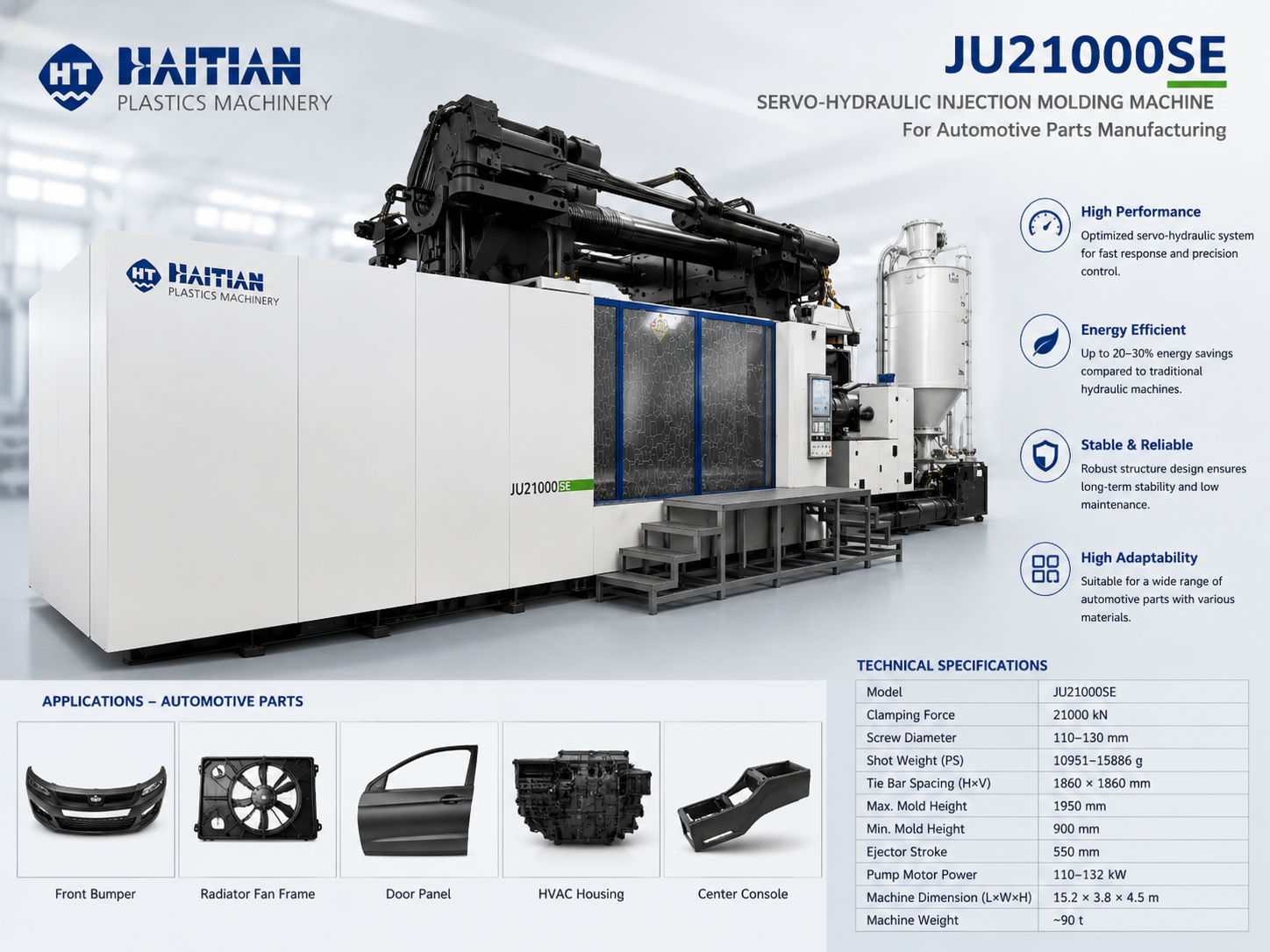
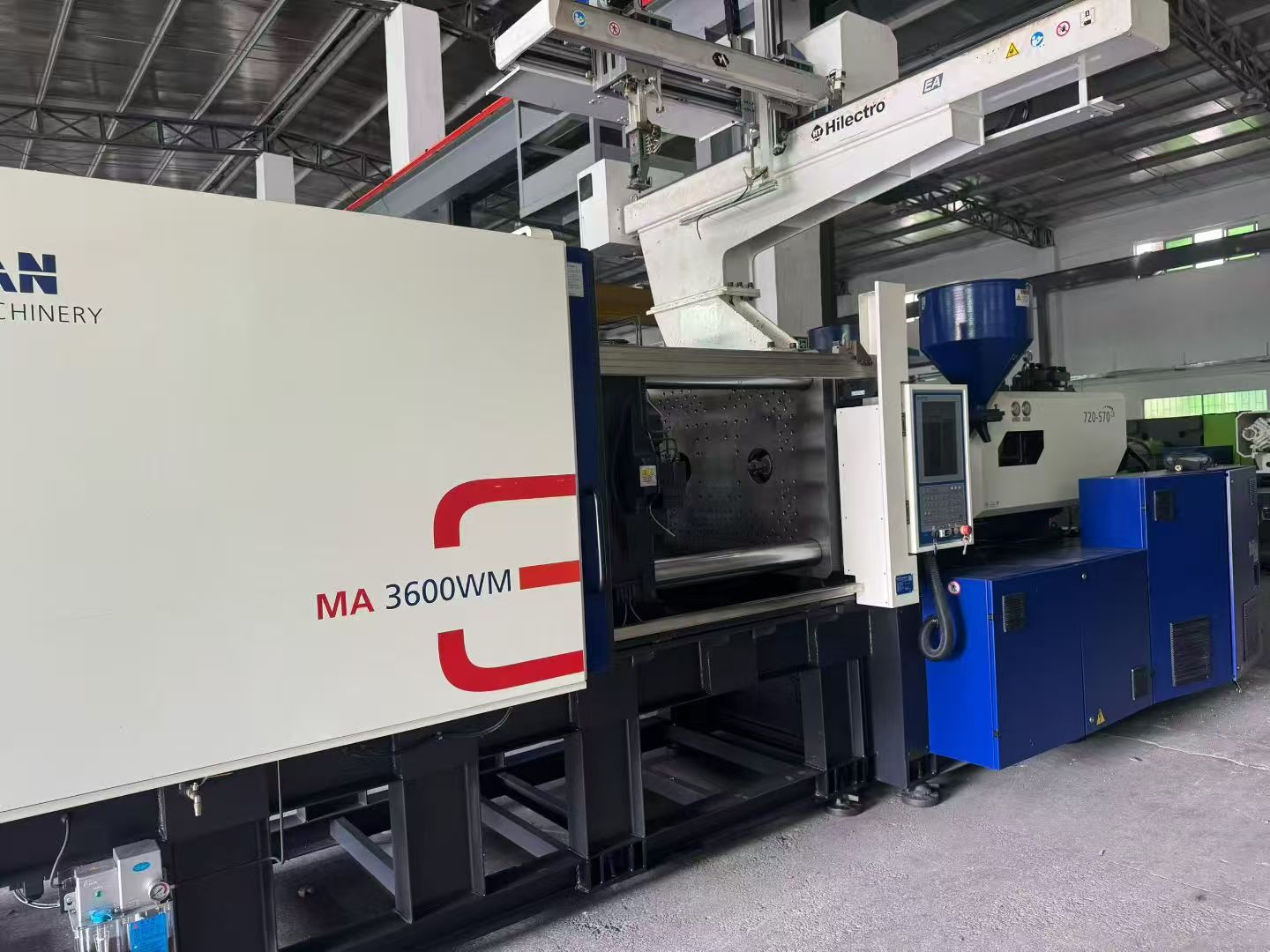
The Haitian MA10000 used injection machine is generally discussed as a large servo-hydraulic injection molding machine, and that tells you most of what you need to know about the category. Servo-hydraulic presses are popular in heavy-duty molding because they combine strong clamping capability with a hydraulic system that can be more efficient than older traditional hydraulic designs. The image data associated with this machine class points to a model labeled JU21000SE, with a clamping force of 21,000 kN and a very large molding envelope. That is the sort of machine used when parts are too large or too structurally demanding for mid-size equipment.
This is the kind of press that gets considered for automotive parts manufacturing: front bumper components, radiator fan frames, door panels, HVAC housings, and center consoles. Those parts are not just large. They also demand stable clamping, good mold access, and enough shot capacity to fill complex cavities without pushing the machine to its limit. In that context, the appeal of a used Haitian injection molding machine is straightforward: buyers may gain access to high-tonnage capability at a lower capital cost than a brand-new press.
Key specifications that matter more than the badge on the cabinet
When evaluating a used Haitian MA10000 second hand injection machine, the specification sheet matters more than the sales description. For the model data supplied here, the machine is listed with the following core figures:
A clamping force of 21,000 kN
A screw diameter range of 110–130 mm
A shot weight range, in PS, of 10,951–15,886 g
Tie bar spacing of 1860 × 1860 mm
Maximum mold height of 1950 mm
Minimum mold height of 900 mm
Ejector stroke of 550 mm
Pump motor power of 110–132 kW
Machine dimensions of 15.2 × 3.8 × 4.5 m
Machine weight of roughly 90 t
Those are not decorative numbers. They determine whether the machine can physically accept the mold, generate enough shot volume, and fit into the plant without a costly layout surprise. Buyers often focus on clamping force first, but a used injection molding machine 10000-ton-class machine is really a system of constraints. Tie bar spacing can stop a mold from fitting even when tonnage looks adequate. Mold height range can determine whether the clamp platen can close correctly and safely. Shot weight tells you whether the machine can fill the cavity without running too close to the edge of its operating envelope.
Energy and operating behavior
The machine class is described as energy efficient, with a claim of up to 20–30% energy savings versus traditional hydraulic machines. That may be directionally useful, but a cautious buyer should treat it as a claim unless it is backed by operating data from the seller or verified in production. Real energy consumption depends on cycle profile, melt temperature, hydraulic loading, auxiliary equipment, and how consistently the machine is run near its intended operating range.
Still, the servo-hydraulic design is relevant. For plants that run large parts with variable demand, the ability to avoid wasting power when full hydraulic output is not needed can be meaningful over a long production schedule.
What a large-tonnage used press is good at, and where it can disappoint
A large tonnage injection molding machine used for automotive parts can be a very sensible asset if the application is stable and the molds are mature. It is a strong choice when the buyer needs high clamp force for large projected areas, structural parts, or wide, shallow components that tend to open up under pressure. It is also attractive when a plant wants to expand capacity without waiting for a new machine order.
But used equipment can disappoint in the same places every time: maintenance history, hydraulic wear, control condition, and prior duty cycle. A press that spent its previous life on demanding, high-volume production may still be serviceable, but only if the seller can show it is mechanically sound and the buyer can inspect the essentials. The phrase preowned Haitian MA10000 injection machine should not be treated as a quality guarantee by itself. It only says the machine has had a previous life.
How to evaluate a used Haitian MA10000 before you buy
Start with the mold, not the machine.
If you already know the part family, check the projected area, required clamp force, shot size, and mold height before you get attached to a specific press. A machine can look impressive on paper and still be a poor fit if the mold stack is too tall or the platen spacing is too tight. This is where buyers sometimes get distracted by the phrase buy used Haitian MA10000 and forget the actual process requirements.
Then inspect the machine as capital equipment, not just as a working press.
Look at the hydraulic system for obvious leaks, listen for abnormal pump noise, and ask how the machine was used before decommissioning. Review the condition of the screw and barrel if that information is available. Check the control interface for signs of age, repair, or replacement. Examine tie bars, platens, and the clamping unit for wear or damage. On a machine this large, small mechanical issues can become expensive very quickly.
Also confirm plant compatibility. A machine in this class is physically large and heavy. At roughly 90 tons and more than 15 meters long, it is not something you casually slide into an empty corner. Power supply, foundation load, material handling, and maintenance access all need attention before shipment.
Buyer-facing warning signs that deserve extra caution
There are a few patterns that should slow a purchase down.
If the seller provides only broad claims such as stable and reliable, but no specific condition report, ask for more detail. If the mold size or shot size you need is close to the machine’s upper limit, that is a warning sign, not a victory. If the previous process was unrelated and the machine has sat idle for a long time, expect a more careful recommissioning effort. And if the deal sounds urgent but there is little information on service history, treat that as a reason to pause rather than a reason to move faster.
A used Haitian MA 10000 can be a good asset, but large presses are unforgiving of assumptions.
Where GEEPOW Machinery fits into the buying process
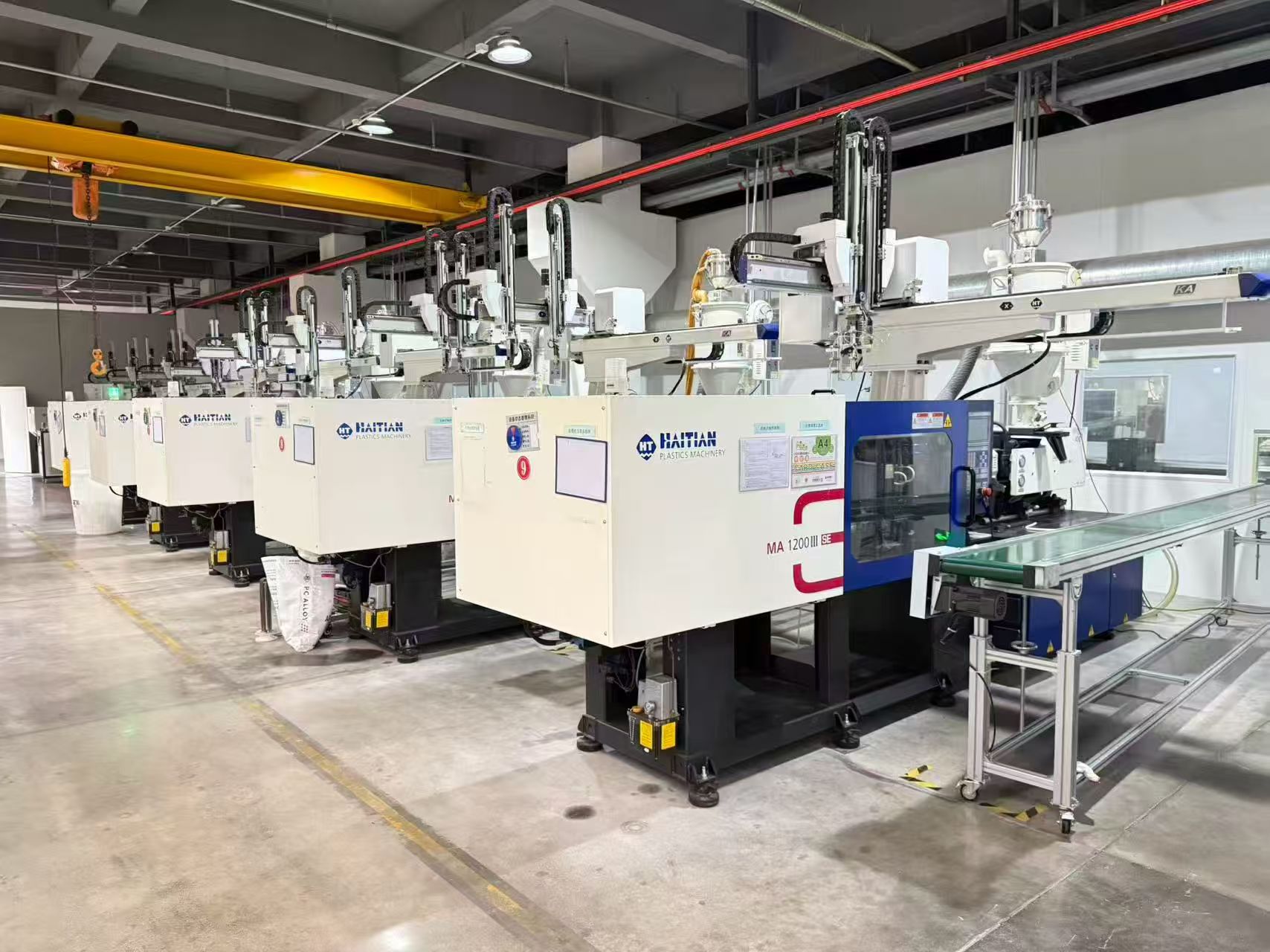
GEEPOW Machinery states that it offers quality used injection molding machines from 90 to 2800 tons, with more than 300 models in stock. For buyers, that matters because large-tonnage sourcing often benefits from breadth of inventory. When a supplier has multiple models available, it can be easier to compare platen sizes, clamp configurations, and machine footprints against a real project instead of trying to force a single machine into every application.
That does not replace technical review, of course. It does mean buyers may have more room to match the press to the part rather than adapting the part to whatever happens to be available.
Practical selection checklist for sourcing and engineering teams
Before moving forward on a used Haitian injection molding machine, confirm the following in writing:
The intended part or part family
Required clamp force with margin
Mold dimensions and mold height range
Shot weight requirement and resin assumptions
Available floor space and ceiling height
Plant power and utility readiness
Expected production volume and duty cycle
Maintenance support after installation
This list sounds basic, but it prevents the most common expensive mistake: buying a machine that is technically impressive and commercially awkward.
FAQ: common questions from first-time buyers
Is a used Haitian MA10000 suitable for automotive parts?
It can be, especially for large exterior or interior components, but the actual decision depends on mold size, shot requirements, and production stability. The machine class is aligned with large automotive plastic parts, which is why it draws attention in that segment.
Is a servo-hydraulic machine always cheaper to run?
Not always. It may offer better efficiency than traditional hydraulic systems, but actual operating cost depends on the cycle, mold design, and production method.
What is the biggest mistake buyers make?
They focus on tonnage alone. On large presses, fit, shot volume, mold height, and plant compatibility can matter just as much.
A sensible next step
If your program needs a large servo-hydraulic press and the used market is the right route, the next step is to compare the machine’s real envelope against your mold data, then request a condition review that goes beyond a brochure summary. A Haitian MA10000 used injection machine can be a strong production asset, but only when the part, the mold, and the plant are all in the same conversation. That is where the best buying decisions usually get made.