Used Injection Moulding Machines for Automotive Parts
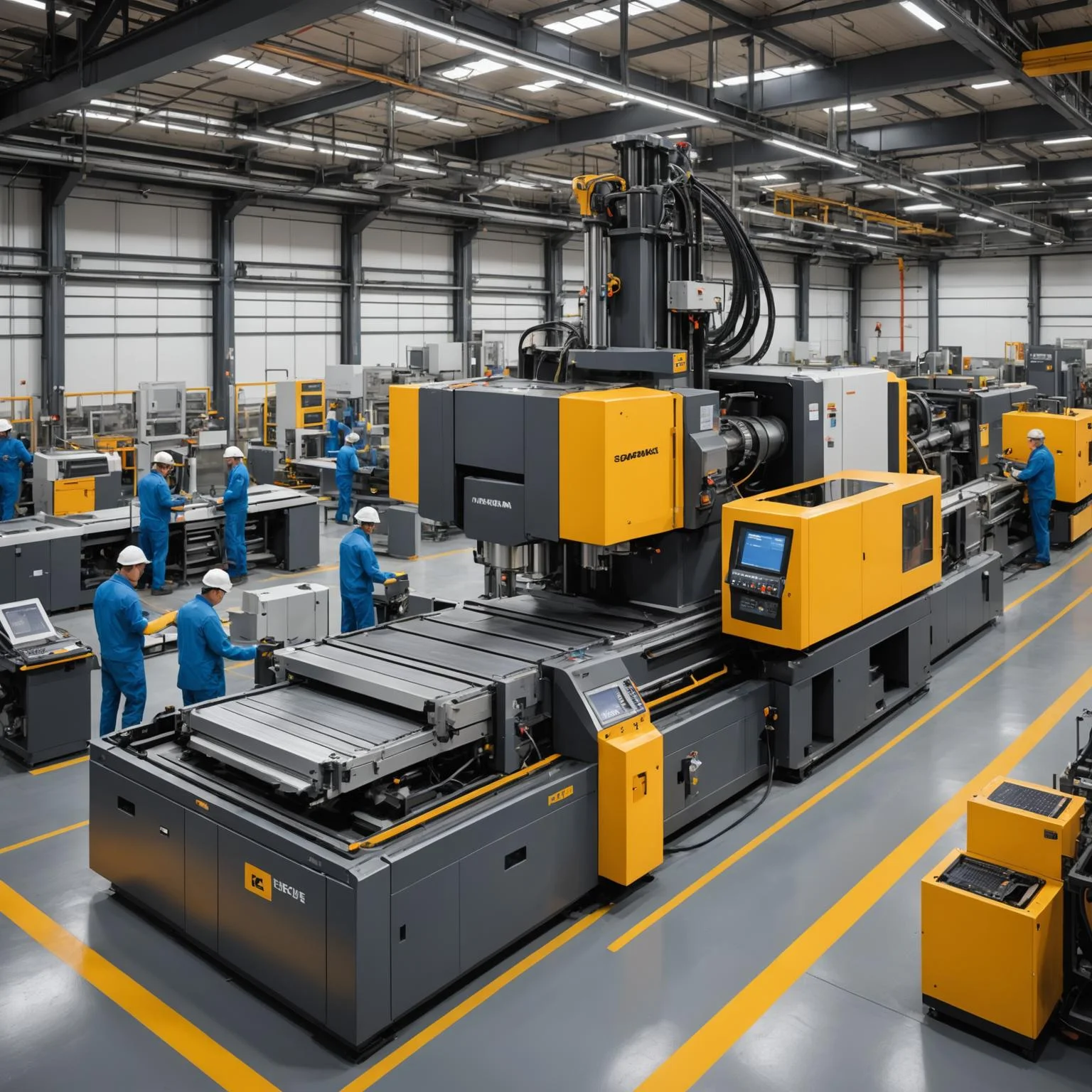
Application illustration retained from the existing site; it is not evidence of an offered machine.
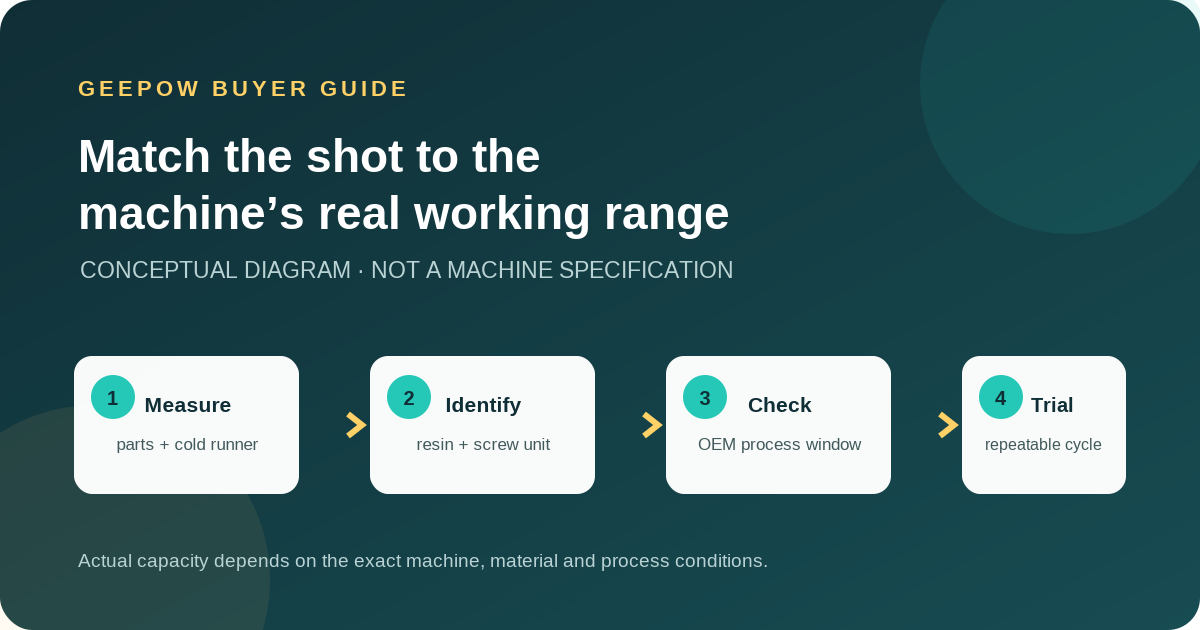
Choose a used press against the actual automotive component and tool. Check the candidate’s mould mounting space, required core and take-out interfaces, and trial criteria for your material and part.
Application checks before shortlisting
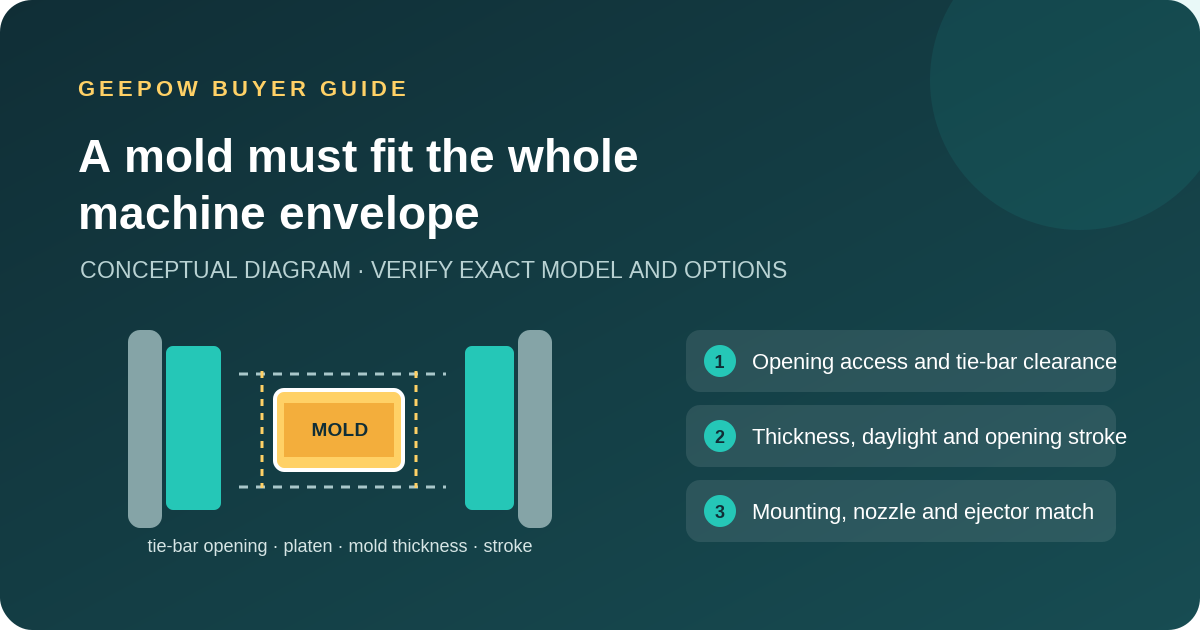
- Compare the mould drawing, projected area and cavity arrangement with the candidate machine’s documented clamp and mounting limits.
- Identify inserts, core movements, ejection and handling requirements; ask which interfaces and auxiliary items are included and demonstrably working.
- Set the trial conditions and part acceptance checks, including the intended resin, dimensions and appearance requirements. Record both accepted and rejected parts.
A buying brief for a large automotive moulding
Use a bumper, trim panel or housing as a project description, then identify the actual drawing and tooling. The outline below is an example enquiry structure, not a delivered GEEPOW project. The existing page illustration is an application reference, not a delivery record.
| Brief item | What to supply or request |
|---|---|
| Tool envelope and access | Mould drawing, overall dimensions and weight, mounting arrangement and the route used to load and remove the tool. |
| Movements and interfaces | Required core movements, ejector connection and travel, part-removal clearance and the interfaces that must be included and checked. |
| Part acceptance | Drawing revision, resin grade, critical features, appearance criteria and the agreed method for recording accepted and rejected samples. |
Ask the trial record to connect the machine to the part
- Match the nameplate and serial number to the quoted controller, installed options and available machine documentation.
- Ask qualified personnel to demonstrate the required opening, ejection and removal sequence under agreed conditions, following the machine and mould instructions.
- Tie the samples and observations to the identified mould and resin. Record what was not demonstrated and who will resolve it before acceptance.
Clamp force alone does not establish tool access, cycle time or finished-part quality. An automotive illustration cannot validate the proposed equipment; part approval and the machine trial need their own agreed evidence.
Discuss this buying briefA buyer question
Does a large clamp rating prove that a used machine is suitable?
No. Ask for a documented fit review and an agreed trial or inspection scope for the actual machine and mould; a fixed tonnage example cannot establish suitability.
Evidence to request for the individual machine
- Share the part drawing or sample, resin grade, mould dimensions, intended output and destination.
- Request the offered unit’s exact model, identification plate, documented configuration and condition history.
- Agree inspection or trial conditions, included equipment, acceptance criteria and commercial responsibilities in writing.
- Clarify packing, loading, export documents and destination-side tasks, including who supplies each item.
A model name or application image does not establish machine condition, output, material compatibility or current availability. Confirm these against the offered unit.
All equipment categoriesContact GEEPOWGeepow hotspot
Used Haitian injection molding machines for Mexico, Peru and Colombia
Request a project review for a used Haitian machine. Share tonnage, mold, voltage, and destination before we quote.