Used Injection Moulding Machines for Household Products
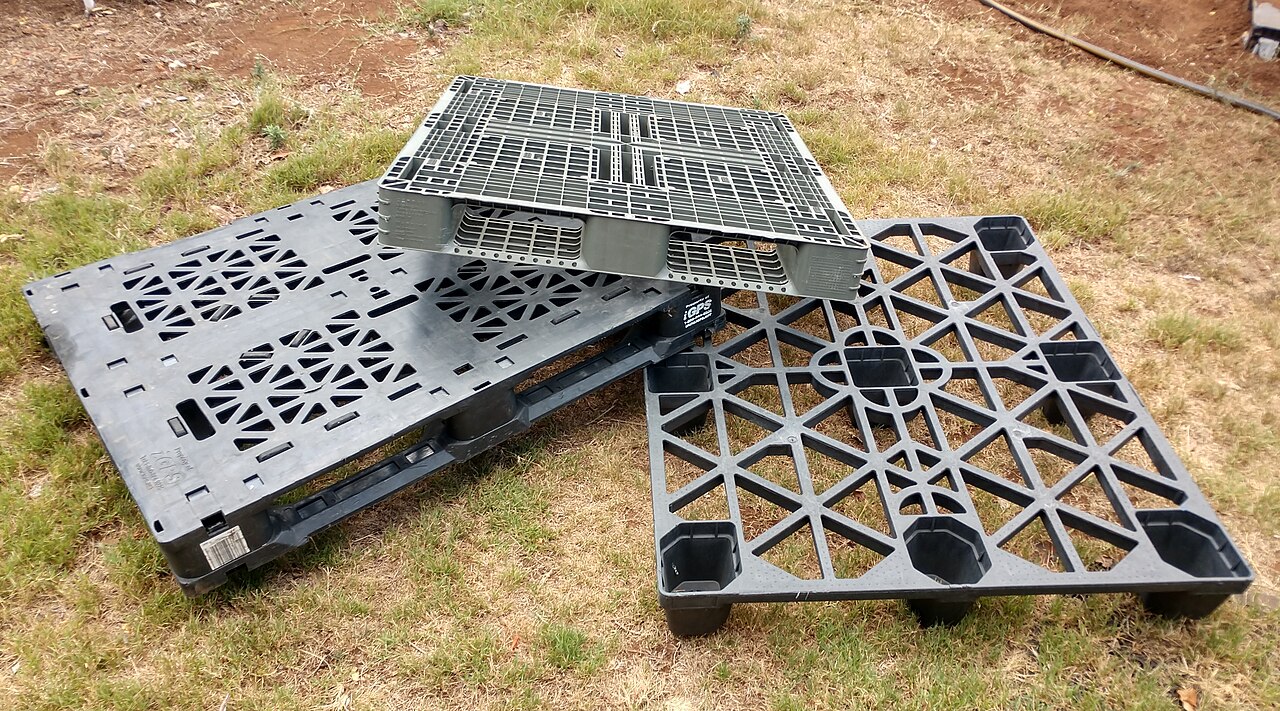
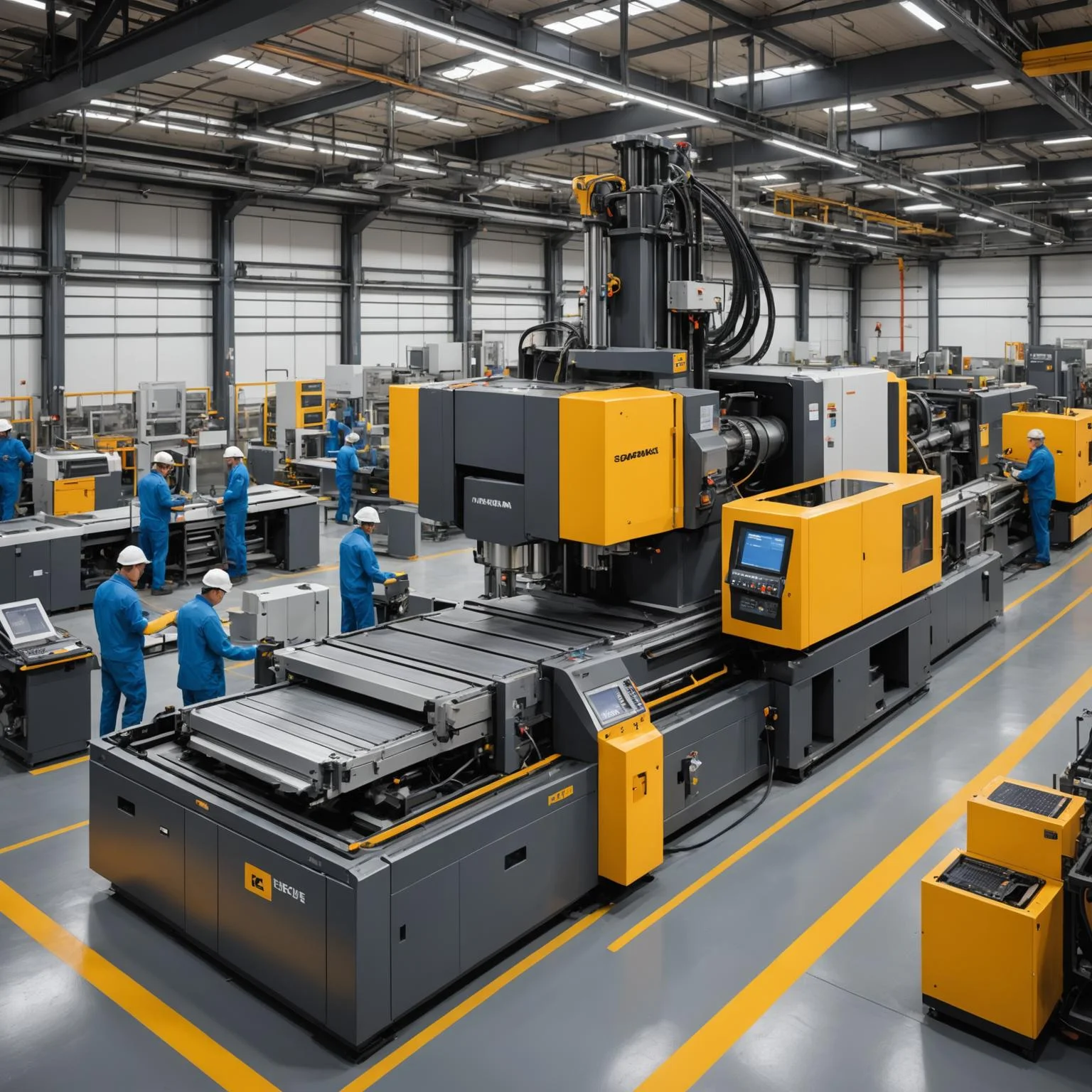
Application illustration retained from the existing site; it is not evidence of an offered machine.
A basket, storage box or other household item should be evaluated with its actual mould and resin. Similar-looking products can have different tooling and production requirements.
Application checks before shortlisting
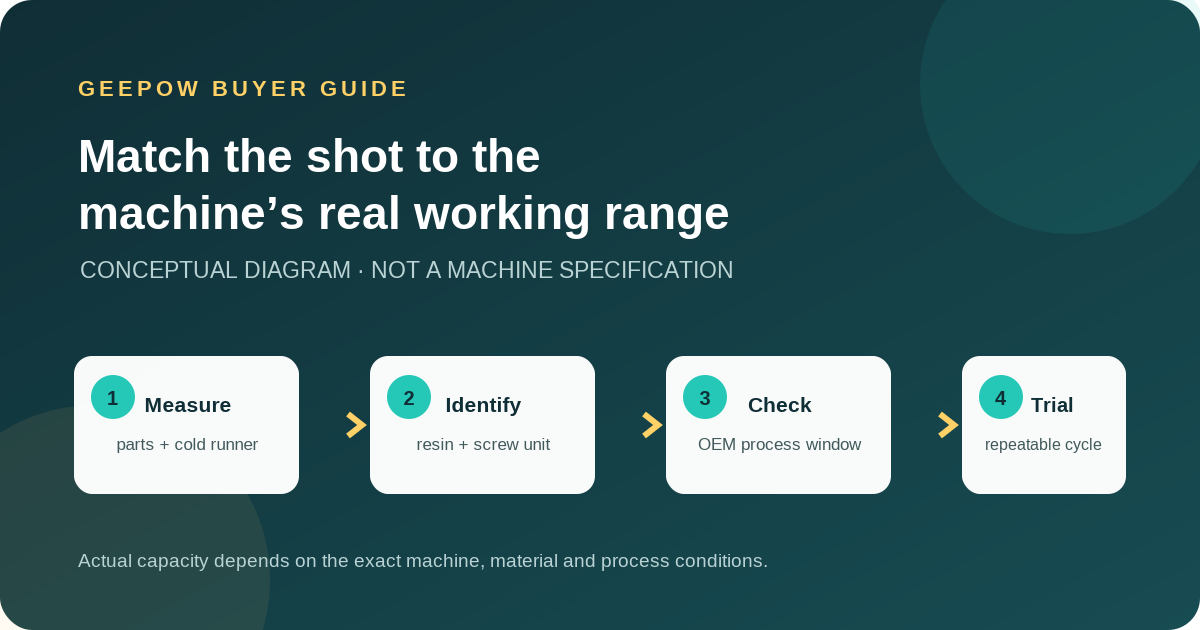
- Record mould dimensions, cavity layout and shot information; request a fit review against the offered machine’s documentation.
- Define visible-surface, colour and dimensional acceptance checks with your production team rather than relying on generic quality language.
- List the utilities, cooling and material-handling equipment included in the offer, then agree how cycle and reject observations will be recorded.
Build a brief for a storage box, crate or pallet
Begin with the drawing and intended use. A nesting box, a stackable crate and a load-carrying pallet can raise different tooling, handling and product-acceptance questions, even when they look similar in a photograph.
| Buying question | Evidence to put alongside the offer |
|---|---|
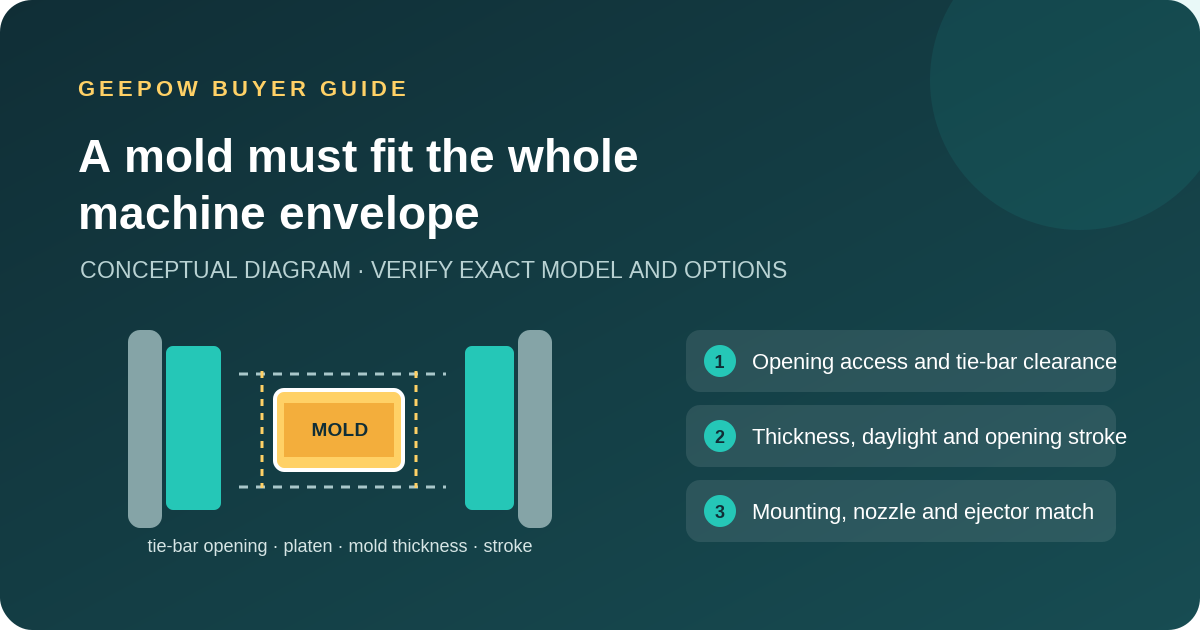
| Can the tool be loaded and supported? | Mould dimensions and weight, mounting drawing, loading route and the candidate machine’s documented limits. |
| Will the part release and reach the removal position? | Required opening and ejector travel, coupling or interfaces, removal method and an agreed demonstration with the identified tool. |
| What must the receiving factory provide? | Power, cooling, handling access and a list separating included auxiliaries from buyer-supplied equipment. |
Keep machine acceptance and product qualification separate
- Define dimensional, appearance, nesting or stacking checks for the intended product, using the drawing revision and material to be trialled.
- Request a record that shows part release, removal and return confirmation for the actual tool, with unresolved checks listed explicitly.
- For a pallet, ask separately for product evidence tied to its declared handling, storage and load conditions. A successful press cycle is not a pallet load rating.
GEEPOW’s 500–3,300 metric-tonne sourcing focus is a procurement range. It does not identify the required clamp force or establish product suitability from a model number or photograph.
Discuss this buying briefA buyer question
Can I select a used machine from a product photograph?
A photograph can start a discussion, but the mould, resin and production requirements are needed before a meaningful machine fit or trial review.
Evidence to request for the individual machine
- Share the part drawing or sample, resin grade, mould dimensions, intended output and destination.
- Request the offered unit’s exact model, identification plate, documented configuration and condition history.
- Agree inspection or trial conditions, included equipment, acceptance criteria and commercial responsibilities in writing.
- Clarify packing, loading, export documents and destination-side tasks, including who supplies each item.
A model name or application image does not establish machine condition, output, material compatibility or current availability. Confirm these against the offered unit.
All equipment categoriesContact GEEPOWGeepow hotspot
Used Haitian injection molding machines for Mexico, Peru and Colombia
Request a project review for a used Haitian machine. Share tonnage, mold, voltage, and destination before we quote.